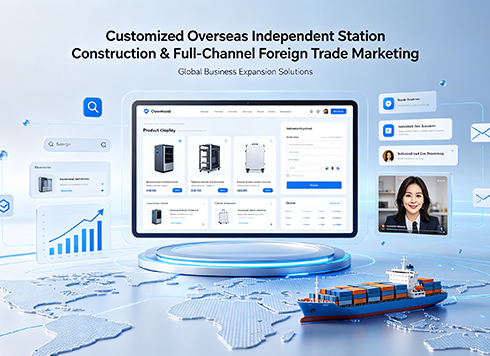



When a Guangzhou company website's Canton Fair business card QR code takes five or six seconds to open, should you compress images first or change servers?
Conclusion first: For foreign trade company websites in Guangzhou, when a business card or booth QR code at the Canton Fair takes five or six seconds for overseas customers to open, most cases should first make above-the-fold images, caching, and the QR landing page lighter, then decide whether to change servers. Based on 2026 Guangzhou project delivery experience, if time to first byte (TTFB) is still within the typical reasonable range, compressing images and building a lightweight landing page is usually more cost-effective; only when TTFB is consistently high and the server configuration is old should changing nodes be moved ahead.
Why a slow Guangzhou foreign trade website is often misjudged as a server problem
Foreign trade, beauty, leather goods, auto parts, and exhibition-related companies in Guangzhou often use their websites as the destination for business cards and booth QR codes. When customers scan the code at the venue using a roaming network or public Wi-Fi, network jitter is greater than in the office, and every extra large image or autoplay video above the fold magnifies the perceived wait. Slow opening here usually means the time until above-the-fold text and the main image are readable, not just one server response metric.
Changing servers mainly improves TTFB, but above-the-fold images and scripts still need to be downloaded again, so changing only the server often brings only a small improvement. Peer websites in Guangzhou commonly have heavy images and many carousels, and customers are used to scanning on mobile first and then searching by company name plus product. If the homepage makes customers wait for large images first, inquiries at the exhibition can easily break off. Judging the order of actions is more useful than directly comparing server prices.
- Check above-the-fold resources first: Homepage carousels, background videos, and live chat scripts commonly total an experience range of 2MB to 5MB; when that is on the large side, compress images first.
- Then check TTFB: Only when server response is consistently high should changing nodes or upgrading configuration be considered.
- Then check the scan path: If the QR code goes to the homepage and then to a product page, each extra redirect adds another wait.
- Finally check content: If English product pages are not proofread, making the content understandable is harder to substitute than making the page open fast.
Compress images first or change servers first: use a three-layer troubleshooting method to set the order
A common situation in Guangzhou projects: the customer says the website is slow, and the supplier's first reaction is to change the cloud server, but after the change the homepage is still heavy. A more stable approach is to look separately at the network layer, resource layer, and page layer, find the bottleneck first, and then spend money. The three-layer troubleshooting method is not about technical complexity; it is about avoiding spending budget on areas with little impact.
- Network layer: Measure TTFB and access conditions in different regions. If TTFB is within the typical reasonable range, do not rush to change servers.
- Resource layer: Check above-the-fold image formats, dimensions, videos, and the number of scripts. Keep a clear version of the main image, compress list images, and lazy-load images that are not above the fold.
- Page layer: Check whether the QR landing page goes through multiple redirects and whether forms and contact details are visible above the fold. A separate landing page for the exhibition QR code is usually more stable than the homepage carousel.
Each step needs acceptance criteria: after compression, can the product still be seen clearly when the main image is enlarged; after caching is enabled, do content updates take effect in time; after changing nodes, do customers in different regions really see improvement. Declaring the issue solved after doing only one step often gets pushed back by customer feedback after the exhibition.
Common pitfalls
- Changing only the server without compressing large above-the-fold images and videos, so download time remains.
- Applying one-size-fits-all compression to all site images, then customers say product details are unclear and images need rework.
- Pointing the QR code to the homepage carousel, so customers first see a large image unrelated to the current product.
- Enabling caching without leaving an update entry point, so after sales changes products the page still shows old images.
Option comparison: when image compression plus caching, changing servers, or rebuilding the template each fit
Based on 2026 Guangzhou project delivery experience, these three approaches are not substitutes for each other; they address different bottlenecks. When budget is limited and the exhibition is near, small changes at the resource layer are usually done first; when server configuration is old and TTFB is consistently high, changing nodes is meaningful; only when both visual design and section structure are outdated should rebuilding the template be considered. The ranges below are experience ranges; verify against the actual pages and supplier quotes.
- Option A: Image compression plus caching and a lightweight landing page. A common experience range is several thousand to just over RMB 10,000, with a cycle of about 3 to 10 working days; suitable for websites with heavy above-the-fold content, a long scan path, and tight time before an exhibition.
- Option B: Change cloud servers or add nodes. A common experience range is several thousand to around RMB 10,000 per year; suitable when TTFB is consistently high and server configuration is old, but improvement for large image downloads is limited.
- Option C: Rebuild the template as a whole. A common experience range is RMB 20,000 to RMB 60,000, with a cycle of about 3 to 8 weeks; suitable when both visual design and structure are outdated, not for solving a single slow QR scan.
If customers are mainly in Southeast Asia, a Guangzhou node plus basic caching may already improve things; if customers are in Europe and America, changing only a Guangzhou server is usually not enough, and resource size and distribution method also matter. Do not use one office speed test to replace on-site testing at the exhibition venue; different scenarios lead to biased conclusions.
Local delivery in Guangzhou: when a redesign is requested only two weeks before the exhibition, what to protect first
Projects during the Guangzhou exhibition season often have constraints like this: the budget is controlled at just over RMB 10,000, only two weeks remain before the Canton Fair, the product photographer has not delivered original images, and no one has proofread the English copy. According to project delivery habits, the first step is to compress the homepage above the fold to a readable level, enable caching, make a separate QR landing page, keep the old site unchanged, and schedule the full redesign after the exhibition.
The result is usually that above-the-fold load drops from five or six seconds to an experience range of two or three seconds, but the trade-offs are real: some list images were over-compressed, customers said details were unclear, and one round of rework was needed; English proofreading was two days late, and the landing page went live first and was supplemented later. At delivery, first check whether materials are complete, who signs off on English, and how many QR codes will be printed; otherwise, if links change after the changes, business cards and booth materials will all need rework.
- Protect the above-the-fold first: After the booth QR code is scanned, customers first see products, contact person, and WhatsApp entry.
- Then protect updatability: Sales can change the main product image themselves without waiting for supplier scheduling.
- Protect the overall project later: Put visual redesign after the exhibition to avoid delays caused by changing structure within two weeks.
Applicable scenarios and boundaries
This judgment fits company websites in Guangzhou that mainly rely on exhibition lead generation, foreign trade inquiries, and traffic to wholesale market stalls, especially when business card and booth QR codes will be printed in large quantities. When customers mostly scan on mobile, homepage images are heavy, and product pages need English descriptions, handling the resource layer and landing page first is usually more cost-effective.
- Suitable: QR codes will be distributed before the Canton Fair or local exhibitions, the homepage has many carousels, and overseas customers will scan directly to view products.
- Not suitable: The website has only a few text pages and a small number of images, and TTFB is already within the typical reasonable range; changing servers and compressing images are not priorities.
- Not necessary: Customers are mainly in China and access is normal; rebuilding the whole template for just one overseas customer is commonly not cost-effective.
A boundary statement can be remembered this way: if TTFB is normal but above-the-fold resources are large, compress images and build a landing page first; if TTFB is consistently high and server configuration is old, change nodes first; if both visual design and section structure are outdated, then discuss rebuilding.
How to judge whether the changes pass: four things to check on exhibition venue networks
Do not only check on office computers. According to the delivery acceptance checklist, test at least once on a mobile phone over 4G or a roaming network at the exhibition venue: whether above-the-fold text and the main image become readable quickly, whether the product can be seen clearly when the main image is opened, whether forms, WhatsApp, and email can be tapped directly, and whether the QR landing page has extra redirects. Testing tools can be checked against platform official documentation, but do not chase a single score.
- The above-the-fold main image is not blurry; list images and detail images are layered, and customers can enlarge them when needed.
- Within two steps after scanning, customers can see the main products and contact details without first going through the carousel.
- English pages are proofread by someone, and product names, specifications, and units are not mixed up.
- After images are changed, caching can update in time, and sales can operate it themselves.
FAQ
If the website change is requested only one week before the Canton Fair, is there enough time?
Usually there is enough time for small changes: compress above-the-fold images, enable caching, and make a separate QR landing page; a full rebuild is high-risk within two weeks, and incomplete materials make delays more likely.
If the website uses a Guangzhou node, will it open fast for overseas customers?
Not necessarily. A Guangzhou node helps some Southeast Asian customers, but for European and American customers, above-the-fold resource size and distribution method still matter; measure TTFB first before deciding.
If customers say they cannot see product details clearly after images are compressed, what should be done?
Keep a clear, enlargeable version of the main image, compress list images further, and load detail pages on demand; do not apply one-size-fits-all compression across the whole site, or product details will be lost.
Should the exhibition QR code point to the homepage or a separate landing page?
Most should point to a separate landing page with main products, contact person, WhatsApp, and email; the homepage carousel is heavy and not suitable as the first screen after scanning.
If the exhibition opens next week, first do above-the-fold compression, caching, and a QR landing page, and arrange English copy proofreading; when budget is limited, there is no need to change servers first. If TTFB is consistently high and server configuration is old, then arrange to change nodes. This approach applies to exhibition lead-generation websites; pure text display sites and intranet systems do not need to spend money this way.
-
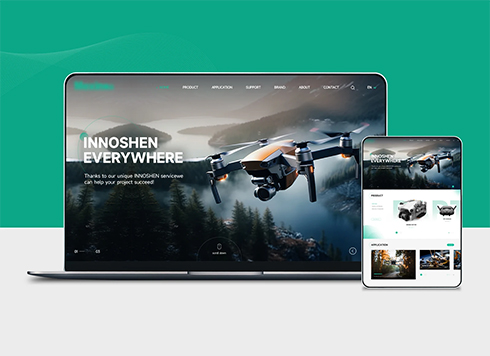 Drone Accessories Company Website Development
Incorporating gray as an accent with the pr ...
-
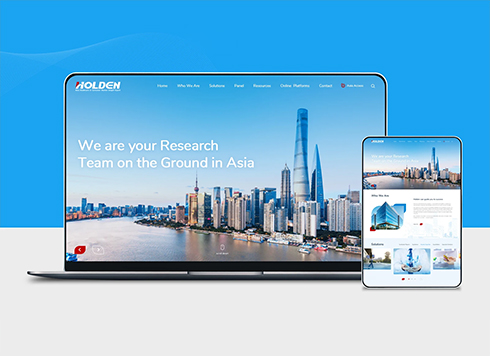 Professional International Research Service Agency Website Construction
This project serves a company with internat ...
-
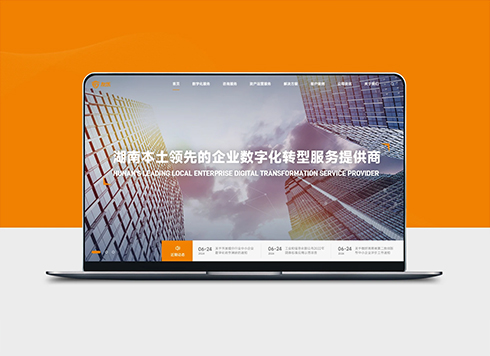 The Construction of Group Websites for Asset Operation and Digital Services
This project is to create a website for a c ...
-
 Thermal Test Equipment Website Construction
Founded in 2022, this tech company focuses ...
-
If clients ask where the factory is but production is in Foshan, will listing both locations on a Guangzhou company website look scattered?
Date: Oct 30, 2026 Read: 75
-
Shenzhen company website shows “This webpage has been stopped from visiting” when shared in a customer group, but a colleague’s link to a peer company opens normally: should I check the link first or change the domain?
Date: Nov 18, 2026 Read: 15
-
If a Shanghai Company Only Has a WeChat Official Account and Mini Program, Is It Dismissive to Reply With the Account When a Client Asks for a Website Link?
Date: Nov 17, 2026 Read: 19
-
A Beijing company's website just launched and the client says on WeChat that searching the company name returns nothing—should we explain first or complete the pages first?
Date: Nov 16, 2026 Read: 20
-
Fuzhou company website: peers say “served hundreds of companies,” but we’re only three years old—will leaving that number blank make clients think we’ve never done projects?
Date: Nov 15, 2026 Read: 27