


Fuzhou company website: peers say “served hundreds of companies,” but we’re only three years old—will leaving that number blank make clients think we’ve never done projects?
Conclusion: You can leave it blank, but the trust module cannot be empty. Based on 2026 Fuzhou project delivery experience, when local manufacturing, supporting, engineering and government/enterprise procurement clients in Fuzhou browse a website, they first check whether the entity can be verified, whether cases match specific scenarios, and whether there is a person they can directly contact—not how many hundreds of companies are written on the page. For a company only three years old, writing “served hundreds of companies” is more likely to invite follow-up questions; leaving the number blank does not reduce credibility, and backing it with verifiable content is what makes it solid.
Why Fuzhou clients are less convinced by numbers like “hundreds of companies”
Fuzhou local website service providers are mainly small studios and local network companies. “Ten years of experience” and “served over a thousand companies” appear frequently on peer pages, so after clients see them many times, their sensitivity to numbers drops. More importantly, such numbers cannot be verified by procurement: you cannot call to verify them, and they will not be written into a contract. Entity name, registered address, filing number and contact person’s phone number can be checked on the spot; once they do not match, the penalty is more direct.
A common Fuzhou client action is to forward the website URL to the contact person in a WeChat group first. Before supplier onboarding or price comparison, procurement checks the “About Us” and “Cases” sections and needs to confirm within two or three minutes that the company really exists and whether it works in their industry. The trust module on the page is therefore not better when it is bigger, but better when it matches more closely.
- Entity information: Whether the full business license name, registered address, filing entity and official website are consistent.
- Industry alignment: Whether there are projects in the same industry, same process or same supporting tier as the client.
- Responsibility entry point: Who to contact when something goes wrong, how to reach them, and how long they take to respond.
- The number itself: Usually only background information, not a deciding factor.
“Four verifiable trust pieces”: with the number blank, what holds the page up
We split it into four layers because the client’s verification order is basically fixed: first confirm “who you are,” then confirm “whether you have done work in my industry,” then see “what the cooperation process looks like,” and finally care about “what happens if there is a problem.” Skipping the first three layers and directly piling up numbers is equivalent to building persuasion on the layer most likely to be questioned.
- Verifiable entity: Keep the company full name, address and filing number consistent in the footer, About Us and Contact Us. Write multiple business lines under the same entity name; do not let clients see different names on different pages. Note: if the address and license do not match, fix the page first before discussing anything else.
- Matching scenarios: Do not write “a certain large enterprise” in cases. Write the industry + the problem to be solved + what was delivered. Three cases written thoroughly are better than many listed. Note: do not name confidential or unauthorized projects, but clearly state the industry and scale tier.
- Visible process: Put the delivery process, milestone nodes, who the contact person is, and the policy on revision rounds on the page or in the proposal, so clients have expectations for the cooperation rhythm.
- Traceable responsibility: Clearly state the after-sales response method, service period, and ownership of domain and cloud hosting accounts. This is a section that many Fuzhou procurement teams check separately in supplier onboarding materials.
Once these four layers are done, a short operating history is not a clear disadvantage. The real advantage of a three-year-old company is often “who is still doing the project.” Writing out the specific people and process is more defensible than a beautiful number.
Delivery site: after a three-year-old company removes the number, how should the page be changed so it does not feel empty?
In local Fuzhou projects, a common constraint is that the first-year budget falls within the typical range for SME official websites, the timeline is two to three weeks, and the client can only provide workshop photos taken with a phone, an old brochure and a few projects whose client names are unclear. In the first version, to “look substantial,” the editor wrote “served 300+ companies” into the first screen. The boss rejected it during review, saying “even we do not believe it.” As a result, two revision rounds were needed, the launch was delayed by about a week, and the time originally reserved for organizing the case page was eaten up.
Later, it was adjusted according to website implementation experience: first spend half a day writing three projects clearly by “industry—problem—deliverables,” then add a line on “who is responsible for client contact for this project,” keep only one business positioning sentence and one phone number on the first screen, and note on the case page which information has been approved for public disclosure. After launch, clients actually asked fewer follow-up questions, because they could already find the points they wanted to verify on the page. The cost of this kind of rework is usually not money but repeated delays to the timeline, commonly adding three to seven working days.
If materials are really insufficient, another approach is to first add “visible process”: write requirement confirmation, sampling or drawings, acceptance and after-sales response as time nodes, and clearly state who the contact person is. This approach is friendlier to companies that have been open for only a short time. Clients can see the cooperation rhythm, and there is no pressure to invent a project count that does not exist.
Numeric vs. evidence-based writing: where cost, timeline and risk differ
For the same trust module, different writing approaches make a considerable difference in cost and risk. Based on common 2026 Fuzhou practices, the following dimensions can be compared using experience ranges; amounts do not need to be written as precise figures.
- Content preparation cost: A numeric approach can be filled out in half an hour; an evidence-based approach requires organizing the industry, problem and deliverables of three to five projects and confirming with the client whether they can be disclosed, which typically takes one to three working days.
- Impact on launch timeline: An evidence-based approach usually adds three to seven days to the homepage and case page, which is within the typical range; a numeric approach launches faster, but when questioned, materials often need to be supplied on the spot.
- Response after client follow-up: Each evidence-based item can correspond to a contract, acceptance form or publicly explainable statement; once a numeric approach is asked for examples, it is easy to fail to answer.
- Risk: Quantity claims that do not match reality are hard-to-verify promotional statements and can be blocked by rigorous procurement or supplier registration review; an evidence-based approach does not have this problem.
- Applicable audience: Companies targeting B2B manufacturing, engineering supporting work, and supplier registration with state-owned enterprises and public institutions should prioritize the evidence-based approach; for pure local retail or small shops relying on referrals from existing customers, neither piling up numbers nor piling up evidence matters much.
When it is suitable to add evidence-based trust, and when there is no need to force it
Situations suitable for an evidence-based trust module: Clients are mainly local manufacturing, supporting, engineering or government/enterprise procurement; the company needs to participate in supplier registration, price comparison or prequalification; the average order value is relatively high and the decision cycle is several weeks or more; after the website launches, a dedicated person can continuously add cases. The value of this kind of page is not in the number, but in the fact that clients can verify it item by item.
Situations where it does not need to be forced: There are only one or two products, almost all clients come from referrals by existing customers, and the official website mainly serves as “an address I can send out”; or the budget and timeline are very tight, so it is enough to first make the first screen, contact information and product pages solid. If such companies force a complete case system, it commonly stops halfway and looks like the page has been unattended for a long time. Many single-page official websites in Fuzhou are in this situation; it is a reasonable trade-off, not poor work.
Common questions
If the “served hundreds of companies” number on the official website is left blank, will it make us look weak?
Usually not. Fuzhou clients more often verify the entity, industry alignment and contact person; a blank number with three cases clearly explained is more solid than a number that cannot be answered once questioned.
We have only been open for three years. How many projects is appropriate to write on the case page?
A common approach is to write three to five thoroughly, expanding by industry, problem and deliverables. Fewer projects is not the problem; unclear scenarios are what make people think you have never done the work.
The client wants peer cases, but the client company does not allow us to use its name. Will writing only “a certain textile enterprise in Fuzhou” look made up?
No. The key is to fill in the industry, scale tier and deliverables, such as the number of production lines, system integration scope and launch timeline; these details prove experience better than a company name.
After the trust module is completed, how long does it take to see whether it works?
Usually one to two inquiry cycles are enough to feel a difference. It is advisable to judge by the proportion of inquiries that “ask specific questions,” rather than only by traffic or ranking changes.
If you are preparing a redesign, it is advisable to do one thing first: list all the numbers on the existing pages and ask, one by one, “What will I use to respond when a client asks about this?” Replace the ones you cannot answer with verifiable content first, then discuss visuals and animation. This approach suits Fuzhou companies whose clients are mainly local manufacturing, supporting industries and government/enterprise procurement; if the official website only serves as an external business card, just make the entity information and contact information accurate, and there is no need to force a case system. A common 2026 Fuzhou project experience is that the more verifiable the trust module is item by item, the less trouble there is in later communication.
-
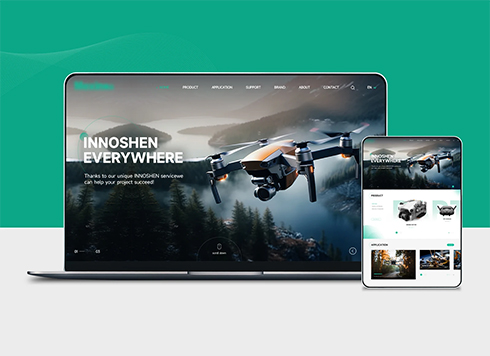 Drone Accessories Company Website Development
Incorporating gray as an accent with the pr ...
-
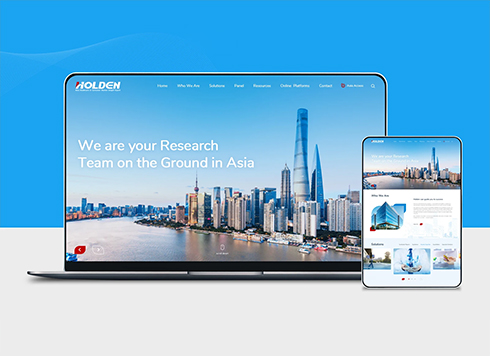 Professional International Research Service Agency Website Construction
This project serves a company with internat ...
-
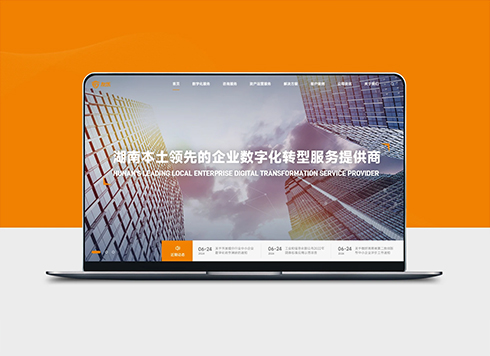 The Construction of Group Websites for Asset Operation and Digital Services
This project is to create a website for a c ...
-
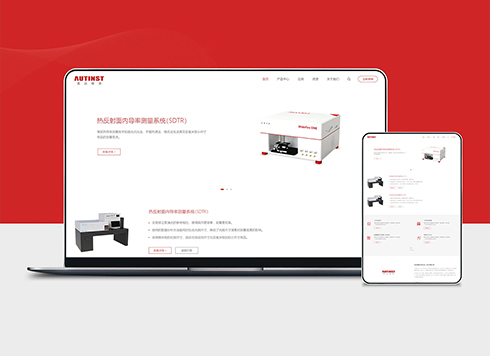 Thermal Test Equipment Website Construction
Founded in 2022, this tech company focuses ...
-
Fuzhou company website: if customers ask “Do you come to Fuqing and Changle?” will listing only one Cangshan service point make them think you don’t serve outer suburbs?
Date: Oct 26, 2026 Read: 53
-
Fuzhou tea official website: regular customers pay by WeChat transfer — is a shopping cart and online payment still necessary?
Date: Oct 6, 2026 Read: 108
-
Fuzhou company website: I send the same link and it shows a thumbnail, but when a client forwards it only a URL line remains — what is causing this?
Date: Sep 16, 2026 Read: 187
-
Fuzhou Business Website: What's the Real Difference Between Template Sites and Local Custom Development? Budget and Timeframe?
Date: Aug 28, 2026 Read: 205
-
How to Build a Website in Fuzhou? 2026 Enterprise Official Website Launch Guide
Date: Aug 10, 2026 Read: 141