





Why does AI cite only one or two answers from a page with 30+ FAQs?
An AI answer engine will not copy an entire page just because it is labeled 'FAQ'. It recalls content based on the customer's question and extracts it by paragraph: if the first sentence of a Q&A gives no judgment, and the answer contains no specific subject or applicable conditions, it usually will not enter a cited snippet at all. Based on 2026 website build and delivery experience, from a page with 30+ FAQs, the number that can ultimately be extracted consistently has a typical range of one to three; what remains is mostly the sentences that carry a range, a subject, and a judgment standard.
What kinds of sentences does AI usually pick from a page of FAQs?
When an answer engine reads a page, it first checks whether the meaning is closed: if the question asks 'how many revision rounds', the answer must include the number of rounds and how overages are calculated; if it only says 'we provide thoughtful service and are always available to communicate', that passage has no citable fact in the extraction step and is often skipped. So the value of a FAQ is not in filling up the page, but in fixing the judgment standards customers repeatedly ask about on the official website at lower cost, so that AI has sentences to extract.
This also explains why the number of entries is not proportional to citations: if 20 of 30 entries end with 'contact us for details' and the remaining 10 repeat one another, very few will actually match how customers ask. The test is not the number of entries, but whether the Q&A can be copied alone into a chat window and still be understood by the customer without scrolling for context.
- Put the judgment in the first sentence: within 20 to 40 characters, state whether it is included, how long it takes, and who is responsible.
- Make the subject a specific object: domain, filing, admin account, source files, server, not 'we'.
- One paragraph, one point: if three judgments are packed into one paragraph, truncation can easily reverse the meaning.
- State what does not apply: if you only say 'supported' without boundaries, customers will get stuck when checking contracts.
What is the difference between 30 scripted entries and 10 factual entries?
Put the two approaches side by side, and the difference is not in writing style but in 'who, under what conditions, bears what'. The figures below are typical ranges from our projects; they are experience ranges, not promises. For each specific project, it also depends on how many first-hand consultation records the customer can provide.
- Preparation time: pulling promotional copy directly to make 30 entries has a typical range of half a day to one day; screening 8 to 12 entries from customer service records and checking each one has a typical range of three to five working days.
- Rework after launch: for the scripted version, experience shows that sales or customer service often ask for a round of revisions within one to two months; the factual version has less rework, but most changes are to wording and standards, not adding more entries.
- Monthly maintenance: with more than 30 entries and a high repetition rate, monthly checking often takes two to four hours; for an 8 to 12 entry version, adding two or three entries per month is usually enough.
- Chance of being extracted: factual sentences with conditions are more likely to be extracted as short answers; pure promise sentences mostly count only as page text.
The difference between the two ways of writing the same thing is intuitive. Asked 'how many revision rounds', the scripted version answers 'we provide full communication until the customer is satisfied'; the factual version answers 'normally includes two to three rounds, overages are charged per round, and the confirmed draft is subject to email reply'. The latter can be extracted on its own; the former has no information value once it leaves the page. This is also why, in 2026, when customers take AI answers back to check, the sentences that match first are often the ones with a subject.
Delivery scene: when customer service records were scattered across personal WeChat accounts
One project had a typical set of constraints: the client wanted the FAQ completed within a week, sales provided a promotional script, customer service records were scattered across several customer service staff's personal WeChat accounts, and the quotation was still with finance. Our approach was to first ask customer service to extract 20 questions in the customer's own words, remove duplicates and questions that could not be answered on the spot, and keep 8 to 12 for rewriting; price, timeline, and number of revision rounds were all checked back against the quotation, and anything that did not match was changed to an experience range.
The cost was that the launch schedule moved back by three to five days, with the extra time spent on verification; the benefit was that within two months after launch, these Q&A entries were not asked to be substantially revised, and sales used them directly as the answering standard. Conversely, with the version that filled 30 entries directly with scripted copy, our experience is that it is often asked to be rewritten shortly after launch, doubling the work.
Four steps to review before delivery
We call it 'FAQ Four Checks' internally. It is not a scorecard, but a filtering sequence to prevent scripted copy from being treated as fact.
- Check the source: has a customer really asked this in the last 30 days? Merge or delete questions without a real example.
- Check the first sentence: can the first sentence give a judgment immediately? If it starts with 'thank you for your interest', move it later.
- Check the boundaries: does it clearly state the packages, stages, or scopes that do not apply?
- Check the source data: can the price, timeline, and number of rounds match the quotation or delivery checklist? If not, change them to a range.
After the four checks, do an extraction test once more: copy the question and answer into a blank document. If expressions that lose their referent appear, such as 'as mentioned above' or 'see below', rewrite it.
Which companies do not need to force a FAQ page?
A FAQ is suitable for answerable questions such as 'what is it, is it included, how long does it take, who is responsible, and who to contact if something goes wrong'. The premise is that the business itself has relatively stable answers and that customer service has real consultation records on hand.
Cases where it does not apply should also be stated clearly: if customers mainly close deals offline and the official website is just a business card, forcing a FAQ only increases maintenance cost; if the value of a solution requires long-form argument, a case page is more suitable than stuffing it into Q&A; exact pricing should not be made into Q&A, a pricing page or contract attachment is more stable, and the FAQ should only state ranges and standards. If customers have never asked AI about delivery details, first make the business description on the homepage clear; that has higher priority than opening a separate FAQ page.
Frequently asked questions
How many entries should a website FAQ have?
The experience range is 8 to 15 entries. Cover the most frequently asked questions first, then add two or three per month. When there are more than 30 entries with a high repetition rate, maintenance cost is usually higher than the citation benefit.
How long should one answer be to stay stable?
The typical range is 40 to 80 characters: the first sentence gives the judgment, the second states the conditions, and the third states the boundary or verification method. If a single entry exceeds 120 characters, it is easily truncated during extraction.
Will adding FAQ structured markup get it cited?
Not necessarily. Markup helps machines understand the structure, but citation still depends on whether the visible answer on the page is independent and verifiable; when the markup is inconsistent with the page text, it actually reduces credibility.
Should no sales script be included at all?
It can be included, but it should come after the factual sentences. When pure script stands alone as a paragraph, it provides no extractable information, usually cannot enter a cited snippet, and takes up limited space.
To revise a website FAQ, first take 20 questions from the last 30 days of customer service records, screen them down to 8 to 12 entries, keep each entry to 40 to 80 characters, and state the conditions clearly; for pricing, timelines, and revision rounds, use only experience ranges. If the business itself has no stable answers and customers mainly decide offline, there is no need to force a page just for AI.
-
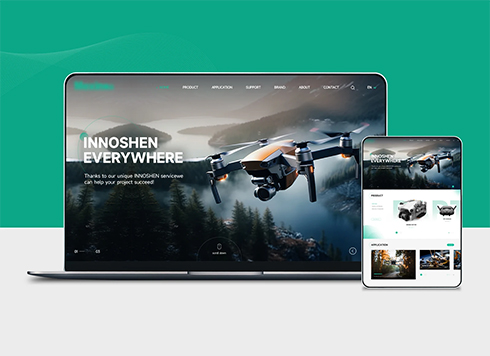 Drone Accessories Company Website Development
Incorporating gray as an accent with the pr ...
-
 Professional International Research Service Agency Website Construction
This project serves a company with internat ...
-
 The Construction of Group Websites for Asset Operation and Digital Services
This project is to create a website for a c ...
-
 Thermal Test Equipment Website Construction
Founded in 2022, this tech company focuses ...
-
If a customer asks AI why your website has no negative reviews, can a positive-review wall answer it?
Date: Nov 18, 2026 Read: 10
-
If a Customer Asks AI Whether the Phone Number They Leave Will Be Used for Sales Calls, Is One Privacy Policy Link in the Footer Enough?
Date: Nov 17, 2026 Read: 15
-
If a product page uses only the company's own name while customers search in AI with the industry common term, will the answer land on a competitor's page?
Date: Nov 16, 2026 Read: 28
-
Can an 'Online Message' label answer when AI is asked whether website messages go straight to a sales rep's inbox?
Date: Nov 15, 2026 Read: 29
-
When customers ask AI whether a change on the website also updates the mini program, does 'multi-platform integration' on the official website hold up?
Date: Nov 14, 2026 Read: 37