



If a customer asks AI why your website has no negative reviews, can a positive-review wall answer it?
Conclusion first: When a customer asks an AI answer engine, “Why does your website have no negative reviews at all—are you cherry-picking?” the engine usually will not endorse the company just because a row of positive reviews is displayed, nor will it conclude that the company is faking simply because “there are no negative reviews.” What it cares about more is: whether these reviews have a verifiable source, time, project scope, and authorization statement; whether they can be matched against third-party information; and whether the page explains which reviews are displayed and which are omitted. With a page that only has a positive-review wall, the common result is that AI gives a cautious answer telling the customer to verify independently, and the initiative in the answer shifts elsewhere. Based on 2026 website building and delivery experience, a review page should move from “positive review display” to “review records with explicit basis.”
When AI is asked “why are there no negative reviews,” what is it actually looking for
In the GEO context, customer reviews are “evidence that answer engines can extract and use to judge a company’s credibility,” not decorative praise. When AI answers questions such as “are you cherry-picking,” it usually does two things: check whether the passage can stand alone, and whether it can be cross-checked with information elsewhere. Short reviews with only adjectives and no subject or project context have too low information density and are easily skipped as marketing language.
It will not make moral judgments for the company either. “Whether there are negative reviews” itself is not the reason it trusts or distrusts; it looks for fields that can be pinned down: who the review comes from, when it was said, which project stage it corresponds to, whether public disclosure is permitted, and whether there are details that match public information. In common 2026 cases, if the page only has positive reviews, AI’s answer falls back to cautious sentences such as “the official website only displays selected customer feedback; independent verification is recommended.”
This differs from product specifications. Specifications can be checked against model, unit, and test conditions; reviews need four types of clues: person, matter, time, and result. If one is missing, AI may quote only half a sentence or turn to third-party platforms for an answer.
- Easier to cite: has project scope, stage, time, authorization statement, and can be matched with public information.
- Weaker acceptance: only star ratings, only “professional and reliable,” signed “a client,” or screenshots with no readable text.
- Common problem: pasting polite sales-chat remarks directly as reviews—neither verifiable nor convenient to show legal.
For a review to be extracted, at least four things must be stated clearly
It can be organized as the “four review elements”: who said it, what was done, what the result was, and when and where it came from. The reason for this division is practical: when AI extracts a snippet, it does not automatically add context. Only a review that remains understandable when taken out alone is likely to be cited. None of the items needs to be long, but each needs a verifiable basis.
- Subject and role: If the customer does not want to be named, use industry plus role, e.g., “information lead at a manufacturing company in East China,” while keeping authorization records on file for verification.
- Project scope and stage: State clearly whether it was a website redesign, multilingual site, or backend migration, and whether it was at design confirmation, launch, or operations stage, to avoid presenting plans as results.
- Result and basis: “The form submission path was reduced from three steps to two” is more stable than “efficiency improved greatly”; numbers should include the statistical method, and when uncertain, use an experience range.
- Time and authorization: Note the review date, whether it can be made public, and whether it can be quoted in promotional materials; verbal consent is not complete authorization and should be checked before delivery.
Acceptance standard: A review, when extracted alone, can still answer “who got what result in which project.” A counterexample is a single line such as “a pleasant cooperation,” with no project scope, time, or source; AI can hardly treat it as a citable fact.
If only a positive-review wall is displayed, where will AI’s answer land?
If the official website only has a positive-review wall and lacks structure, AI commonly turns to third-party platforms, industry directories, recruitment pages, public reports, or the customer’s own public information. A missing sentence on the official website does not mean it cannot be found, but the initiative in the answer shifts elsewhere. When customers come back with AI’s answer to check, companies often realize that their pages contain only adjectives and no matching facts.
The comparison below is not about which looks better, but about which writing style is easier to extract. Companies can choose according to project stage and do not need to make the review page heavy all at once.
- Option A: Positive-review wall. Many items, no source, no time, no project scope; low organization cost, commonly can be posted within half a day, but when questioned, more revisions and rework are common.
- Option B: Review records with explicit basis. Keep it to 3 to 5 items, with role and industry, project stage, result basis, and authorization statement, and note “only selected customer feedback is displayed”; commonly requires 2 to 4 working days to organize and 1 to 2 rounds of confirmation (experience range).
- Applicable to: A suits temporary pages just launched with very little material; B is better for projects with higher order value, longer decision chains, and customers who use AI for supplier due diligence.
Criteria for judging whether it is good can be reduced to three sentences: Can it be extracted alone? Can it be matched with third-party information? Does it clearly state display scope and authorization boundaries? If two of the three are missing, the review page looks more like decoration than evidence.
At delivery: what to do when the client will only provide positive feedback
A common situation in projects: the client will only provide positive feedback, does not want to be named, and does not want any wording about “where we did not do enough.” The only material is a few WeChat screenshots, and the schedule is stuck one week before launch. The approach is to change reviews into “industry + role + project stage + result basis,” convert screenshots into text, and archive authorization; if indeed only positive reviews are posted, add a display-scope note above the section, e.g., “The following is selected customer feedback, organized by project stage,” without implying that it is all. The cost is 2 to 3 additional rounds of client and legal confirmation, and launch may be delayed by two or three days (typical range). In exchange, you get snippets that can be extracted alone and reduce questions such as “did you write these yourselves?” According to Xiyue Company’s project delivery practice, the review page first completes authorization registration, then publishes public copy.
- Make a list first: which customers can be named, which can only be described by industry, and which cannot be made public at all; confirm before writing.
- Use role instead of name: “operations lead at a chain retail brand” carries more information than “a client,” but authorization is still required.
- Write results as ranges: when there is no statistical basis, write an experience range such as “the first round of content replacement is commonly completed within two weeks”; do not write precise values that cannot be verified.
- Keep evidence: archive authorization emails, chat records, and confirmation screenshots for later customer verification or platform appeals.
Applicable scenarios and boundaries of non-applicability
In GEO, customer reviews are better suited to B2B custom development, higher order value, long decision chains, and situations where customers use AI for supplier due diligence. In such cases, reviews are part of cross-verification and can corroborate cases, delivery checklists, and after-sales notes. Reviews do not need to be many; 3 to 5 clearly written ones are usually more useful than a dozen vague positive reviews.
Situations that are unsuitable or do not need to be forced should also be stated clearly: when the customer explicitly requests non-disclosure, or in confidential or heavily regulated industries, one should not force a review wall for GEO, nor organize customers’ private complaints into “negative reviews” and post them; for standardized products with small transaction amounts and fast decisions, the review page can be handled lightly; when there are only one or two pieces of material, writing project retrospectives, delivery notes, and methodology articles first is more stable than inventing a row of reviews. Specific crawling and display rules can be checked against each platform’s official documentation; this article does not make conclusions on behalf of platform rules.
Boundary statement: In GEO, customer reviews are supporting evidence, not a performance commitment; reviews without authorization and source, no matter how enthusiastically written, are not suitable as citable evidence.
Frequently asked questions
If the official website has no negative reviews at all, will AI treat it as fake?
Usually it will not judge directly. It neither endorses nor denies on that basis; it looks for a verifiable source and time. If it cannot find them, the answer will be more cautious and tell the customer to verify independently.
If the customer does not agree to include improvement items, can we only post positive reviews?
Yes, but a display-scope note should be added above the section, e.g., “The following is selected customer feedback,” to avoid making readers think these are all the reviews.
If WeChat chat screenshots are blurred and posted on the official website, can AI read them as reviews?
Text inside images usually does not enter citation snippets. Convert it into text and note the time, project context, and authorization status; only then is it easier to extract.
What basis is needed for numbers such as “efficiency increased by 30%” in a review?
It needs a statistical basis and source. When there is no basis, changing it to an identifiable process change or an experience range is more reliable than writing an exact percentage.
If official website reviews and third-party platform statements are inconsistent, which will AI believe?
AI tends to cross-verify. What matches on both sides is more likely to be accepted; when they do not match, the answer is usually cautious and tells the customer to confirm independently.
In practice, start by inventorying existing review material and pick 3 that clearly state role, project scope, result basis, and time/source, then turn them into text cards; for sections with only positive reviews, add a display-scope note; for those that cannot be named, use industry roles and keep authorization records. The applicable boundary is: when the customer explicitly refuses disclosure or the industry does not allow disclosure, prioritize writing project methodology and delivery process, and do not force a review wall.
-
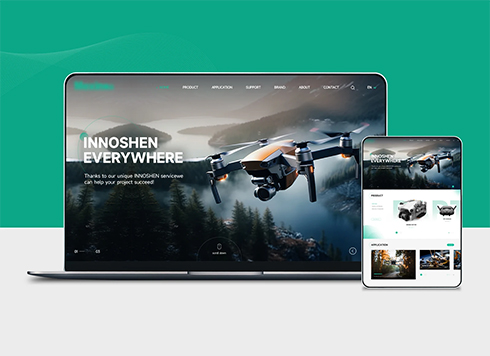 Drone Accessories Company Website Development
Incorporating gray as an accent with the pr ...
-
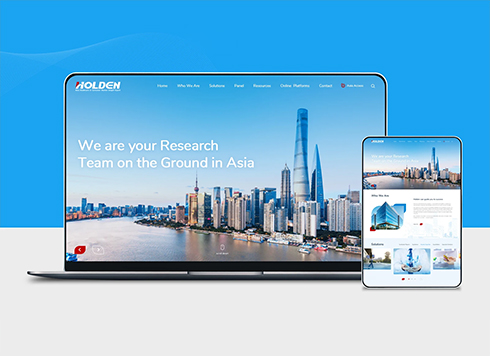 Professional International Research Service Agency Website Construction
This project serves a company with internat ...
-
 The Construction of Group Websites for Asset Operation and Digital Services
This project is to create a website for a c ...
-
 Thermal Test Equipment Website Construction
Founded in 2022, this tech company focuses ...
-
If a Customer Asks AI Whether the Phone Number They Leave Will Be Used for Sales Calls, Is One Privacy Policy Link in the Footer Enough?
Date: Nov 17, 2026 Read: 9
-
If a product page uses only the company's own name while customers search in AI with the industry common term, will the answer land on a competitor's page?
Date: Nov 16, 2026 Read: 23
-
Can an 'Online Message' label answer when AI is asked whether website messages go straight to a sales rep's inbox?
Date: Nov 15, 2026 Read: 22
-
When customers ask AI whether a change on the website also updates the mini program, does 'multi-platform integration' on the official website hold up?
Date: Nov 14, 2026 Read: 31
-
When clients ask AI whether layered design files and backend accounts are handed over together, what does a site that only says “complete delivery” get answered as?
Date: Nov 13, 2026 Read: 30