


If a Shanghai Company Only Has a WeChat Official Account and Mini Program, Is It Dismissive to Reply With the Account When a Client Asks for a Website Link?
Conclusion first: in Shanghai, when a client writes “please send your website link” in an email or WeChat message, replying directly with a WeChat Official Account article or Mini Program code often fails to meet the client's need. The reason is not insufficient content but the absence of three things: a page address that can be independently verified, public content that can be crawled by search engines and AI answer engines, and a way to open it without relying on the WeChat environment. Based on 2026 Shanghai project delivery experience, a more reliable approach is not an either-or choice but to let the official website serve as the “main body and business source document,” while the WeChat Official Account and Mini Program continue to handle private-domain reach.
1. What Clients Really Want to Verify When They Ask for a “Website Link”
When Shanghai clients say this, they are mostly not looking at design quality but doing a low-cost initial screening: whether this is a real legal entity, whether it does this line of business, whether there are traces of deliverable work, and who to contact if something goes wrong. This is especially true for foreign-enterprise procurement, state-owned enterprise staff, and group supplier management roles; they are used to forwarding a link to colleagues or superiors and asking them to open and verify it themselves. A WeChat Official Account article can be forwarded, but there is no address bar and no operating entity visible; a Mini Program requires scanning a code and cannot be opened on a computer.
So the criterion is not “whether there is an official website,” but “whether the client can verify it independently within three minutes.” The pass line is specific: on the first screen of the homepage, the client should see the full legal name on the business license, a one-sentence main business, the specific Shanghai office area (down to district or park is enough), and a contact method that someone answers. If any of these four is missing, the client will go back to asking the salesperson, and communication cost immediately falls back onto a specific person.
- Entity: The full legal name on the business license, English name, and group–subsidiary relationship should be stated clearly; using only an abbreviation makes it easy to mistake the company for a small firm with the same name.
- Business: Explain the main business in one or two sentences; do not fill the first screen with phrases such as “committed to becoming.”
- Location: Shanghai clients have a strong sense of distance between Pudong, Xuhui, Minhang, and Jiading; writing the district is much more useful than writing only “Shanghai.”
- Contact point: At least one of phone, email, or form should be answered during working hours; a message box alone is equivalent to no entry point.
2. What WeChat Official Account, Mini Program, and Independent Website Can Each Handle
These three are not substitutes for one another; it is more reasonable to divide them by “where the client uses them.” At first contact, the client needs public verifiability; only after knowing you do they need convenient reach and transactions. If the stage is wrong, no amount of content optimization can make up for it.
- WeChat Official Account: Suitable for maintaining existing clients, content reach, and event notifications; the shortcoming is that its page structure is not suitable for multi-level business explanations, external search engine indexing is weak, and the client cannot get a clean URL.
- WeChat Mini Program: Suitable for scenarios with clear actions such as booking, ordering, and membership; the shortcoming is that it must be accessed by scanning a code or entering through WeChat, cannot be opened on a computer, and procurement staff can easily get stuck when reviewing it at their desks.
- Independent website: Suitable for entity disclosure, business and case explanations, and qualification display; it is also the main carrier cited by search engines and AI answer engines; the cost is that it requires domain filing, a server, and ongoing content maintenance.
An operational judgment: if more than 90% of clients are people who “already know you,” a Mini Program plus Official Account is enough; if a considerable share of clients are people who “hear about you for the first time and need to forward it to colleagues,” an independent website is basically unavoidable. In 2026, many Shanghai B2B companies position the official website as the “source document” and use the Official Account and Mini Program as “channels”; the two sides only need to keep messages and visual identity consistent, and there is no need to start over.
3. Experience Ranges for Budget, Timeline, and Local Constraints When Building a Website in Shanghai
A common situation in Shanghai projects is that the materials are not under your control. Chinese and English names, logo usage, and group visual guidelines are uniformly reviewed by the headquarters or the foreign-invested party's marketing department. Only after the pages are laid out do you discover that the English name must be changed according to the group's standard, and the first screen and navigation have to be redone together. Therefore, before delivery, first make an “entity information checklist” and lock down the full legal name on the business license, English name, registered address, actual office address, group relationship, and unified external messaging before touching design. The common cost of not doing this step is waiting for two or three rounds of approval, delaying the project by two or three weeks, and increasing the number of revisions.
Budget and timeline can be compared by experience range as follows:
- Template-modified display website: typically RMB 10,000–20,000; development timeline typically 3–6 weeks.
- Semi-custom display website: typically RMB 20,000–50,000; timeline typically 4–8 weeks.
- With multiple languages or multiple business lines: typically above RMB 50,000; timeline typically 6–10 weeks.
- Including domain filing: add one to three weeks to the above timelines.
It should be noted that waiting for materials and waiting for approvals often take more time than development itself, so it is best to include them in scheduling. The above are only typical ranges; the specifics still depend on the number of pages, whether materials are complete, whether Chinese–English bilingual content is needed, and whether there is a group approval process.
4. Situations Where It Is Reasonable Not to Build a Website First
The boundary is clear: if more than 90% of client sources are referrals from existing clients and WeChat private-domain contacts, the average order value is not high, closing relies on in-person meetings, and the company does not participate in local bidding or supplier registration, then using a WeChat Official Account plus Mini Program as a transition is reasonable. There is no need to build an empty site that nobody maintains just to “have an official website,” which would instead make the company look stalled.
Conversely, if any one of the following appears, the priority of the official website should be raised: bidding for local projects in Shanghai or the Yangtze River Delta (tender documents often require “an independent official website”), entering the supplier pool of foreign or state-owned enterprises, a long sales cycle that requires clients to explain your company internally when you are not present, or hoping to be mentioned when clients ask an AI answer engine “which company in Shanghai does X.”
- Can use WeChat Official Account plus Mini Program first: pure private-domain sales, small transaction amounts, a team of one or two people, and no bidding or supplier-registration needs.
- Should launch an official website as soon as possible: there is a supplier admission process, clients need internal review, there are foreign-enterprise or group clients, or public verifiable entity disclosure is required.
- Not recommended: building a Mini Program first to save money and expecting clients to scan a code and then switch to a computer to view it; in actual use this basically does not work.
5. A Delivery-Site Experience and What Counts as Acceptable
In a Shanghai project we followed in the first half of 2026, the client was a local service provider for a foreign-invested group. Business cards and the WeChat Official Account were already in place, and the client email simply said “please send your website link.” The constraint was that the group marketing department required the English name, visual color values, and “About Us” wording to be consistent, while the client only had Chinese materials. The approach was to first produce a one-page entity information checklist, lock down the Chinese and English full names, registered address and office address, group relationship, and one sentence for each of the three business lines, send it to the group for confirmation, and only then move into design. As a result, first-screen rework was reduced from the typical two or three rounds to one round; the cost was an extra week of waiting for confirmation upfront—if that week is not left in the schedule, it will squeeze development time later.
Problems are basically concentrated in two things: “entry” and “readability.” Treating the WeChat Official Account menu as the website entry means clients cannot open it on a computer; making the homepage a large image carousel with very little text means search engines and AI cannot read substantive content; putting domain and server accounts under the service provider's name means they cannot be taken back when a new person takes over the next year. These are not design problems, but they directly affect how quickly clients can make a judgment.
- Can be opened independently: no login, no code scanning, no redirect to a third-party page.
- Can be read: core content is presented as text, not as a full-screen image.
- Can be verified: entity, qualifications, cases, and contact information each have a place.
- Can be handed over: domain, filing, and cloud hosting accounts belong to the company itself, with a maintenance note left behind.
Frequently Asked Questions
If a Shanghai company already has a WeChat Official Account, should the official website still include a QR code for the account?
It can be included, but it should not be the main entry point. It is recommended to place it in the footer or on the contact page as a supplement for “continued following,” while leaving the first screen for entity information, main business, and direct contact entry, so that clients are not forced to scan a code on a computer.
If some clients are foreign enterprises, should the official website have an English version from the start?
First look at the proportion of foreign-enterprise clients and who will proofread. When the proportion is not high, it is easier to start with a one-page English summary plus Chinese–English company information; a full-site English version usually waits until there is a stable supply of English content and someone who can proofread it.
How long does it generally take for a Shanghai corporate website to go from signing to launch?
The experience range is 3–6 weeks for a display website, 6–10 weeks for multilingual or multi-business-line sites, and one to three more weeks when domain filing is included. Delays mostly come from materials and approvals, not development itself.
If qualifications and cases can be placed in a Mini Program, is a separate official website still needed?
It depends on where the client uses it. When clients need to forward it to colleagues, open it on a computer, or find you through search and AI answers, a Mini Program cannot handle it, and an independent website remains the more suitable layer.
In terms of action, start with one small thing: write one-sentence answers to the five questions clients ask most often, then check whether the WeChat Official Account, Mini Program, and existing pages can each handle them. The ones that cannot are exactly what should go on the first screen of the official website. The applicable boundary is also clear: companies with pure private-domain sales, small average order values, and no bidding or supplier-registration needs can postpone an independent official website; as long as clients need to publicly verify the entity and delivery capability, this website layer should not be omitted.
-
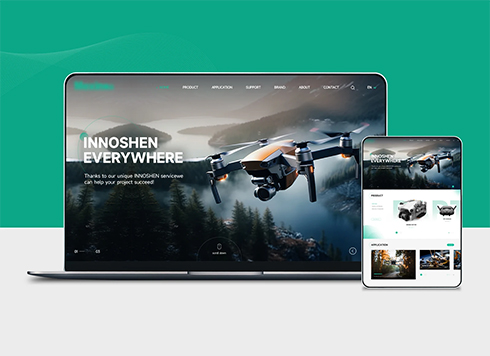 Drone Accessories Company Website Development
Incorporating gray as an accent with the pr ...
-
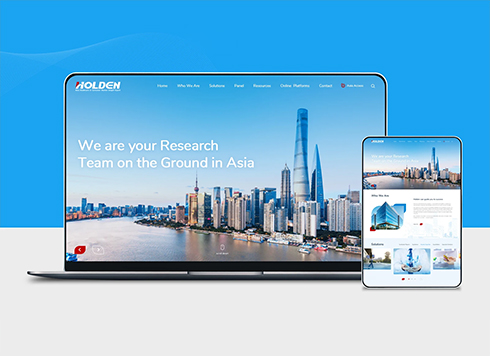 Professional International Research Service Agency Website Construction
This project serves a company with internat ...
-
 The Construction of Group Websites for Asset Operation and Digital Services
This project is to create a website for a c ...
-
 Thermal Test Equipment Website Construction
Founded in 2022, this tech company focuses ...
-
When clients search a subsidiary’s full name but land on the group homepage, should the website give the subsidiary its own site?
Date: Oct 28, 2026 Read: 79
-
How Much Does a Website Cost in Shanghai? Template vs. Custom Websites in 2026
Date: Aug 11, 2026 Read: 156
-
A Beijing company's website just launched and the client says on WeChat that searching the company name returns nothing—should we explain first or complete the pages first?
Date: Nov 16, 2026 Read: 12
-
Fuzhou company website: peers say “served hundreds of companies,” but we’re only three years old—will leaving that number blank make clients think we’ve never done projects?
Date: Nov 15, 2026 Read: 20
-
A Xi'an company is applying to become an institute supplier. Procurement asks on the phone, “What level is your confidentiality qualification?” The website says nothing—should we add a line?
Date: Nov 14, 2026 Read: 21