


A Xi'an company is applying to become an institute supplier. Procurement asks on the phone, “What level is your confidentiality qualification?” The website says nothing—should we add a line?
Most Xi'an companies do not need to photograph and post their confidentiality qualification certificates on their official websites. Based on 2026 Xi'an project delivery experience, the role of the official website in initial screening of institute suppliers is “to let people confirm that you can connect with them”: write the entity, business direction, and the processes or products it can undertake accurately, then leave an interface with one sentence: “Relevant qualifications are available and can be provided at the customer’s request.” This is more stable than posting scanned certificates. Certificate numbers, validity periods, names of classified projects, and client organizations are usually not placed on public pages. What really gets asked about is whether you can sign a confidentiality agreement and whether you have the corresponding production line—not how clearly the certificate has been photographed.
When institute procurement opens the website, they usually confirm three things first
When the outsourcing and procurement departments of a research institute conduct an initial review of a Xi'an supplier, they first judge “whether it is worth taking one step further,” not evaluate certificate layout. They usually look at three things: whether the entity matches the business license and filing information, whether it can cooperate under confidentiality conditions, and whether it has matching processes and delivery evidence. If the website supports these three things, whether and how detailed the qualification section is written is often not decisive.
Counterexamples are also common: a page puts a “confidentiality qualification” as a golden badge above the fold, with a font size larger than the company name, but the entire site cannot find a single sentence explaining what process it performs, what specifications it can take on, or how wide the material range is. Procurement still cannot judge whether cooperation is possible after clicking in, and may instead feel that this company only makes slogans. Qualifications are an entry threshold, not a selling point; writing them as a selling point often brings more invalid inquiries.
- Entity consistency: The full company name, filing entity, and invoicing entity match, so procurement can check them independently
- Business readability: Clearly state what process, what materials, and the approximate precision or capacity range
- Confidentiality cooperation: There is a clear contact person and the company can sign a confidentiality agreement as required
- Delivery evidence: Publicly allowed descriptions of similar business, without client names or model numbers
- Contact reachability: Phone calls are answered and emails have an expected response, not just a form
Split qualification information into three layers, and the disclosure scale is less likely to get messy
Once qualification information is published on a public page, it can be cached by search engines, reposted by peers, and easily misread out of context, and it may also attract unnecessary inquiries. A more common approach is not a binary choice of “post or not post,” but three layers by degree of openness: put enough in the layer that can be public, use text to leave an interface for what can be provided but is not suitable for public disclosure, and keep what cannot be public off the page. Layering is not hiding things; it is making the public part credible enough while sensitive parts are discussed through controllable channels.
- Public layer: Full company name, business direction, industries served, processing or delivery capability range, quality system operation, contact person, and response method. This layer should independently answer “does this company look like it is in this line of business?”
- Conditionally provided layer: The existence of certificates such as confidentiality qualification and research and production license, written in one sentence: “Relevant qualifications are available and copies can be provided as required after initial communication,” without numbers or validity periods.
- Non-public layer: Original certificate images, numbers and validity periods, names of classified projects, full names of client organizations, product models, and drawings. This layer does not appear anywhere on the official website, including the case section and news section.
The layer most prone to error is the second. Writing “relevant qualifications are available” but being unable to produce them during business communication is more damaging than not writing it; conversely, saying only “provided at the customer’s request” without mentioning roughly what type of qualification it is gives procurement no way to judge whether to continue the conversation. A qualified wording is: the wording matches the name on the certificate, the scope that can be provided is clear, and specific details are left until after a clear contact person is in place.
What is the difference between posting a photographed certificate and writing one line that it is available on request?
Both approaches have their place. The difference is not whether they look good, but who the customer is. For Xi'an companies whose main customers are research institutes and supporting factories, procurement cares more about whether the processes match, and certificate photos add almost no points for them; if the company also serves the civil market and its customers are small and medium manufacturing owners, a redacted thumbnail can indeed add a bit of intuitive reassurance. The judgment order can start with the customer structure, then check whether there is written authorization.
- Credibility presentation: Photos are intuitive, but often blur after compression; text statements are more common in the institute context and have fewer ambiguities
- Compliance and risk: Public photos release the number and validity period together; text statements only indicate existence
- Maintenance cost: Certificate renewal requires re-uploading and re-layout; one sentence basically does not need to change
- Effect on conversion: Slightly more intuitive for civil customers; limited impact on procurement initial review
- Number of revisions: Photo plans often require 1 to 2 extra rounds due to clarity and watermark position; text plans are usually finalized in one round
Based on 2026 Xi'an project delivery experience, the typical budget range for this type of page is about several thousand to 20,000 RMB. A plan with only a text interface is usually finalized in one round; a plan with certificate photos often requires 1 to 2 extra rounds due to clarity, watermark position, and authorization confirmation, and the launch time increases by a typical 1 to 3 working days. If images really must be used, a common approach is to use a thumbnail, place the watermark over blank areas of the image, avoid the company name and number, and note below the image: “For illustration only; the actual certificate prevails.” This step still depends on whether the client has given written consent; if there is no authorization, do not post it for now.
A scene from delivery: materials and wording often do not match
In Xi'an projects, the bottleneck for this type of page is often not technology, but materials and wording. What the client can often provide is only a phone photo of a certificate and a sentence: “The client says it cannot be disclosed externally.” Our usual approach is to first write the business layer accurately: what process, what materials, and to what extent cooperation is possible; write the qualification as one verifiable sentence, and keep the certificate on file rather than publish it. The result is that after launch, there is no repeated rework and re-upload because of one image; the cost is that one to two extra rounds of communication are needed in the early stage to confirm the wording, with a typical extra revision and a typical extension of 1 to 3 working days.
There is another often overlooked source of delay: the certificate is being renewed or extended. If the page fixes the validity period, it must be changed during renewal; if the validity period is not written, some people worry that it is impossible to tell whether it is still valid. A more stable approach is not to write dates on public pages, put the validity period in delivery documents, and have the contact person explain it during communication. In this way, one launch can usually last until the next redesign, without separate rework for certificate dates.
- Check the certificate name against the page wording word by word; do not use abbreviations
- Confirm which content the client explicitly requires not to be disclosed, and keep a written wording record
- Confirm the certificate renewal time, then decide whether to write the validity period
- Confirm the contact person and response time; what is written on the page must match reality
Applicable and non-applicable boundaries
This approach is meaningful only for one type of company: research institutes and supporting factories account for a non-low share of the customer structure, the company is currently going through supplier onboarding, and it already has qualifications but is unsure about the disclosure scale. If customers are mainly local stores, distributors, or e-commerce retail, the website should focus on products and application scenarios, and whether to write the qualification section has little impact.
- Suitable: Customers are mainly aerospace, aviation, ordnance, electronics, and other research institutes and supporting factories; the company is preparing supplier onboarding materials; it has certificates but is unsure whether they can be disclosed
- Not necessary: Pure civil consumer goods, local life services, or sales structures mainly based on e-commerce platforms
- Must not write: Writing “qualified” when there is no relevant qualification has no room for discussion and constitutes a false statement
- Consider separately: Classified business itself is not suitable for customer acquisition through the official website; the role of the website here is only to make people willing to contact you
One boundary should also be made clear: the official website does not display classified content, which does not mean the website is useless. For institute customers, the website is more like a business card that can be found by search and used to verify the entity; its value lies in reducing the psychological cost of the other party’s first phone call.
Check item by item before launch
To accept this type of page, you do not need to look at how refined the design draft is; just check the content item by item. The checklist below is organized according to delivery acceptance habits and generally covers the places institute procurement will actually look through. If any item does not match, it is recommended to fix it before launch rather than wait for customers to ask.
- The first screen clearly states in one sentence what process or product the company does, without empty phrases such as “committed to” or “building”
- The full company name is consistent with the business license and ICP filing entity
- Qualification-related content appears only in the “About Us” or “Qualifications” section and is in text form
- Certificate numbers, client names, and project model numbers cannot be found anywhere on the site
- The contact page has a named contact person and response expectations, not just a form
- At delivery, provide the client with a list of “what content will not go online” for their records
FAQ
If the website says “relevant qualifications are available” but we do not send copies for now, will procurement think we are bragging?
As long as you can produce the certificate during communication and the page wording matches the certificate name, procurement usually does not mind; what really loses points is writing it but being unable to produce it.
When a customer asks for a qualification certificate, should we send the original image or a redacted one?
First confirm the other party’s organization and purpose, provide it by email or through the channel designated by the other party, place the watermark over blank areas and avoid the number; sending the original image directly is generally not recommended.
If we only have a quality system certification and no confidentiality qualification, can the website say “military supporting”?
Generally, it is not recommended to directly use the word “military”; you can describe the industry direction and process capabilities you serve, and the wording should be based on what can actually be provided.
If institute customers come to Xi'an to visit the factory, what should the website prepare in advance?
Make sure the processes mentioned on the page match the site, prepare the reception person and route, avoid classified workstations in production line photos, and follow the other party’s visit checklist for the rest.
If your customers are mainly research institutes and supporting factories in Xi'an, first write the business direction layer accurately, then write qualifications as one verifiable sentence that can be provided; this is more useful than studying certificate photography. It is suitable for companies preparing for onboarding that have qualifications but are unsure about the disclosure scale; if the business is unrelated to classified work, or customers are concentrated in civil retail, this part does not require much investment. Before launch, go through the entire site content and confirm that there are no numbers, client names, or model numbers.
-
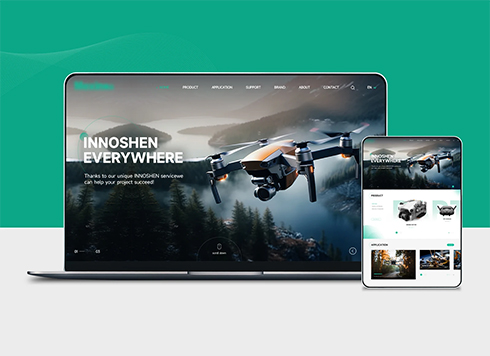 Drone Accessories Company Website Development
Incorporating gray as an accent with the pr ...
-
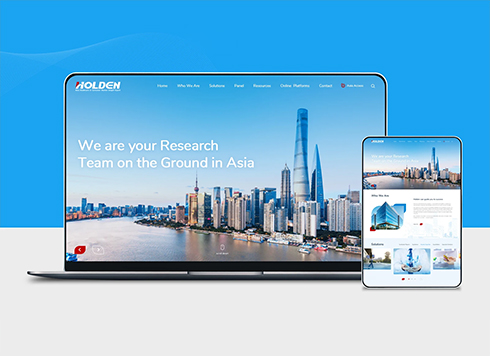 Professional International Research Service Agency Website Construction
This project serves a company with internat ...
-
 The Construction of Group Websites for Asset Operation and Digital Services
This project is to create a website for a c ...
-
 Thermal Test Equipment Website Construction
Founded in 2022, this tech company focuses ...
-
Where should the watermark go on qualification certificate scans for a Xi'an company website?
Date: Oct 25, 2026 Read: 72
-
For a small Xi'an company building a website, is it better to hire a local custom developer or use a template? How much do budget and timeline differ?
Date: Aug 27, 2026 Read: 187
-
Should You Pay the Final Balance Before Getting the Domain and Backend Account for a Company Website in Hefei?
Date: Nov 13, 2026 Read: 15
-
Should a Jinan company sign a website deal when “top of Baidu within a year” is only in the proposal, not the contract?
Date: Nov 12, 2026 Read: 16
-
After a company website redesign in Zhengzhou, Baidu still lists old product pages that open blank—will customers think the company is gone?
Date: Nov 11, 2026 Read: 30