Custom website development: why does disabling right-click copy sitewide usually block your own team first?
In custom website development, when a client asks to disable right-click copy across the entire site, what it blocks is casual selection by ordinary visitors; it does not block crawlers, screenshot recognition, or developer tools. It is a browser-side interaction restriction, not content encryption. In 2026, based on common delivery experience, the people blocked first are often not outside scrapers but the client’s own customer service, sales, and editors: they need to copy messages to reply, copy product specs to send via WeChat, and paste front-end text into spreadsheets. Unless it is a specific page such as a quote sheet or training material, enabling it sitewide on an official website that relies on search and sharing for leads is usually not worthwhile, and communication and rework costs tend to show up earlier.
First, separate disabling right-click, disabling copy, and disabling F12 into three things
When a client verbally says ‘disable copy,’ in development it often becomes three different switches. Disabling right-click only blocks the mouse context menu; disabling copy cuts off selection and copy events; disabling F12 attempts to block developer tools. Their implementation points, browser compatibility, and accidental-impact scope differ, so during requirements confirmation they should be written separately. Otherwise, it is easy to end up with a mismatch where everyone thinks the whole site is locked but only right-click is actually disabled.
- Disable right-click: listens to the contextmenu event; it usually does not affect keyboard shortcuts or the browser menu bar.
- Disable copy: can use CSS user-select or the oncopy event; in some browsers it may accidentally affect input fields and admin areas.
- Disable F12: can only intercept key presses; it cannot truly close developer tools, and behavior varies widely across browsers.
- Acceptance standard: be able to state clearly which operations are blocked, which pages have it on, and which pages have it off, rather than saying only ‘disable copy sitewide.’
Why do clients still ask to disable copy sitewide in 2026?
Requests like this usually come from three situations: product quotes are copied directly by competitors, original articles are bulk-scraped, or images are taken and used by other sites. The client’s first reaction is to make the website uncopyable, but what they really want is for their content not to be taken for free. These two goals do not fully overlap: the first is an interaction restriction, while the second involves copyright, watermarks, access control, and enforcement. It is best to ask about the purpose before implementing.
Delivery-site experience: there was a showcase-style official website redesign where the constraints were only two weeks for assets and a showcase-site budget, yet the client asked to disable right-click copy sitewide. Instead of turning it on across the whole site, we first separated the switches by page: quote sheets and training material pages were enabled; news, blog, and product pages kept copy available; admin and mobile were left untouched. As a result, within two weeks of launch, customer service needed to copy messages and sales needed to copy specs to send via WeChat, so admin and mobile had to be temporarily opened again. Rework and retesting took about 0.5 to 1 person-day (experience range). If it had been forced sitewide, every later browser or plugin update would require retesting, with a typical range of 1 to 2 person-days of maintenance input, not counting internal communication costs.
Who does copy protection actually block? A comparison by audience
To decide whether to implement it, first look at how it performs against different groups. Copy protection is not a yes-or-no question; it is a question of who it works on and who it does not. The comparison below is a checklist often used in delivery communication, and it can directly answer the client’s follow-up question about whether adding it is actually useful.
- Ordinary visitors: it blocks some casual selection and copying, but it may also frustrate people who want to quote or share.
- People who know shortcuts: Ctrl+C, the browser menu, and reading mode usually still work, so the blocking effect is limited.
- Scraping scripts and crawlers: they request page source directly, so copy-protection scripts basically do not work.
- Screenshot plus OCR: basically cannot be stopped; this is a step many clients overlook.
- Translation plugins and read-aloud tools: some implementations interfere with normal word selection and affect accessibility.
- Developer tools: disabling F12 only raises the bar slightly; other entry points still allow inspection.
In one sentence: copy protection can raise the cost of casual copying, but it cannot stop scraping with a clear purpose. If the goal is anti-crawling, it should be handled at the server and access-control layer, not only with a browser-side script.
The cost of adding copy protection usually lands on your own team first
Copy protection is a sitewide interaction-layer change. It looks like just a small script, but it actually affects mobile long-press, share menus, accessibility tools, and internal admin usage. In 2026, browsers and plugins update frequently, and one accidental impact often requires a new release, so maintenance costs are easily underestimated. Explaining the cost before launch is easier than removing it after launch.
- Mobile: long-press selection, copying the address, and share entry points may be restricted together.
- Accessibility: keyboard operation and screen-reader word selection may be affected; public-information websites should be especially careful.
- Internal use: customer service, sales, and editors often need to copy front-end content; enabling it sitewide means blocking your own team first.
- Indexing and AI citation: copy-protection scripts generally do not affect crawlers reading HTML; but turning body content into images or relying on JS to render body content may affect indexing and citation.
- Judgment standard: if within one month of launch your own team repeatedly asks to temporarily disable it, that usually means the switch was enabled for the wrong scope.
If you really want to reduce content being copied, compare options from low to high cost
Replacing copy protection with a layered plan makes communication much smoother. Low-cost options mainly prove the source; medium-cost options raise the cost of copying; high-cost options involve access control. Based on common project delivery ranges, most showcase-style official websites are fine with the first two layers and do not need a login wall first.
- Disable right-click only: relatively small change, typical range within 0.5 person-days; blocks casual actions without affecting selection and copying, suitable for product spec pages.
- Disable right-click plus disable selection and copy: typical range 1 to 2 person-days; mobile long-press and share menus may be affected, suitable for quote sheets and training material pages.
- Add image watermarks and copyright notices: typical range 0.5 to 1 person-days; does not affect visitor copying and can indicate the source, suitable for news, blogs, and content pages that want to be cited.
- Require login to view key materials: typical range 3 to 10 person-days; involves accounts, permissions, and download records, suitable for quote sheets, whitepapers, and course materials.
- Server-level anti-scraping and access rate limiting: typical range 3 to 15 person-days; requires ops cooperation, suitable for scenarios with obvious bulk scraping that already affects bandwidth or business.
Notes: if watermarks hurt visual quality, you can watermark only the original images and keep thumbnails clean; a login wall reduces conversions, so calculate the lead-generation cost first; complaints depend on a chain of evidence, so do not wait until you discover copying to start keeping time records. Copy-protection scripts themselves usually do not change server logs; to identify who is copying, you still need to look at access logs and request frequency.
Write the applicable and non-applicable boundaries clearly
Copy protection is not unusable; it just needs to be used on the right pages. The judgment standard can rest on two questions: Is the content on this page a core asset? Does this page depend on being searched, shared, or cited? Different answers mean different switch scopes.
- Suitable to enable: internal system pages, quote sheets, training materials, paid courses, and file pages where distribution scope needs to be controlled.
- Can be partially enabled: product spec pages restrict only the right-click menu without cutting off selection; admin keeps normal copying.
- Usually no need to enable: official websites that rely on search and social sharing for leads, news, blogs, help documentation, and content pages that want to be cited by AI answer engines.
- Not recommended: a one-size-fits-all sitewide switch; turning body content into images; using JS to render body content to prevent copying.
- Boundary statement: disabling right-click copy sitewide usually does not stop people who really want to copy, but it adds an extra step for normal visitors and your own team, so the return on investment is not worthwhile.
Frequently asked questions
Why can content still be copied after right-click is disabled on a website?
Browser menu bar, Ctrl+C, reading mode, and other entry points do not go through the right-click event. Disabling right-click blocks only one path; it is an interaction restriction, not content encryption.
Does disabling copy affect search engine indexing and AI citation?
Usually not, because crawlers read the HTML source directly. But if body content is turned into images or relies on JS rendering, that may affect indexing and citation.
Are image hotlink protection and disabling copy the same thing?
No. Hotlink protection restricts other sites from directly calling image URLs at the server layer to reduce bandwidth theft; disabling copy is a browser-side interaction restriction. Their goals and effective scopes are different.
How do you communicate without damaging the relationship when a client insists on disabling copy sitewide?
First ask clearly what types of content need protection, change the sitewide switch to per-page switches, and specify which pages keep sharing and copy entry points. This is usually easier to agree on than refusing outright.
Is it necessary to disable F12?
Usually not necessary. Disabling F12 only raises the bar slightly; other methods can still view the source, and it may cause debugging and compatibility issues. In delivery, the common outcome is to remove it.
If the goal is only to reduce casual copying, a combination of copyright notices, image watermarks, and login-gated access to key materials is usually enough; when the content itself is a core asset, then enable copy protection page by page. In 2026 official website projects, a sitewide one-size-fits-all approach and turning body content into images often cost more than they are worth. Before launch, writing into requirements confirmation who you are blocking and to what extent is more reliable than reworking afterward.
-
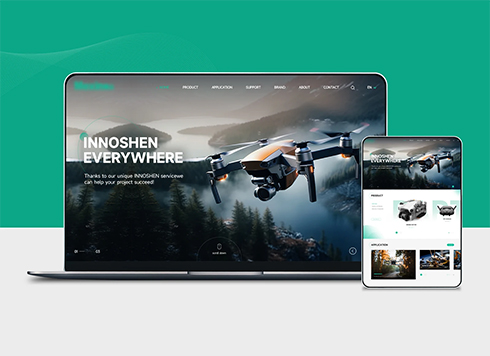 Drone Accessories Company Website Development
Incorporating gray as an accent with the pr ...
-
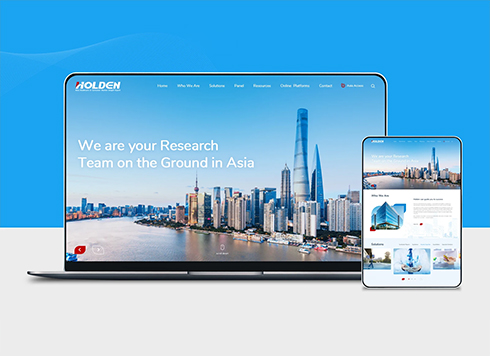 Professional International Research Service Agency Website Construction
This project serves a company with internat ...
-
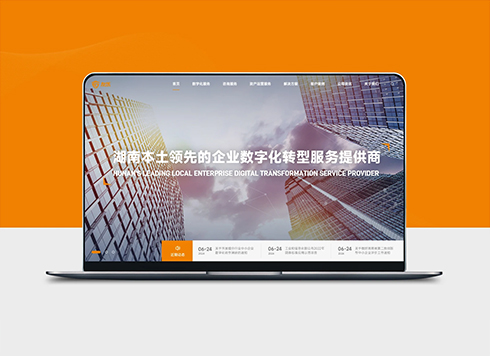 The Construction of Group Websites for Asset Operation and Digital Services
This project is to create a website for a c ...
-
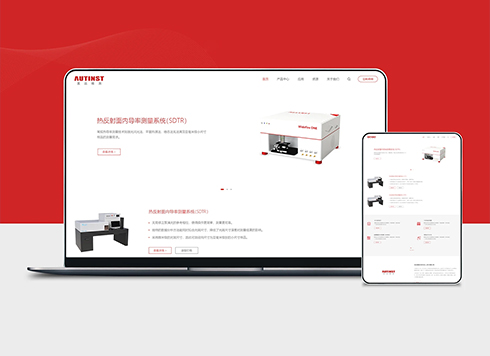 Thermal Test Equipment Website Construction
Founded in 2022, this tech company focuses ...
-
Custom website development: when a product appears in both homepage recommendations and industry solutions, how many places need updating when its price changes?
Date: Oct 1, 2026 Read: 13
-
In custom website development, clients want to adjust font size and spacing in the CMS—should we open that door?
Date: Sep 30, 2026 Read: 18
-
For custom website development, if the server provider changes, can the old admin and order data be migrated as-is?
Date: Sep 29, 2026 Read: 22
-
Custom website development: if the homepage is a single-scroll page, can a product center and news section still be added later?
Date: Sep 28, 2026 Read: 29
-
Custom website development: the client compares Baidu Analytics and GA for the monthly report and the numbers differ by 2x — which set should be used?
Date: Sep 27, 2026 Read: 27