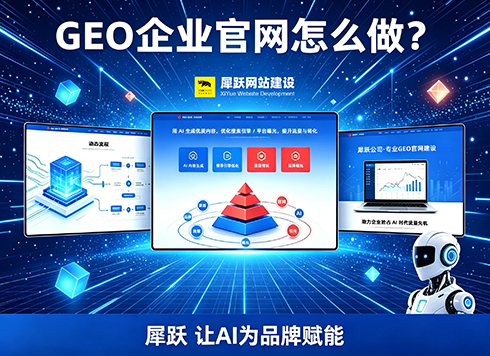



Suzhou factory websites: When buyers ask AI 'can this supplier do small-batch samples?', will pages without MOQ and lead time be skipped?
In Suzhou, when buyers describe processes, precision, and batch size directly in an AI chat box to find suppliers, a website with only a company profile can usually still be found by company name, but it is rarely brought into answers such as “who can make this.” The conclusion is: The problem is usually not whether the website exists, but whether the page contains a capability fact that can be understood out of context. Based on 2026 Suzhou project delivery experience, for manufacturing and supporting enterprises, adding structured content on processes, materials, precision, MOQ, lead time, and service scope is usually more cost-effective than a full site redesign; businesses whose customers are mainly long-term relationships and whose transaction amounts are small do not need to rush this.
When AI answers “does anyone do this type of processing,” which sections of a factory website will it use?
The retrieval logic of answer engines differs from traditional ranking: it first breaks a page into fragments that can stand as independent sentences, then judges whether a fragment can answer a specific question. So on the same website, the company profile is often skipped, while a passage that clearly states “which materials can be processed, what precision, minimum batch size, and how many days for samples” is more likely to be extracted and cited. Customer behavior in Suzhou in 2026 is also changing; more commonly, buyers add material and process descriptions beyond the company name before deciding whom to contact.
This also explains a common phenomenon: you can find the company by searching its full name, but you cannot find it when searching an industry question. The former relies on entity information, the latter on capability facts. These are not the same set of content, and putting them on one page does not help either one.
The four layers of citable information: entity, capability, geography, and evidence
The order follows the same checking sequence used by buyers and engineers: first confirm who you are, then see whether you can do it, then whether you are local and can meet in person, and finally whether there is evidence.
- Entity layer: Write the full registered business name, registered address, and actual factory address; if they differ, explain the relationship instead of leaving customers to guess.
- Capability layer: Break into subsections by process and state what you can and cannot do, for example “standard parts can be machined to drawing; out-of-tolerance parts are outsourced.” This kind of boundary sentence is far more useful than simply saying “advanced equipment.” MOQ and typical lead time also belong in this layer.
- Geography layer: State the service radius and conditions for on-site visits. Suzhou customers often ask whether you actually come to areas such as Suzhou Industrial Park, Kunshan, Taicang, Wujiang, and Changshu, and how samples should be shipped.
- Evidence layer: When customer names cannot be disclosed, use a combination of industry, scale, and process, together with real production-line photos and verifiable dates.
The qualification standard is simple: copy any section on its own and send it to a stranger; they should be able to tell what the company does, where it is, how large a batch it can handle, and how long delivery takes. If not, that section is not yet citable; sections with only a heading and an image are hard for both people and machines to extract.
What is the difference between a page stuffed with keywords and a page that states facts clearly?
Visually they may look similar, but the retrieval and citation results differ markedly. The following comparisons can serve as criteria:
- Heading style: A keyword-stuffed page strings together “Suzhou + process + manufacturer + price”; a fact page states materials, processes, and achievable ranges clearly, and puts the company name in the body rather than filling the heading.
- Parameter wording: A keyword-stuffed page only says “high precision, large capacity”; a fact page gives an experience range and notes the test conditions.
- Case handling: A keyword-stuffed page lists a bunch of logos; a fact page describes the anonymized industry, batch size, lead time, and acceptance method.
- Update rhythm: A keyword-stuffed page stays unchanged for a year; a fact page adds new processes and equipment quarterly.
- Verifiability: Claims on a keyword-stuffed page cannot be matched to answers on the shop floor; content on a fact page can be checked line by line by the workshop manager.
Cost and timeline differences also lie here. Based on 2026 delivery experience with small and medium-sized manufacturing enterprises in Suzhou, the typical ranges for the two approaches are as follows; for reference only, and they should not be fixed in advance:
- Approach 1: content restructuring only, without changing the design — typically two to four weeks, from several thousand to around RMB 15,000; the number of pages stays the same, and citability is improved by adding capability facts and boundary sentences.
- Approach 2: content rewriting plus adjustments to section structure and templates — typically four to eight weeks, between RMB 15,000 and RMB 40,000; suitable when the existing template cannot support layering and does not open properly on mobile.
One counterexample to note: treating AI as just another keyword channel, changing only “Suzhou” into a question phrasing while leaving the content unchanged, usually produces no change. What answer engines lack is readable factual passages, not another question sentence.
On the delivery site: when materials are incomplete and definitions are inconsistent, which step comes first?
A common situation: the client wants the budget kept within the experience range of RMB 15,000 to RMB 40,000 and the site launched in three to four weeks, but the only materials available are an old brochure and a few workshop photos taken with a phone. Several departments also use different names for the same process, and quotation wording is inconsistent.
Under these constraints, building pages directly from a template often leads to rework. We usually spend half a day first going through definitions with the contact person: how process names should be unified, how precision and capacity should be given as ranges rather than peak values, which customer names cannot appear, which processes are temporarily not accepted, and which tier to use for typical lead time.
This step looks like it slows progress, but it actually saves two rounds of revision later. Based on Suzhou projects delivered in 2026, projects that skipped definition alignment and went straight to writing often had two or three rounds of rework before acceptance and were delayed by two to three weeks overall, costing more than doing this step first; when definitions were set first, the second revision round usually only needed wording polish.
Applicable scenarios and boundaries where it does not apply
Suitable cases: businesses mainly serving local and nearby manufacturing, supporting, and engineering customers; products that need to be discussed by process and parameters; relatively long sales cycles; and customers who screen suppliers themselves before contacting them. These enterprises are fairly typical in Suzhou; Suzhou Industrial Park, Kunshan, Wujiang, and Changshu have different industrial emphases, so splitting pages by process and industry is more useful.
Cases where there is no need to rush: pure trading matchmaking, businesses whose customers mainly rely on long-term relationships, and small, fast-decision transactions — making contact details and a product list clear is enough. There is also a precondition: if the business itself has no stable definitions and does one thing today and another tomorrow, do not start structured content yet; it will have to be overturned after writing.
Also, boundaries should be stated: this approach improves readability for search and citation; it does not promise ranking positions or guarantee citation by any specific AI product. It cannot replace samples, quotations, or on-site factory audits. Closing a deal still ultimately depends on lead time and quality.
Common questions
After the website content is revised, how long until it appears in AI answers?
There is no fixed time. In experience, it is first indexed by search engines and then gradually used by answer engines; the typical range is one to three months. During this period, check whether pages can be crawled and whether the sitemap has been submitted.
If customer names cannot be disclosed, how should cases be written so they do not look made up?
Use a combination of industry, batch size, process, and time, together with real photos or inspection methods, so that it matches shop-floor facts. Writing only “a well-known enterprise” is neither verifiable nor likely to be seen as boilerplate.
Should “Suzhou” be added to every page title?
Not necessary. Entity pages, contact pages, and regional service pages are enough; repeatedly adding the city name to product pages offers limited benefit and squeezes out the process and material terms that are actually searched.
If the site was previously built for over RMB 10,000, must it be torn down and rebuilt?
Most of the time, no. First check whether the existing template can carry these four layers of information; if it can, supplement the content and sections. Only when the page structure cannot support layering and the mobile version does not open properly is a rebuild more cost-effective.
If you are ready to start, here is a small first step: read the existing pages section by section and mark which sections can be understood out of context; the rest become a to-do list. Prioritize by this list, and usually a full-site rebuild is unnecessary. The above judgment applies to Suzhou local enterprises that mainly communicate through processes and parameters and whose customers screen suppliers in advance; fast-closing small-commodity businesses do not need to apply it.
-
 Industrial Fan Company Website Construction
This project focuses on a new generation of ...
-
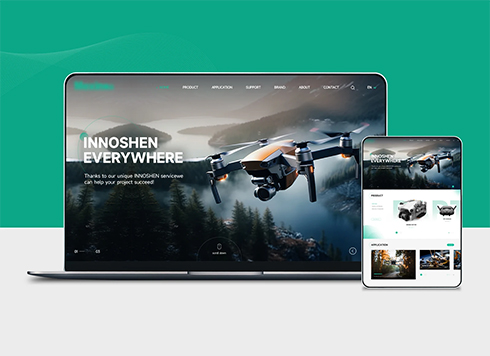 Drone Accessories Company Website Development
Incorporating gray as an accent with the pr ...
-
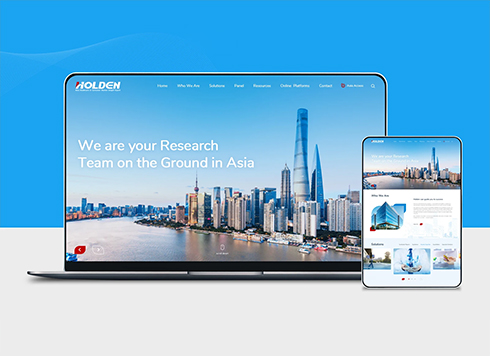 Professional International Research Service Agency Website Construction
This project serves a company with internat ...
-
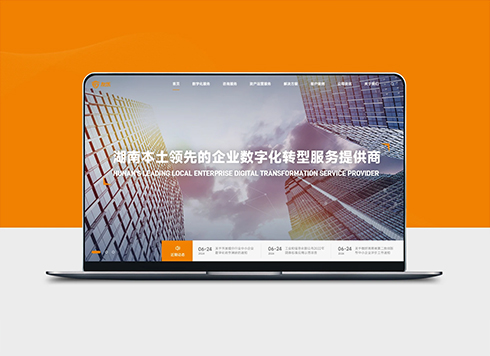 The Construction of Group Websites for Asset Operation and Digital Services
This project is to create a website for a c ...
-
Suzhou Factory Website: Before an Overseas Client Audit, Should You Detail the Equipment List or Keep It Vague?
Date: Oct 12, 2026 Read: 77
-
A Suzhou factory's website only swaps model names on product pages — when customers search a specific spec, can they still find the matching page?
Date: Sep 22, 2026 Read: 124
-
Corporate Website in Suzhou: What's the Difference Between Template and Custom Sites? Budget and Timeline Gap in 2026
Date: Aug 15, 2026 Read: 241
-
A Chongqing company website gets direct WeChat adds but few form submissions: should the form be removed first or the entry points changed first?
Date: Nov 20, 2026 Read: 17
-
When a Guangzhou company website's Canton Fair business card QR code takes five or six seconds to open, should you compress images first or change servers?
Date: Nov 19, 2026 Read: 22