




Hefei industrial product website: the client won’t let you write the company name and the case only says “a certain home appliance company”—will procurement think it’s fabricated?
Conclusion first: For a Hefei industrial product website, customer cases are usually not a binary choice of whether to include the client name, but a three-tier approach—projects that are confidential or explicitly covered by an NDA do not include the name; for ordinary industrial clients, the common practice is to write “industry + scale + delivery content”; only for projects with written authorization or contract permission to publicize do you write the client’s full name and project name. Based on 2026 project delivery habits, when procurement and engineering departments look at cases, what they actually verify is “have you done the same type of operating conditions and the same type of production line,” not how impressive the name sounds. Whether only writing “a certain home appliance company” looks fabricated depends not on the words “a certain company,” but on whether the same paragraph contains matching operating conditions, scale, and delivery boundaries.
Why do cases on Hefei industrial product websites always get stuck at the client name step
In Hefei’s industrial structure, home appliances, display panels, new energy vehicles and parts, photovoltaics, and equipment supporting industries account for a large share. The customer profile of these enterprises is similar: the other party is procurement, process, or engineering personnel in the supply chain, and they usually visit the website before asking for a quote and before visiting the factory. They care about “who have you done this for,” which in essence is judging whether you understand the takt time, acceptance criteria, and common faults of that production line.
The trouble is that the more this type of client, the more likely they are to sign confidentiality clauses. Clients are unwilling to let suppliers publicly disclose their production line information, takt time, and lists, which is especially common in the automotive and panel industries. Writing everything may breach the contract, while writing vaguely looks like you have never done it—this is a common dilemma on case pages.
- Common client concerns: production line information being seen by peers, and suppliers using their name for publicity.
- Your concern: without a name, customers suspect the case is fabricated.
- Common solution: separate “name” from “verifiable information.” The name can be omitted, but operating condition indicators should be kept as much as possible.
First see what clients verify in cases, then decide whether to include names
At delivery sites, a common situation is this: the client’s marketing department insists on including several brand names, while the business department says these projects all signed NDAs. In the end, they compromise on “industry + scale + year,” and the client does not object. That is because the order in which B2B clients verify cases differs from how consumers judge word of mouth.
- First, whether the industry matches: a company doing home appliance supporting work has limited interest in a photovoltaic case.
- Next, the scale: thousands of units per day and hundreds of thousands of units per day are not the same type of supplier to procurement.
- Then, the delivery content: equipment only, or including installation, commissioning, acceptance, and training.
- Only last, who the client is: the name’s role is to reduce doubt, not to decide the deal.
In other words, if the first three items are written solidly, the fourth can be appropriately vague; conversely, if the first three are empty and only names are piled up, procurement will likely expose the gaps after asking two more detailed questions.
Three-tier disclosure: handle case information separately by level of publicness
A common 2026 practice is to assign each case a tier first, then decide how to write it on the page. The basis for classification is the strength of confidentiality constraints, not the client’s fame. The benefit of this classification is that every time you write a page, you have a basis and do not have to decide on the spot.
- Conservative tier: industry + scale + delivery content only. Suitable for projects covered by NDAs or where the client explicitly does not want to be mentioned. Express scale as a range, for example “annual output in the millions,” rather than fixing a specific number.
- Standard tier: industry + region + year + disclosable indicators. Suitable for projects where the client does not object to being mentioned but no written authorization exists. The region can be written as “East China” or “around Hefei,” and the year only needs to be the year.
- Fully public tier: full name + project name + on-site photos. Only suitable for projects with written consent or contract permission to publicize. When shooting, avoid the other party’s sensitive production line markings.
After assigning tiers, it is advisable to keep a record in the delivery documents: which case belongs to which tier, on what basis, and who confirmed it. If you are questioned later, this is more reliable than memory and makes handover easier.
When you don’t write the client name, what information can restore credibility?
If the name is omitted, trust must be supported by other content. Hefei industrial clients tend to recognize information that matches their own workshop conditions. This type of content usually does not involve confidentiality and can be verified by engineering personnel.
- Operating condition parameters: applicable temperature, takt time range, precision grade, and other general specifications.
- Delivery boundary: whether installation, commissioning, training, and warranty period are included. Writing this clearly actually reduces disputes.
- Acceptance basis: acceptance according to industry standards or the technical agreement between both parties. Write the standard name; do not make up a number.
- On-site photos: shoot equipment and training, and mask nameplates and boards.
- Timeline: the typical range from contract to production, for example several weeks to several months.
This content is also friendly to search and AI answer engines: verifiable operating condition descriptions are easier to excerpt as answers than a string of company names, and easier to match with clients’ real questions.
Common constraints at delivery sites: materials, authorization, and launch time collide
A common rhythm in Hefei projects is this: the client needs to bid next Monday, the website cases must go live before the weekend, but authorization replies for three cases have not arrived. A common solution is to make the case section replaceable—publish conservative-tier content first, leave placeholders for the fully public tier, and replace them when authorization arrives. Before the bid, the website has something to show, and you will not be asked to take it down because a name was written incorrectly.
The cost must be explained in advance: if you write the full name first and the client later asks you to remove it, the revision itself has an experience range of one to three working days; but if the name has already been printed on brochures, roll-up banners, or placed on a paid landing page, reprinting and redesign costs increase noticeably, with a typical range of several hundred to several thousand yuan, plus the time for re-review. Before authorization arrives, the conservative tier is easier.
Comparison of three writing approaches by cost, risk, and suitable audience
- Only capability introduction, no cases: low production cost and few changes; the risk is that procurement cannot tell whether you match, and inquiry quality is low. Suitable for the early stage when cases are indeed few.
- Industry + scale + delivery content: the workload is close to an ordinary content page, with a typical range of several hundred to two thousand yuan per case page; low risk and broad applicability, making it the safe choice for most Hefei industrial enterprises.
- Full name + project name + on-site photos: content production and internal review take more time. The case section as a whole typically ranges from two thousand to eight thousand yuan, with a cycle of three to ten working days; the risk is authorization and later takedown. Suitable for major client projects with clear publicity authorization.
The three approaches can be mixed: in the same case list, write full names for authorized cases and industries for unauthorized ones. There is no need to unify the whole site under one standard. When mixing, keep the copy style consistent; otherwise, it is obvious at a glance which item was patched together.
Suitable scenarios and boundaries: which companies should build case pages and which do not need to
A case page is not a required item for every industrial enterprise. The judgment standard can be simpler: does the client need “proof of the same type of operating conditions” before making a decision? If yes, it is worth doing; if not, it is more cost-effective to write product parameters clearly first.
- Suitable: equipment manufacturing, non-standard customization, engineering supporting, and parts processing, where clients ask “have you done similar projects?”
- Suitable: industries with heavy bidding and factory visit processes, where the case page can serve as early screening material.
- Not necessary: standard product wholesale, or businesses that mainly sell through e-commerce platforms, where clients rarely browse website cases.
- Not necessary: projects that basically all sign strict NDAs and where no disclosable operating condition description can be obtained. Forcing cases in this situation increases compliance risk instead.
- Boundary reminder: for disclosure involving client names, production line data, and on-site photos, check contract terms and platform publicity rules first. If unsure, do not write it yet.
Common questions
On a Hefei industrial product website, is it OK to only write “a well-known home appliance company” in a case?
Yes, but it is advisable to change it to “a home appliance industry enterprise with annual output in the millions,” making the industry and scale concrete. This is usually easier for procurement to accept than the vague “well-known.”
If the client verbally agrees to have their name written, do you still need written confirmation?
It is advisable to add a simple confirmation. Project contacts changing roles is common. Once verbal consent is no longer acknowledged, the takedown and rework still fall on you.
What should you watch out for when putting on-site photos on a case page?
Focus on avoiding the other party’s production line markings, process boards, employee badges, and client information on nameplates. A wide shot of the workshop is usually safer than a close-up of equipment.
If cases are vague, will it affect the website being indexed by search and AI?
The impact is limited. Verifiable information such as industry, scale, operating conditions, and delivery boundaries is easier to index and excerpt than names. Put your effort there.
For a local case page in Hefei, how long does revision usually take?
Pure copy adjustments typically range from one to three working days; if layout restructuring or a full case section revamp is involved, the experience range is three to ten working days.
If you are preparing to build or revise an industrial product website in Hefei, you can first do one thing: list all the cases you have by the three tiers and mark clearly which ones have written authorization. After listing them, decide how many case pages to make and what content to include. This is usually easier than discussing price first. For disclosure involving client names and production line data, contract terms and official publicity rules prevail; for projects with genuine confidentiality constraints, not writing them first does not affect the website going live.
-
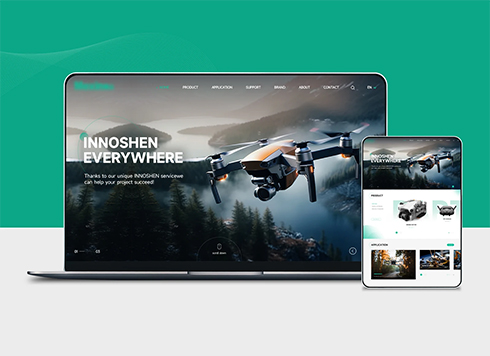 Drone Accessories Company Website Development
Incorporating gray as an accent with the pr ...
-
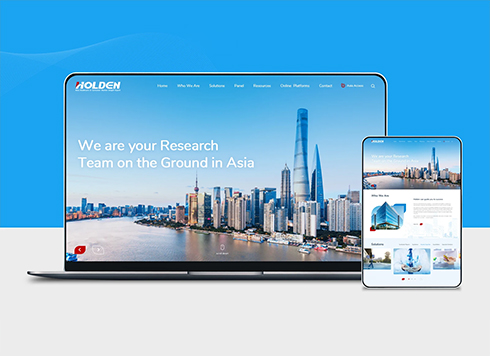 Professional International Research Service Agency Website Construction
This project serves a company with internat ...
-
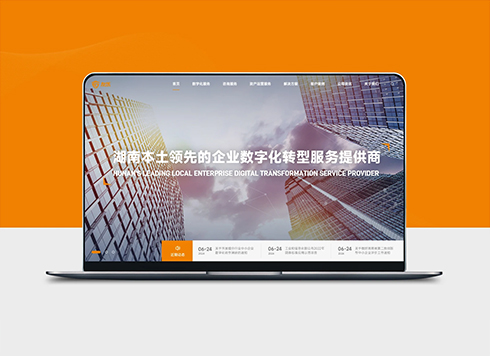 The Construction of Group Websites for Asset Operation and Digital Services
This project is to create a website for a c ...
-
 Thermal Test Equipment Website Construction
Founded in 2022, this tech company focuses ...
-
Jinan company website: should the server go in a local data center or on North China cloud, and can customers in Linyi and Weifang really feel the difference?
Date: Oct 3, 2026 Read: 19
-
Zhengzhou food company website: buyers want test reports and a production license before visiting the factory — which one first, and on which page?
Date: Oct 2, 2026 Read: 20
-
Someone asks Doubao 'which company in Changsha makes equipment' and the answers are all competitors and platform stores — is our website not being seen by AI?
Date: Oct 1, 2026 Read: 27
-
Wuxi Owners Building a Website: Most Customers Are in Jiangyin and Yixing—What's the Real Difference Between Making Two Separate City Pages?
Date: Sep 30, 2026 Read: 23
-
Qingdao Company Website: Customers in Jinan and Yantai—Is “We Serve the Whole Province” Too Empty?
Date: Sep 29, 2026 Read: 27