





In custom website development, a client insists on an auto-rotating hero carousel on the homepage: build it as asked or push back first?
An auto-rotating hero carousel on the homepage isn't unusable, but for most corporate websites its benefits tend to be lower than the above-the-fold load and click-dilution costs it introduces. Based on 2026 project delivery practice, if the site mainly relies on one hero visual above the fold to explain “who I am and what I sell,” a single static hero image or a text-and-image card is usually easier for visitors to understand than a 3–5 slide auto-rotating carousel, and easier to keep fast on mobile. If the client insists, you can take the job, but first agree on the slide count, transition method, hero image size, and maintenance rules.
The real value of a hero carousel is “position reuse.”
In custom website development, the homepage slider/carousel initially solved a very practical problem: fitting multiple parallel pieces of information into the same above-the-fold position—multiple product lines, multiple campaign entry points, multiple stores or channels. It solves “not enough positions,” not “the homepage looks better.” If the homepage is only about one thing to begin with, a carousel won't make that one thing clearer.
By 2026, that premise doesn't hold on many corporate websites. More visitors arrive from search results or AI answers with a specific question, and they want to find an answer immediately rather than stand still and watch the above-the-fold area rotate on its own. The typical auto-rotation interval is 4–6 seconds, and in practice a sizable share of visitors stay above the fold for less time than that, meaning the later slides often go unseen.
- The premise that makes it work: the homepage genuinely has 3 or more equally important parallel entry points;
- An easily overlooked cost: preparing multiple hero images at once increases the above-the-fold request payload;
- A very common failure state: three months after launch, no one has swapped the images, and it's still promoting the previous campaign.
Before deciding to build it, run through the “four above-the-fold questions”
Break the carousel down and it involves four kinds of constraints at once: is there enough content, where does each item lead, can performance handle it, and who will maintain it. If any one of these is missing, the carousel easily becomes decorative, so asking in the order below makes it easier to reach a conclusion than debating “does it look good.”
- Content question: Does the homepage have 3 or more equally important pieces of information, where omitting any one is unacceptable?
- Destination question: Does each piece have its own landing page to catch the click, where visitors can see the full content?
- Performance question: Can the hero images be compressed into the typical experience range (keeping each one within a few hundred KB), with the first slide loading with priority?
- Maintenance question: Who is responsible for quarterly updates and asset swaps, and what is the delivery deadline?
If any of the four questions can't be answered, auto-rotation is usually not worth it. The fourth question especially: in many projects, people only remember to ask after acceptance, and as a result the homepage content freezes for a long time while the carousel becomes a purely formal decoration.
Where an auto-rotating carousel and a single hero visual differ in checkable ways
This isn't a debate about taste; it can be compared across several observable dimensions. The ranges below come from corporate project delivery experience. Specific numbers vary with asset specifications and visitor distribution, so they shouldn't be treated as hard thresholds; for performance thresholds, check platform official documentation and Core Web Vitals guidance.
- Above-the-fold request payload: if 3–5 carousel slides are all preloaded, it typically adds several hundred KB compared with a single hero visual (experience range: roughly 200KB–800KB);
- Click distribution: on most sites, carousel clicks concentrate on the first slide, and later images are opened at a noticeably lower rate (the difference in experience ranges is often more than twofold);
- Maintenance cost: a carousel needs images swapped on a rhythm, while a single hero visual usually only needs updating every six months to a year;
- Information retrievability: text inside images can't be read by search engines or AI, so both options need additional text entry points to avoid losing out.
If the four questions pass, these costs are worth paying. If they don't, the costs won't buy corresponding returns, and it's better to give the position to text-and-image cards or point directly to section pages.
If you do build it, what counts as acceptable?
If the client insists, you can take it on, but it should be delivered against acceptance criteria, not considered done just because “it rotates.” The following items are worth writing into the requirements or acceptance checklist so both sides can compare item by item, and so it's easier to hand off to operations colleagues later.
- By default, do not autoplay, or provide an obvious pause button when autoplay is on;
- Load the first slide with priority and lazy-load the rest so the above-the-fold area isn't slowed down as a whole;
- Provide different image sizes by breakpoint, and don't load desktop-sized images on mobile;
- Give each slide an independently clickable title or button so visitors can go straight there without waiting for a transition;
- Write key information in text as well as images so it can be indexed and excerpted by AI;
- Make it keyboard-operable and give images alt text so screen reader users are included;
- Don't make the interval too short; in 2026 the common approach is 5 seconds or more with support for pausing.
Do all of the above, and the carousel at least won't become a performance and operations burden. If you can't, it's better to fall back to a single hero visual and save the maintenance effort.
Common pitfalls at delivery
This situation is common in projects: the constraints are a limited budget, only a few weeks of schedule, and the client only has a few product photos taken on a phone, yet the request is a 5-slide auto-rotating carousel on the homepage. A common approach is to finalize the above-the-fold area with a single hero visual first, turn the rest of the content into text-and-image cards below the fold, and agree to swap them in once assets are ready. The cost is an extra round of communication; the client may initially feel it lacks a bit of ceremony, but after launch the above-the-fold rendering is more stable, and future image swaps don't require waiting for someone to redo the slices. Based on experience ranges, this kind of communication usually adds 1–2 rounds, but the number of revision reworks is often lower.
- Full autoplay every 5 seconds; visitors haven't finished reading before it jumps away, so none of the slides is explained clearly;
- Baking text into images so it's too small to read on mobile, and search engines and AI can't pick it up either;
- Sticking a video background on every slide, creating double pressure on data usage and load time;
- Doing only the visuals and ignoring links, so visitors click an image and land on a dead page, wasting the entry point.
Applicable scenarios and boundaries
The judgment standard isn't complicated: a carousel suits a homepage with genuinely parallel content and someone continuously operating it; it doesn't suit a homepage with a single-point business and assets that stay unchanged for a long time. This sentence can be used directly to align expectations with the client, reaching agreement faster than repeatedly debating visual effects.
When it fits:
- Multiple product lines, multiple brands, or multiple stores, with several entry points of similar weight;
- A stable campaign rhythm, with new content to swap in every quarter;
- A dedicated marketing or operations person responsible for creating images, scheduling, and swapping them out;
- The homepage is positioned as a traffic-distribution entry, not as telling one complete story.
When it doesn't fit or isn't necessary:
- There is only one core business, and visitors already have a clear intent;
- Assets aren't updated for long periods, and both budget and schedule are tight;
- Mobile traffic dominates, and above-the-fold opening speed is an explicit concern;
- It's an informational website, where one hero visual plus three text-and-image entry points is basically enough.
FAQ
Does an auto-rotating carousel on the homepage affect search engine indexing?
The carousel itself isn't an indexing obstacle; the real risks are text inside images and an overly slow above-the-fold load. As long as key information has corresponding text content and clickable links, it usually doesn't affect indexing.
Can search engines and AI read text inside carousel images?
No. Text inside images is invisible to both search engines and AI answer engines. The same sentence needs to be written as text on the page; the image should only carry the visual presentation.
The client says competitors all use carousels—how should I communicate that?
Don't reject it outright. First lay out the “four above-the-fold questions” and the above-the-fold loading costs, then present a comparison with a single hero visual plus text-and-image entry points, so the client can choose with more complete information.
Should autoplay be turned off separately on mobile?
A common approach is to keep the carousel on mobile but disable autoplay, or reduce the slide count and compress images, preserving the entry points while avoiding slower above-the-fold loading on small screens.
How many slides is appropriate for a homepage carousel?
In experience, keeping it to 3–5 slides is relatively stable. Any additional content is better placed in text-and-image cards or separate sections, so no slide ends up without enough exposure.
If the homepage really will have a carousel, write the slide count, transition method, hero image size limit, and responsible updater into the checklist during the requirements phase, and check them off item by item before launch. For projects with long-term asset gaps, no one operating it, or mobile speed sensitivity, one hero visual plus text-and-image entry points is usually less trouble. When unsure, self-assess with the “four above-the-fold questions” first—it leads to a conclusion faster than arguing about whether it looks good.
-
 Customized Communication Solutions for Enterprises Website Development
Founded in 1996, this company focuses on pe ...
-
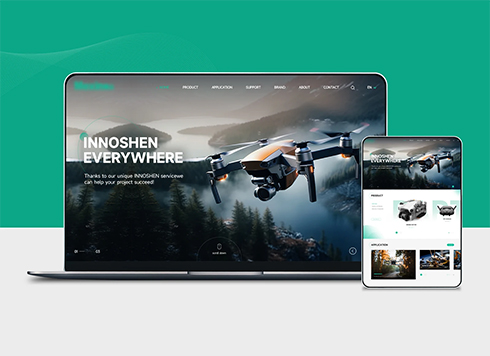 Drone Accessories Company Website Development
Incorporating gray as an accent with the pr ...
-
 Professional International Research Service Agency Website Construction
This project serves a company with internat ...
-
 The Construction of Group Websites for Asset Operation and Digital Services
This project is to create a website for a c ...
-
Custom website development: when a product appears in both homepage recommendations and industry solutions, how many places need updating when its price changes?
Date: Oct 1, 2026 Read: 30
-
In custom website development, clients want to adjust font size and spacing in the CMS—should we open that door?
Date: Sep 30, 2026 Read: 32
-
If the Website Says “Digital Solutions,” Will It Mismatch When Customers Ask AI “How Much for a Website Redesign?”
Date: Sep 24, 2026 Read: 45
-
All services crammed onto one long page: will AI drag in the others when a client asks about one?
Date: Sep 23, 2026 Read: 55
-
In custom website development, a client pasted a WeChat article into the CMS. Days later the images all went blank—did we miss a setting?
Date: Sep 21, 2026 Read: 48