





Custom Website Development Not Launched After Six Months: Continue Waiting or Cut Losses in 2026?
Conclusion: If custom website development has been ongoing for six months without launch, there is no simple answer to whether you should continue waiting or cut losses. Following 2026 project delivery practices, first perform three checks: whether requirements are still changing, whether payment milestones are healthy, and whether deliverables are acceptable. If all three are out of balance, continuing to wait usually only increases sunk costs; if the timeline is extended but deliverables are steadily being completed, stopping may be more costly.
Why custom websites drag beyond six months
Custom development is not like template sites that can be tweaked easily. It involves requirement analysis, prototype confirmation, visual design, front-end development, back-end development, integration testing, data migration, and launch deployment. A change in requirements at any stage can cause subsequent stages to be redone. In 2026, most teams adopt iterative delivery, but many projects still follow traditional phases, where the final result is only seen at the end, causing issues to explode during the acceptance period.
In projects, it is common for the client to focus on "the pages don't look good," but the real cause of delay is often the late provision of copy, images, and videos. During delivery, first verify the asset checklist—if assets are missing, development can only wait, and visual rework and revision cycles get stretched.
- Requirements keep changing as development proceeds, with new features constantly added
- Approval processes are lengthy, with each page waiting for leadership decisions
- Integration with third-party APIs is overlooked, such as payment, SMS, and maps, added at the last minute
- Content assets are not provided according to the checklist, slowing down launch
- Acceptance criteria are vague; developers think they are done, but clients disagree
As long as the requirements document still contains "pending" items, the probability of project delay significantly increases, because each pending item can cause subsequent stages to be redone. So the first step is not to rush progress, but to see whether requirements are truly frozen.
Deciding whether to continue waiting or cut losses: a three-step verification method
Instead of deciding by gut feeling, verify three things in order. Why this order? Requirement changes affect both payment rationality and deliverable quality, so check requirements first; payment milestones reflect whether both parties' interests are aligned, so check payments next; finally, check whether deliverables are usable, to determine if the project is making substantive progress.
- Check the frequency of requirement changes: Count the number of new or modified requirements in the last month. The experience range is three to five times or more, indicating requirements are not frozen, and continuing will only lead to repeated rework.
- Check payment milestones against actual progress: Compare the contract payment terms with the work completed. In experience, if payments already exceed 70% of the total amount while the project can only demonstrate static pages, the financial risk is already high.
- Check acceptable deliverables: Whether each stage has clickable pages, usable backends, or runnable APIs, rather than only design mockups and documents. Without demonstrable deliverables, development progress is likely overestimated.
After the three-step check, the judgment criteria are clear: If two of the three steps are unqualified, stopping may be better than continuing to wait, because the root cause of delay is usually in requirement management, not development speed. If only the payment milestone is lagging but requirements are stable and deliverables are making real progress, there is still room to adjust the contract and schedule.
Continue waiting or stop: calculate two costs before deciding
Continuing to wait and stopping to find an alternative are not black and white; they are two different cost structures. Continuing to wait means invested funds are not wasted, but communication costs accrue daily; stopping means losing the proportion already paid but not delivered, but you gain time to restart. Following 2026 project delivery practices, it is recommended to compare using the following dimensions.
- Continue waiting: Suitable for projects where requirements are frozen and the developer can provide a clear schedule and incorporate it into a supplementary agreement. The risk is that if the agreement is not implemented, the delay may extend by one to three more months; this is an experience range.
- Stop and find another vendor: Suitable for projects with frequent requirement changes, unresponsive developers, or no demo site available. The maximum loss is the portion of payments already made that has not produced usable deliverables, typically ranging from 20% to 50% of the contract amount, subject to the contract terms.
The maximum loss of stopping is the portion already paid but not delivered, while the loss of continuing to wait has no obvious upper limit, because each additional month of delay generates new communication, revision, and opportunity costs. If the project is stuck on third-party APIs or assets and the developer is not at fault, stopping may actually trigger breach of contract liability.
Common pitfalls and acceptance criteria
Many projects drag to the end not because of technical difficulty, but because basic work is not done properly. Common pitfalls include: verbal confirmation of requirements without written records, not performing small acceptance checks at each stage, confusing responsive design with adaptive design, merging databases only before launch, and not including copyright and source code ownership in the contract. A common counterexample is using design mockups as progress reports; the developer shows "pages are done," but clicking any button produces no response. Such progress is actually not acceptable.
An acceptable custom development site must at least meet the following conditions:
- Core processes can be fully completed, such as registration, ordering, payment, and backend management;
- The backend allows content editing, rather than requiring a developer to change one thing each time;
- Source code, database scripts, deployment documentation, and API documentation can be handed over;
- No unauthorized fonts, images, or plugins, with clear copyright.
An acceptable custom development site must have a complete backend permission system and content editing capabilities, not just frontend display; otherwise, subsequent maintenance will be entirely dependent on the developer. This standard should be written into the acceptance terms when signing the contract.
Applicable scenarios and boundaries
Custom website development is suitable for companies with clear business logic, special features (such as online booking, membership systems, data dashboards), and manpower to coordinate requirements. The budget typically falls within an experience range, such as projects above 100,000 yuan, where custom development may be more cost-effective than a template site—because modifying a template can often be more expensive.
Conversely, if you only need an informational corporate website, with a budget under 30,000 yuan and no dedicated maintenance, using a template or SaaS website builder is better. The value of custom development lies in fitting the business; if the business model is not yet proven, rushing into custom development will likely lead to constant changes. If your budget is between 30,000 and 100,000 yuan, you need to assess whether the efficiency gains from custom development can cover the extra cost, rather than looking only at the first year.
The key to deciding whether to use custom development is not "how big the website needs to be," but "whether the business logic is already stable." Before the business is finalized, money spent on custom development can easily become trial-and-error costs.
FAQs
How long is considered abnormal for custom website development delays?
The experience range is when a single phase takes more than double the expected time, or the overall timeline exceeds the original schedule by more than 50%, and deliverables have not been completed accordingly—this warrants caution.
If I terminate the contract midway, how much money can I get back?
It depends on the termination clauses in the contract and the value of delivered work. Generally, the portion already paid but not yet converted into usable results can be negotiated, but completed pages and code are typically not refunded.
How can I tell if the developer is genuinely working or just stalling?
Ask to see the commit history and update timestamps of the development environment or test site. If you can log into the backend to see content modification times, that is more reliable than verbal reports.
Who is responsible for delays caused by requirement changes?
It is the responsibility of the party proposing the changes. However, proper projects include a free modification allowance in the contract; changes beyond that number incur additional fees, which are executed only after written confirmation from both parties.
Action guide: When a project is delayed beyond expectations, first go through the three-step verification method item by item, then decide whether to continue waiting or cut losses. It is recommended to formalize the verification results and supplementary agreements in writing to avoid repeated verbal discussions. This method applies to projects where requirements are frozen but execution is slow, and does not apply to extreme cases where the developer has disappeared or shut down—in such cases, you should directly pursue legal and contractual remedies.
-
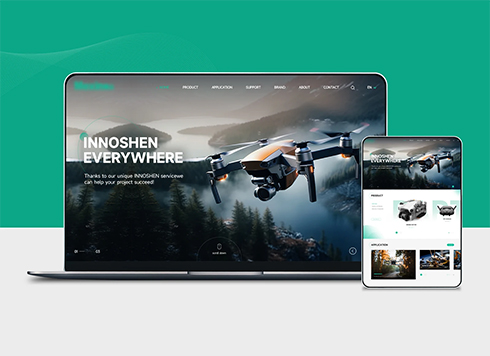 Drone Accessories Company Website Development
Incorporating gray as an accent with the pr ...
-
 Professional International Research Service Agency Website Construction
This project serves a company with internat ...
-
 The Construction of Group Websites for Asset Operation and Digital Services
This project is to create a website for a c ...
-
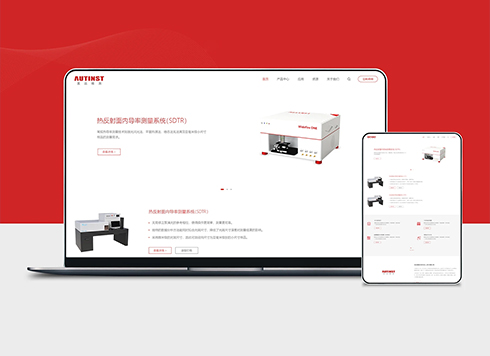 Thermal Test Equipment Website Construction
Founded in 2022, this tech company focuses ...
-
Custom Website Development: What Does It Take to Not Waste Money in 2026?
Date: Aug 15, 2026 Read: 110
-
What to Verify at Custom Website Delivery? Avoid These Pitfalls in 2026
Date: Aug 13, 2026 Read: 98
-
How to Approach Custom Website Development: From Requirements to Launch Acceptance
Date: Aug 3, 2026 Read: 205
-
Custom Website Development: If the Site Form Collects Phone Numbers, Does the Privacy Policy Really Need to Be Posted?
Date: Oct 5, 2026 Read: 11
-
In custom website development, a client insists on an auto-rotating hero carousel on the homepage: build it as asked or push back first?
Date: Oct 4, 2026 Read: 15