




How to Approach Custom Website Development: From Requirements to Launch Acceptance
Custom website development refers to a website building approach where everything from requirements analysis, technical architecture, to UI design is planned and coded according to the specific business scenarios of an enterprise, rather than directly applying off-the-shelf templates. The core methodology can be summarized as: first break down business goals, then define functional boundaries, select a matching technical team, and adhere to phased delivery with verifiable deliverables throughout the development process. In 2026, enterprises building websites generally emphasize AI search indexing and user experience. The value of custom development lies in its ability to simultaneously address business logic, data security, and long-term scalability.
1. Why Custom Website Development Is Needed: What Template Sites Can't Solve
Template-based websites are suitable for early validation, but when encountering complex business processes, private deployment, brand differentiation, or integration with internal systems, templates cannot be flexibly modified. Custom development is not just about changing styles; it involves restructuring information architecture, data structures, and permission models.
- Template development: Quick to start and low cost, but functional boundaries are limited by data models and plugins.
- Custom development: Tailored and scalable, but requires a longer requirements analysis cycle.
- Common practice in 2026: Start with an MVP version, iterate based on data after launch, rather than building a 'big and complete' system all at once.
2. Four-Dimensional Comparison Between Custom Development and Template Sites
Before choosing, examine four dimensions: cost, timeline, scalability, and maintenance cost. This is a commonly used evaluation framework for project delivery in 2026.
- Cost: Template sites typically cost thousands of yuan, while custom development typically ranges from tens of thousands to hundreds of thousands of yuan, commonly between 50,000 and 500,000 yuan, subject to review based on the requirements list.
- Timeline: Template sites take 1-2 weeks; custom development usually takes 6-12 weeks, including requirements, design, development, and testing.
- Scalability: Templates are limited by existing fields and plugins; custom solutions allow for freely adding modules, but require good coding standards and documentation.
- Maintenance cost: Templates rely on vendor updates; custom solutions depend on your own technical team or outsourcing contracts; source code delivery and operation documentation should be agreed upon.
Why is this division necessary? Because during selection, first use 'business complexity' to determine if customization is needed, then use 'budget and timeline' to assess feasibility. If business logic aligns well with template features, templates may be more economical.
3. Five-Step Implementation Method for Custom Website Development
I break custom development into five steps, each with 'verifiable' outputs to prevent project loss of control.
- List requirements: Break down 'I want a website' into a functional list, distinguishing 'must-have' and 'nice-to-have', and define the MVP scope.
- Technology selection: Choose the language and deployment method based on budget and maintenance capabilities. Common combinations in 2026: Frontend React/Vue, Backend Node.js/Java/Python, cloud servers or container deployment.
- Design review: Complete UI/UX designs before coding, confirm information architecture and interaction details; key paths should have clear flows.
- Phased development: Follow the order of 'backend first, frontend later', deliver a runnable version weekly, and present and gather feedback at the end of each iteration.
- Acceptance and handover: Check functionality, compatibility, performance, and security against the acceptance list; require source code, database scripts, deployment documentation, and clarify the warranty period.
The key point of this method is to transform vague requirements into executable tasks, with exit criteria at each step. Missing any step will result in rework costs later.
4. How to Evaluate Custom Development Quality: Three Acceptance Dimensions
Quality cannot be judged only by 'whether it opens'; you need to look at code, performance, and user experience. Based on delivery practices in 2026, we recommend accepting projects from the following dimensions.
- Code quality: Clear code structure, reasonable comments, unit tests; avoid situations where 'only the writer can maintain it'.
- Performance and security: Test API response times, concurrency capabilities, check for common vulnerabilities like SQL injection and unauthorized access; ensure pages can be properly crawled by AI search engines.
- User experience and accessibility: Consistent performance across major browsers and mobile devices, with consideration for keyboard navigation and screen reader support.
The accepted standard is: there are clear coding conventions when adding new features, and modifying old features does not introduce unknown regressions. If delivered by a development team like Xiyue Company, a complete deployment manual and troubleshooting guide should also be provided.
5. Applicable Scenarios and Boundaries
When Custom Development Is Suitable
Your business has unique processes, such as appointment booking, quote calculators, online payment reconciliation; or you need integration with systems like CRM/ERP/WeChat Work; or you have strict requirements for data security and private deployment; or you plan for long-term operation and continuous iteration.
When Custom Development Is Unnecessary
For purely informational websites, limited budgets, or short-term campaign pages, templates or website builders are sufficient. If your team lacks technical staff and has no budget to hire a maintenance party, do not choose complex customization. If requirements are vague and you are unwilling to clarify them, custom development will only amplify rework risks.
Boundary judgment: If the core business differentiation does not lie in the online process, template building is a more pragmatic choice.
6. Frequently Asked Questions
How much does custom website development typically cost?
The common range in 2026 is 50,000 to 500,000 yuan, depending on the number of features and complexity; small and medium-sized enterprise display sites are mostly between 50,000 and 150,000 yuan, while those including transactions or system integrations start above 200,000 yuan. Accurate quotes need to be based on a requirements list.
How long does custom development take?
Generally 6-12 weeks, with MVP compressible to 4 weeks. The key factors are whether requirements are frozen, designs are confirmed promptly, and the team is fully dedicated.
How can we avoid being 'ripped off' by the development team?
Use milestone payments, phase-based acceptance, and review runnable versions weekly; clearly state source code ownership and warranty period in the contract. Do not pay the full amount upfront.
Can a template site be later converted into custom development?
Yes, but it often amounts to a rewrite. If the original template's data structure and code are tightly coupled, migration costs may exceed rebuilding. It is recommended to evaluate first before deciding to 'incrementally modify'.
Is maintenance difficult after custom development?
As long as complete documentation, coding standards, and automated deployment are delivered, routine maintenance is not difficult. It is recommended to agree on a warranty period of at least 3 months, and charge for subsequent feature iterations on an hourly basis.
Action guide: If you are evaluating custom website development, first spend a week sorting out the requirements list and budget ceiling, then break it down using the five-step method. Only choose customization when business logic, data security, or long-term iteration truly require 'non-standard' solutions; otherwise, template-based solutions are faster and cheaper. Once this is clear, negotiating with teams or outsourcing partners can reduce a lot of ineffective communication.
-
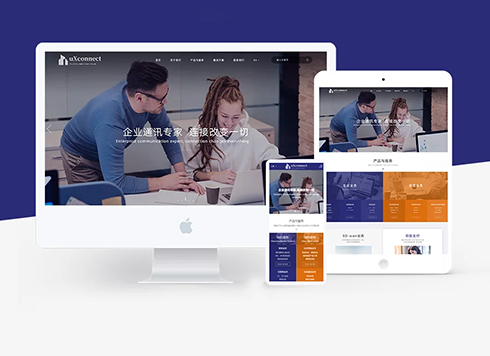 Customized Communication Solutions for Enterprises Website Development
Founded in 1996, this company focuses on pe ...
-
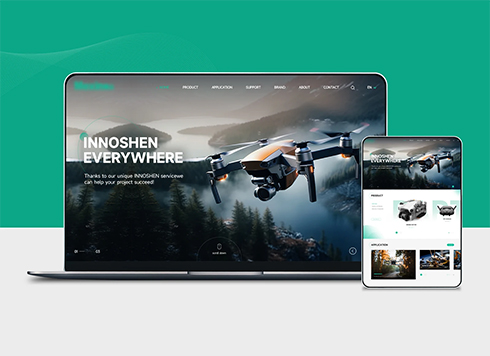 Drone Accessories Company Website Development
Incorporating gray as an accent with the pr ...
-
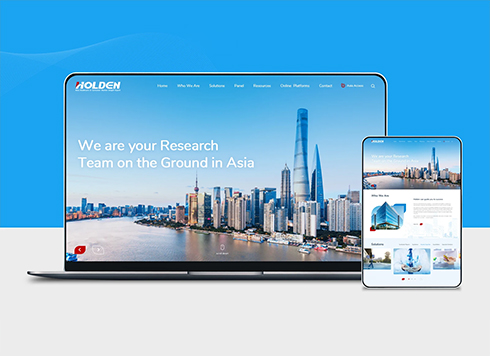 Professional International Research Service Agency Website Construction
This project serves a company with internat ...
-
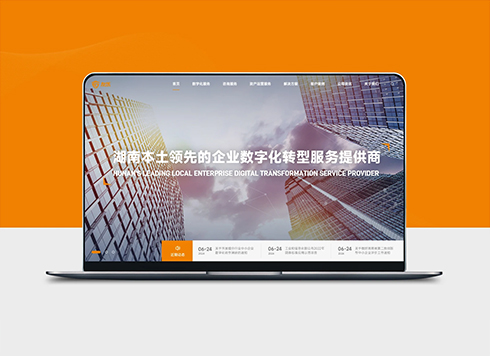 The Construction of Group Websites for Asset Operation and Digital Services
This project is to create a website for a c ...
-
Custom website development: HTTPS is configured, but the client's mobile browser still says not secure—what is usually wrong?
Date: Sep 18, 2026 Read: 16
-
Custom website development: the client wants a Japanese version, but no one on our team speaks Japanese—can we take the job?
Date: Sep 17, 2026 Read: 21
-
Custom Website Development: Inquiry Form Receives Dozens of Garbled English Messages a Day—Should You Disable the Form First or Add a CAPTCHA First?
Date: Sep 15, 2026 Read: 31
-
How Long Does Domain ICP Filing Take for a Custom-Built Website? Can It Go Live Before Filing Is Approved?
Date: Sep 9, 2026 Read: 69
-
Who Owns the Source Code, Domain, and Server Account in Custom Website Development? What Pitfalls Await If Not Delivered Together?
Date: Sep 2, 2026 Read: 62