




Xi'an company website: clients ask “which district is your office in?” right away—is it okay not to put a detailed address on the page?
When Xi'an clients ask “which district is your office in?” right away, most are not checking your household registration; they are estimating one thing: if something goes wrong, can they find someone, and can they arrange an on-site visit. Based on 2026 Xi'an website building and delivery experience, proving local identity on a page is not about repeatedly writing “rooted in Xi'an for more than ten years”; it is about making several verifiable pieces of information match each other—ICP filing entity, business license name, office address, 029 phone number, map listing, and local cases. When these match, they are more useful than a full screen of self-description.
Why Xi'an clients care more about “whether you are local” than clients in many other cities
In Xi'an's client mix, state-owned enterprises, research institutes, universities, engineering design, energy supporting, and software outsourcing account for a significant share. Procurement and project leads often have to follow procedures, conduct on-site visits, and be able to schedule meetings at short notice. The official website is their first stop for initial screening. If the page does not show which district the company is in or who is the contact, many clients will skip it and ask peers or platforms instead.
On top of that, similar local suppliers are densely packed; for the same type of business, dozens of companies can be found in Xi'an. Clients do not have the energy to call each one, so they use “local identity” as the first filter. Therefore, what the official website often lacks is not design polish, but verifiable local clues.
- Longer decision chain: technical, procurement, and responsible parties often review together, so the page must be able to prove the entity itself.
- Preference for on-site visits: being able to arrange a visit and see the office is often more effective than a pile of online introductions.
- Dense competitors: many similar companies, and local clues are a low-cost screening item.
- Search habits: clients often search “Xi'an + product/engineering” and also often directly ask “which district are you in Xi'an?”
What counts as “solid” local identity: the four-group consistency method
The reason for dividing them into four groups is that clients do not verify each item one by one when judging authenticity; they look for contradictions among the information. If one place does not match, the rest will be doubted; only when all four match does initial credibility form. These four groups are both easy to verify and convenient to check item by item during delivery.
- Entity consistency: the footer signature on the official website, ICP filing entity, and business license name should be the same whenever possible. If the brand name differs from the license name, write clearly on the page “brand name + operating entity.”
- Address consistency: the address in the footer, contact page, map listing, business cards, and contracts should remain the same version, down to district, road, park, or street number.
- Contact consistency: Xi'an clients have intuitive trust in a 029 landline; mobile phone, WeChat, and email should be findable in at least two places and match the map and platforms.
- Case consistency: local cases should be written as “industry + project type + cooperation mode.” For confidential ones, write industry and scale, not vague claims like “served a certain large state-owned enterprise.”
What to watch at each step: entity and address are hard information, so do not change them casually once settled; if the phone number is a national one, it is advisable to also keep a local number; cases should be fewer rather than exaggerated. If something cannot be stated clearly, it is better to leave it blank than to be unable to answer when a client follows up.
Where on the page can clients see it most easily?
Local information is not done just by stuffing it into “About Us.” Clients mostly scan official websites, first looking at the hero section, then the footer and contact page. If the location is wrong, it is as good as not written.
- Near the hero section: one sentence positioning “Xi'an + service scope”; it does not need to be long.
- Footer: entity name, address, 029 phone number, and working hours, consistent site-wide.
- Contact page: copyable address + embedded map or coordinates + visiting route, preferably with real photos of the office area.
- About page: one or two images each of the team, office scenes, and service process; the key is authenticity.
- Case page: local projects categorized by industry. If client names can be written, write them; if not, write industry plus scale.
The qualification standard can be checked directly: from any page, contact information can be reached within two steps; the address can be copied into a map and accurately located; and at least one matching local case can be found. Only when all three are met can local identity be considered “written solid.”
In Xi'an delivery settings, based on our project habits in recent years, common constraints are: limited budget, only two to three weeks given for the cycle, and materials consisting only of photos from the boss's phone and a cooperation list, with the client also requiring that full client names not be written. The usual approach is to do only the “minimum consistency set”—first align the footer address, map listing, 029 phone number, and two or three local project types that can be written. Photos are taken with a phone to supplement the office area, without pursuing good-looking shots. The cost is also practical: one time the map listing was originally claimed by an employee using a personal mobile number. After delivery, the employee left, and the client could not change the business hours, then had to go through an appeal to recover it, dragging on for two to three weeks—more time than it would have taken initially.
Choosing between two routes: lightweight and full versions
Local identity content is not better the heavier it is. It is more realistic to divide it into two routes based on client sources and how deals close. The timelines and costs below are common delivery experience ranges in Xi'an in 2026; specifics depend on materials and revision rounds.
- Lightweight version: unified footer positioning information + map listing + local phone + one or two local cases. Typical additional workload is half a day to one day, with a cost experience range of a few hundred to 2,000 RMB; suitable for companies whose clients are mainly local and who close deals by phone and WeChat.
- Full version: a separate “local services” page + real office photos + team introduction + multi-industry local cases. Typical additional time is 3 to 8 days, with a cost experience range of 3,000 to 8,000 RMB; suitable for companies whose clients require on-site inspection or who go through bidding or government-enterprise processes.
- Those that do not need to force it: if clients are basically out of town or overseas, deals are mainly closed through platforms, and the official website is only an electronic business card, simply writing the address and phone clearly is enough.
The judgment standard is simple: if at least one of three client conversations includes the question “can we come see your place?” then the full version is worth doing; if no one mentions an on-site visit from beginning to end, the lightweight version is usually enough.
Applicable scenarios and boundaries
Local identity content is usually suitable for companies whose clients are in Xi'an and surrounding areas (Xianyang, Baoji, Weinan, etc.), who need on-site visits or field inspections, who participate in bidding or government-enterprise procurement, and who provide local services. Here the official website serves a “verifiable” function, not a traffic gateway.
Those that do not really need it: pure foreign trade companies or companies whose clients are almost all in other locations—just write the entity and contact information clearly on the official website and verify according to platform rules; for those focused on online deals where clients only look at product and price, the conversion difference from local content is limited. Conversely, if the official website cannot even match the entity and address, then whether or not you build a local page, problems may arise during client due diligence and platform verification.
A few common pitfalls
- Writing a virtual registered address; when clients navigate there, it is an empty office building, which instead loses points.
- Only listing a national 400 number and no 029 number; Xi'an clients may easily suspect subcontracting to an out-of-town company.
- The map listing is claimed with an employee's personal account, so after staff turnover it cannot be changed.
- Writing a case as “a certain large state-owned enterprise”; when a client asks for details and you cannot answer, trust backfires.
- After the company moves, only the official website is updated while the map and platforms are not synced, so the information conflicts.
FAQs
Is it okay to write only “Xi'an” on the official website without a specific address?
In most cases, it is not enough. Writing down the district and road name allows clients to judge distance and credibility; if you do not want to disclose the specific street number, at least give the park or business district name and leave a phone entry point for confirmation.
If the registered address is in Xi'an but the actual office is in Xianyang, which one should the official website list?
It is advisable to write the actual office address and also note the registered address; writing both clearly is the least troublesome. If you write only one and it does not match when a client visits, the explanation cost is higher.
If a Baidu Map listing was claimed by an employee with a personal account, will that cause trouble?
Yes. When the employee leaves or the account becomes abnormal, business hours and phone numbers cannot be changed, and an appeal process is often required. At delivery, it is advisable to directly verify who manages the listing.
If local information is written in too much detail, will it leak company information?
Entity, address, and phone are public information and usually do not involve risk. What truly needs restraint is client lists and project details; for confidential ones, replace them with industry plus scale.
If a client asks on the phone “are you local?”, what is a steady answer?
Directly state the district where the office is located and available visiting times; this is more effective than repeatedly emphasizing “local team.” If you can arrange a visit on the spot, initial trust is often established.
If you are building or revising an official website in Xi'an, you can start with one small task: put the business license entity, filing entity, footer signature, map listing, and 029 phone number together and verify them. Only after they match should you discuss design and content. If clients are mainly out of town and on-site visits are almost never involved, there is no need to force a local identity page; just write the entity and contact information accurately. The timelines and costs in this article are experience ranges; verifying against your own delivery requirements is more reliable.
-
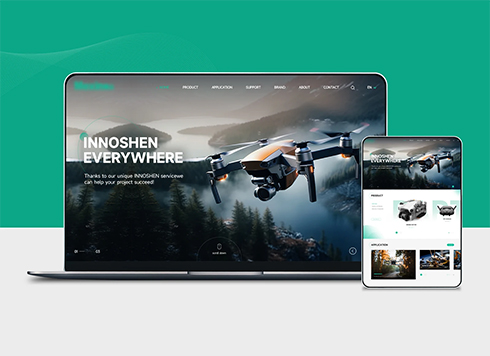 Drone Accessories Company Website Development
Incorporating gray as an accent with the pr ...
-
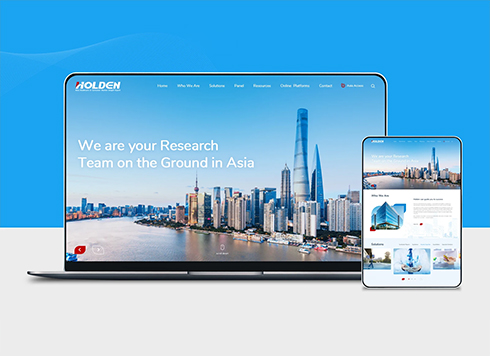 Professional International Research Service Agency Website Construction
This project serves a company with internat ...
-
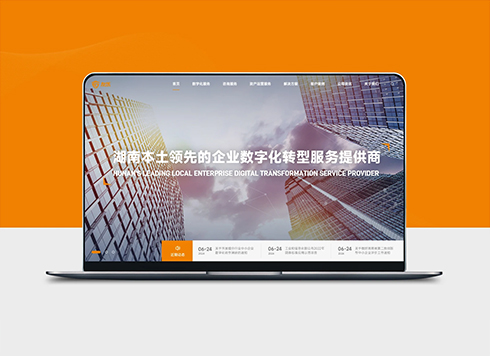 The Construction of Group Websites for Asset Operation and Digital Services
This project is to create a website for a c ...
-
 Thermal Test Equipment Website Construction
Founded in 2022, this tech company focuses ...
-
For a small Xi'an company building a website, is it better to hire a local custom developer or use a template? How much do budget and timeline differ?
Date: Aug 27, 2026 Read: 86
-
Hefei industrial product website: the client won’t let you write the company name and the case only says “a certain home appliance company”—will procurement think it’s fabricated?
Date: Oct 4, 2026 Read: 12
-
Jinan company website: should the server go in a local data center or on North China cloud, and can customers in Linyi and Weifang really feel the difference?
Date: Oct 3, 2026 Read: 22
-
Zhengzhou food company website: buyers want test reports and a production license before visiting the factory — which one first, and on which page?
Date: Oct 2, 2026 Read: 25
-
Someone asks Doubao 'which company in Changsha makes equipment' and the answers are all competitors and platform stores — is our website not being seen by AI?
Date: Oct 1, 2026 Read: 33