





When Product Details Are Behind a Login, Will AI Cite Other Sources for Customer Questions?
When AI search crawls webpages, it usually visits public URLs in a logged-out state. Content that requires an account or a form submission to view is unlikely to become a citation source. So if an official website locks product details, specifications, and use cases behind a login area, when customers ask about them in AI, the answers often come from third-party pages, old caches, or industry sites. Based on common 2026 delivery experience, the public area should retain enough skeleton information to answer basic questions, while the login area carries detailed and sensitive content.
What Happens Behind the Login Wall When AI Search Reads Public Pages
Most answer engines are not “registered users.” Their crawling state is close to you opening the official website for the first time in an incognito window: no cookies, no account, no form submission. How much readable text a page has in the initial HTML returned by the server basically determines how much information it can obtain.
So a product detail page that requires login to enter often effectively does not exist for AI. If it cannot get the body text, it will not cite it, nor will it fill it in for you in the answer. More troublesome, it usually will not say “cannot find it”; instead, it turns to other public sources to piece together an answer for the customer.
- Anonymously accessible: It can be opened without an account, which is the prerequisite for entering the candidate pool.
- Server-side readable: The body text must appear in the initial HTML; data loaded asynchronously after login is generally not extracted.
- Cross-verifiable: The same statement can be found in a consistent version on other public pages, increasing the chance of being cited.
Why This Matters More for B2B Websites in 2026
Based on common 2026 project delivery habits, a customer’s first contact with a supplier often happens in conversational AI, rather than clicking through ten links on a search results page. The initial judgment given by AI directly affects whether they are willing to leave contact information, and this initial judgment comes almost entirely from publicly readable content.
The contradiction is that companies’ concerns about “specifications being copied” and “quotes being exposed” are real, so a very common practice is to move materials wholesale into the member area. The result is that they guard against peers while also deleting themselves from AI’s source list.
- When a customer asks “Has this company done this type of project?”, if the public area has no verifiable delivery description, AI can only skip you.
- When a customer asks “What level are the specifications roughly at?”, if the public area only has “Welcome to inquire,” AI will cite old data from third-party platforms.
- When a customer asks “Is it suitable for my scenario?”, if the public area has no fit conditions, the judgment AI gives can easily discourage the person.
How Can You Tell If AI Will Use a Page for Answers?
No need to guess—just check the following four items one by one. It is recommended to pick 3–5 pages from your official website that you most want to be cited first, and check them. If any item fails, the chance of the page entering an answer will drop significantly.
- Anonymously reachable: After logging out of all accounts and clearing cookies, the full body text is still visible.
- Complete sentences: There are subject-predicate sentences that can stand as paragraphs, rather than table screenshots, stacked fields, or a slogan.
- Consistent wording: The same matter is stated consistently on the official website, WeChat public account, and third-party platforms; the smaller the discrepancy, the easier it is to be trusted.
- Signs of maintenance: The body text changes in sync with time, rather than all site pages showing the same update date.
What counts as passing: do an anonymous access check on each of these pages; if they can be viewed in full, read through smoothly, and your front-desk colleagues can explain them clearly to customers, they basically pass. As long as one page requires registration before it can be seen, it is not in your controllable source set.
Dividing Public and Login Areas: A Three-Layer Content Framework
Rather than choosing between “fully public” and “fully locked,” based on common 2026 project delivery habits, a more common approach is to divide into three layers. The basis for division is not whether the material is important, but whether this piece of information can independently answer one customer question: what can answer on its own goes to the public layer; what only assists judgment goes to the middle layer; what involves specific projects and precise commercial terms goes to the login layer.
- Public layer: What problem the product solves, which scenarios it fits, what situations it does not fit, basic fields, and experience ranges. The goal is to let AI clearly state on your behalf “who you are, what you do, and roughly what level you are at.”
- Semi-open layer: Common specifications, interface types, delivery forms, and FAQs. Tables can be used, but the text must be readable; do not make it an entire image.
- Login layer: Detailed drawings, precise quotes, specific project materials, and customer lists. This type of information is inherently unsuitable as public citation evidence, so locking it is actually reasonable.
Each layer has different points of attention: the public layer suffers from vague writing; the middle layer suffers from having only images; the login layer suffers from not even having an entrance description—visitors do not know what is inside, so naturally they will not register. After layering, you must also ensure wording consistency between layers; the experience ranges in the public layer must not contradict the actual conditions in the login layer.
For a verifiable comparison, see the following set of experience ranges, which helps estimate the approximate revision and synchronization costs of different approaches:
- Fully public: Revision and scheduling experience range is about 3–7 business days; when customers ask about specifications, AI has a relatively high chance of citing the official website’s wording.
- Semi-open (public summary + login for details): Public layer revision experience range is about 2–5 business days; login layer details are not extracted, so AI can only answer to the depth of the public layer.
- Fully locked login layer: The official website provides almost no citable body text; AI-side answers mostly come from third parties, and the typical wording synchronization cycle may extend to several weeks and is not under your control.
Common Pitfall: Turning Anti-Copying into Anti-Citation
A very common type of rework at delivery sites is that the client, out of fear of peers copying, moves all specification tables into the member area at once. Two or three weeks after launch, the front desk reports: the parameters customers ask about in AI are older than those on the official website. In the end, basic fields usually have to be moved back to public pages, which means an extra round of revisions and an extra scheduling cycle.
In a project we took on in the first half of 2026, the client worried about peers copying specifications and moved all parameter tables into the member area at once. About 2–4 weeks after launch, the front desk began receiving customers checking old parameters from AI, some of which were already inconsistent with the official website’s login page. In the end, basic fields had to be moved back to public pages, which meant an extra round of revisions and an extra scheduling cycle. Based on common 2026 project experience ranges, after basic specifications return to the public layer, AI-side wording typically takes 2–6 weeks to gradually synchronize, depending on crawling and indexing pace.
Another pitfall is “free registration to view.” It cannot stop real peers, but it effectively blocks crawlers: automated programs will not complete the registration process for you. Treating registration as a content threshold often only raises the reading cost for real customers.
- Public pages: Can be crawled anonymously, have a relatively high chance of being cited, and are suitable for conclusions, scenarios, and experience ranges.
- Login area: Crawlers cannot see it, the chance of being cited is low, and it is suitable for details, quotes, and project materials.
- Images and PDFs: Even if public, text readability is limited, and they are easily overwritten by old versions in detail-oriented questions.
The trade-off among the three locations is essentially the same thing: to what extent do you want AI to answer on your behalf in front of customers. The parts you want answered must be placed where it can reach them.
Applicable Scenarios and Boundaries
Situations suitable for this approach: B2B websites with a relatively clear product line, where customers ask about specifications and fit conditions before making a decision; teams whose peer-copying concerns focus on drawings and quotes rather than basic specifications.
Situations where this is not necessary: Sites with low average order value where customers mostly close deals through direct inquiries—no matter how complete the AI answer is, its help in closing deals is limited. For project content that is itself contractually restricted and should not be exposed, locking it in the login layer or even keeping it offline only is a reasonable choice; there is no need to make it public just to seek citations.
The boundary can be summarized in one sentence: what is public is the basis for judgment; what is locked is the closing conditions. If you do the opposite, you are likely to fail on both ends.
Frequently Asked Questions
Will AI use our member account to log in when crawling?
No. Crawlers access public URLs anonymously and will not complete login or registration for you; body text that requires an account to view is usually not extracted.
If we put materials in the login area, will AI completely stop mentioning them?
No. AI may still cite old materials you have published elsewhere or third-party platform information, but the cited version is no longer under your control, and the wording is hard to synchronize.
If we put a specification table as an image on a public page, does that count as public?
It counts as public, but not as readable. Text extraction from images is unstable; in questions about specific models or parameters, it is easily ignored or overwritten by old third-party data.
If free registration allows viewing, that should not count as a login wall, right?
For visitors it does not count, but for crawlers it does. The registration process is generally not completed automatically; whether it is free or not does not change the existence of this threshold.
You can first do an anonymous access check on the 3–5 pages you most want to be cited, confirm the body text is complete and readable, and then move each piece of detail that must remain confidential to the login layer one by one. If core materials truly cannot be made public, accepting the cost that “AI answers are not under your control” is usually more prudent than forcing them public.
-
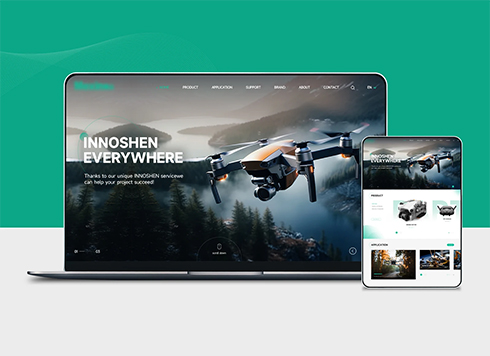 Drone Accessories Company Website Development
Incorporating gray as an accent with the pr ...
-
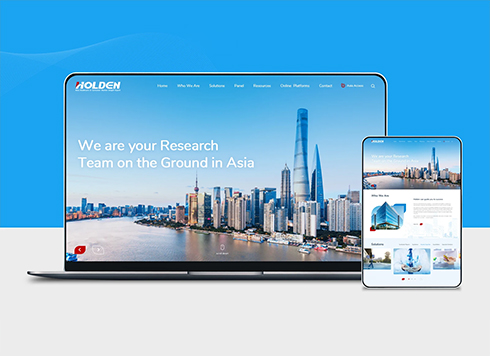 Professional International Research Service Agency Website Construction
This project serves a company with internat ...
-
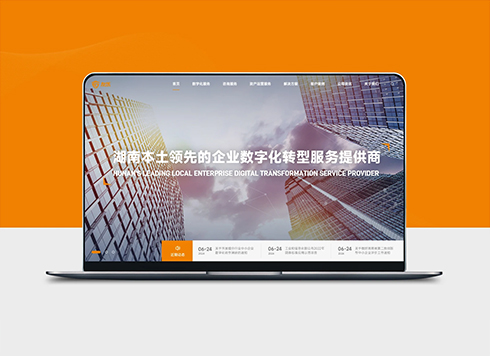 The Construction of Group Websites for Asset Operation and Digital Services
This project is to create a website for a c ...
-
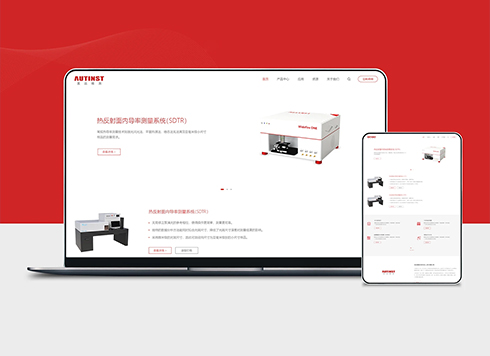 Thermal Test Equipment Website Construction
Founded in 2022, this tech company focuses ...
-
The roadmap says “in development,” but AI tells customers the feature already works — where does that mismatch usually come from?
Date: Oct 4, 2026 Read: 19
-
A client sends an AI answer screenshot and asks why it differs from our website—which sentence should we change first?
Date: Oct 3, 2026 Read: 17
-
If We Put 'No AI Crawling' on Our Website, Will Customers Really Not Find Us in AI?
Date: Oct 2, 2026 Read: 25
-
If an out-of-town client asks AI whether someone needs to be on site and the website only says “nationwide service,” which way will the answer lean?
Date: Oct 1, 2026 Read: 27
-
Customers ask AI how long our company has been founded, and the answer is one year off from business registration. What should we fix first?
Date: Sep 30, 2026 Read: 32