





Custom Website Development: Why Does a Six-Figure Project in 2026 Still Look Like a Template Site?
When a custom website ends up looking like a template, the common cause isn't developer laziness, but the design phase failing to nail down "what this page should actually look like." In 2026 delivery practices, the tipping point between true custom and template-based sites lies in front-end review, not functional testing. The value of custom development is in information hierarchy and interaction details that fit your business, not in having more feature entries than a template.
Why Custom Development Ends Up Looking Like a Template
The template feel usually shows up in a few fixed spots: no visual memorability, layout like a generic shell, button spacing at default sizes. In projects, clients often only describe "high-end and atmospheric," leaving the vendor to interpret; later, once all features are done, there's no time to polish details. Component libraries are just tools; the problem is not adapting them to the brand.
- Messy information hierarchy: the homepage is stuffed with entries, no primary or secondary, looking like a portal.
- Default spacing and typography: no unified spec for headings, body text, line heights, leading to poor scroll rhythm.
- Undesigned empty states: corners like after login, no search results, often reveal the truth.
- Visible backend traces: code clearly contains CMS keywords.
Each detail alone isn't a big issue, but stacked together, it makes people feel "same as the next shop." To avoid this, the design phase should break down key pages until "every state has a mockup," at least two versions for main functional states and empty states.
Comparison of Custom Development and Template-Based Solutions
Before going custom, clarify the differences between the two approaches to know where your money goes. The figures below are experience ranges from 2026 projects; different teams will have varying quotes.
- Cost range: custom development typically ranges from 30,000 to 200,000 RMB; template sites from a few hundred to a few thousand; semi-custom (skin changes) typically 10,000 to 50,000 RMB.
- Delivery cycle: custom development 4–12 weeks; template sites 1–3 days.
- Visual uniqueness: custom derives a design system from brand assets; templates lock into a dozen or so ready-made skins.
- Functional extensibility: custom allows code changes anywhere; templates are limited by platform fields and layout constraints.
- Maintenance cost: custom requires developers who understand the code; templates rely on platform auto-updates.
- Suitable audience: custom suits companies with high brand dependency and different business processes; templates suit temporary or simple content.
It should be noted: so-called "custom development" under 30,000 RMB is mostly template recoloring, which isn't necessarily dishonest, but the contract should specify which pages are redesigned and which are only color adjustments, to avoid disputes at acceptance.
Four Steps to Verify Whether the Delivery Is Truly Custom
Judging shouldn't rely only on code volume or tech stack. Following 2026 acceptance practices, walk through these four steps to expose problems early.
- Screen-by-screen comparison with design mockups: overlay the design and the live page to check spacing, font size, and color. If a screen has more than 5 layout differences, it fails fidelity and needs rework.
- Style-change test: ask the vendor to rewrap a heading or change a button color, and see if they change code or drag and drop in a CMS. Real custom typically changes code; template sites often use backend configuration.
- Check for CMS traces: right-click to view source and look for wp-content, shopify, or low-code platform style keywords. These don't necessarily mean a template site, but they indicate a specific framework.
- Inspect abnormal pages: no-results, 404, and form error pages. Whether these have design is a better indicator of site-wide customization.
Each step should have a pass line. For example, the first step suggests a fidelity rate of at least 95%, but not necessarily pixel-perfect; keep the main information hierarchy and spacing/typography consistent. If the fourth step shows a default 404 page, it indicates the team didn't cover all scenarios.
How to Allocate Budget and Timeline to Avoid a Template Feel
Improper budget allocation is another source of the template feel. Based on typical experience ranges, a conventional corporate site budget allocation is roughly: strategy and information architecture 15%–20%, visual design 30%–40%, front-end and back-end development 25%–35%, testing and review 10%–15%. The design phase typically accounts for 30%–40% of the total timeline; once delayed, the later schedule gets compressed.
In 2026, many teams use component libraries and AI-generated code, speeding up development, but design communication cost hasn't decreased. If a vendor says "development is fast, you don't need much design time," be wary—custom differentiation is created precisely in the design mockup phase.
- Does the requirements document include a list of page states? This is a common omission.
- Do the design mockups cover mobile? In 2026, mobile traffic share is already high; PC-only mockups need responsive rules added.
- Does the contract specify the number of mockup revisions? The typical range is 2–3 major rounds, with additional rounds billed incrementally.
Delivery Scene: A Lesson from a Building Materials Company Website Review
In 2026, when working on a building materials company website, the budget was in the typical experience range, but the client only provided one week of materials and internally reviewed three rounds. Our approach was to split into three phases: first confirm visual style, then do core pages, and finally the remaining pages. In the second phase, we discovered the client's promotional tone leaned conservative and disliked bright colors. If we had waited until all pages were done to give feedback, the visual rework would have taken at least two extra weeks within the experience range. This case shows that phased delivery isn't about schedule, but about making "correct as you go" happen before front-end development.
In another project, the client emphasized "don't want it to look like a template," yet couldn't provide references. We asked the client to collect screenshots from three competitors, then extracted the colors and layouts they approved, which brought rework costs back to the typical range. The lesson here is: the earlier the visual direction is set, the fewer changes later; otherwise, overturning after development is complete costs more than design fees can cover.
Applicable Scenarios and Boundaries
Custom development suits websites that need high brand differentiation, special business logic, and continuous iteration—such as multilingual corporate sites, booking/ordering flows, and membership point systems. It doesn't suit temporary campaigns with budgets under 10,000 RMB, fewer than five pages, or needing to go live within a week. In such cases, a template is more cost-effective.
A one-line boundary: does your website have a brand demand that "it shouldn't look like others'?" If not, the ROI of custom development is low.
- Suited for: high brand recognition, special processes, and a team capable of continuous iteration.
- Not suited for: budgets under 10,000, fewer than 5 pages, tight launch deadlines.
- In one line: if looking like others makes you feel it's a loss, go custom; otherwise use a template.
If you're evaluating, start by organizing brand assets and a page list, ask the vendor for a one-page visual style mockup, and specify in the contract which pages are redesigned and how many major mockup revisions are included. Budget is a hard constraint, but more important than budget is confirming the design direction first.
FAQs
If a custom website looks worse than a template, is the developer slacking off?
Usually not slacking, but the design mockups are too rough, or front-end fidelity is insufficient. Templates are highly polished; if the custom mockups don't nail down details, the launch will naturally resemble a template.
Can I get custom development on a small budget?
You can, but lower expectations. Under 10,000 RMB, semi-custom is more suitable—choose a base framework and change the visual; a full redesign requires the typical budget range, otherwise it's easy to end up with a template feel.
Which aspect should I focus on during acceptance?
Focus on fidelity to the design mockups, not the feature list. Functional bugs are immediately visible, but spacing, font size, and empty states are what determine if it looks like a template.
How can I tell if the development team used a template?
First, do the style-change test; then check the code for CMS keywords; then compare the design mockups with the live site. But these only indicate the tech stack, not laziness; the contract is the final reference.
-
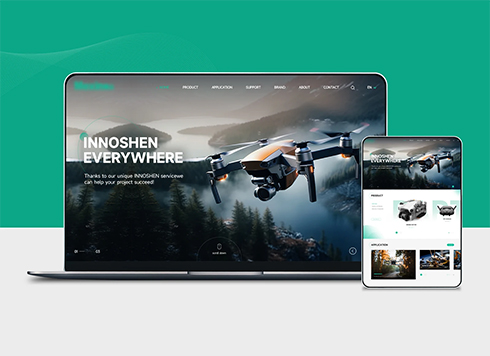 Drone Accessories Company Website Development
Incorporating gray as an accent with the pr ...
-
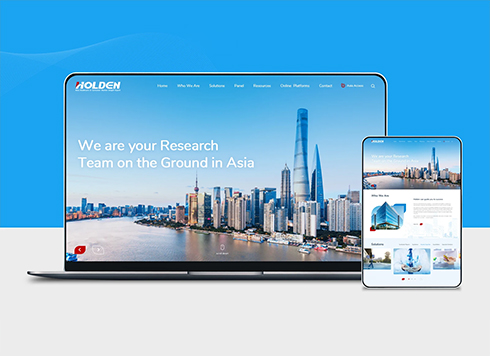 Professional International Research Service Agency Website Construction
This project serves a company with internat ...
-
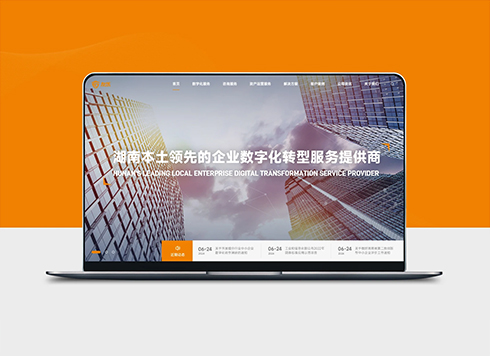 The Construction of Group Websites for Asset Operation and Digital Services
This project is to create a website for a c ...
-
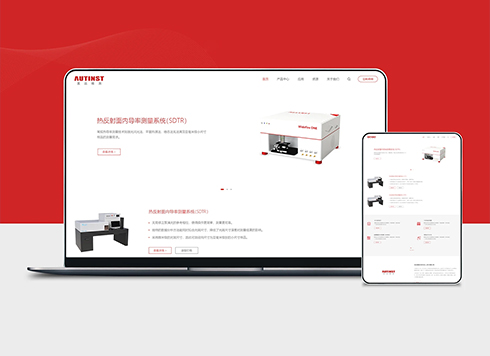 Thermal Test Equipment Website Construction
Founded in 2022, this tech company focuses ...
-
How much does a company website cost in Hangzhou? Local custom vs. template: what's the difference?
Date: Aug 17, 2026 Read: 263
-
Custom Website Development: What Does It Take to Not Waste Money in 2026?
Date: Aug 15, 2026 Read: 145
-
Partner Logo Was Forwarded from a WeChat Group and Their Boss Gave Verbal Approval—Can It Go Straight on Our Website Case Studies Page?
Date: Oct 22, 2026 Read: 9
-
Both www and non-www open: keep both as extra entry points or redirect to one?
Date: Oct 21, 2026 Read: 20
-
Website Custom Development: What If a Client Wants a Bigger Employee Count on 'About Us' but It Doesn't Match the Bid?
Date: Oct 20, 2026 Read: 23