





Custom Website Development Always Blows the Budget? Can 2026 Cost Control Start at the Requirements Stage?
Custom website development exceeds budget mainly because requirements are not frozen before work starts. Based on 2026 project delivery habits, freezing requirements before development and prioritizing features can significantly reduce the probability of overspending. Conversely, making changes as you go will inevitably cause cost and schedule to spiral out of control. This assessment method applies to most corporate websites, business systems, and small-program customization projects with a backend.
Why are custom websites still prone to budget overruns in 2026?
The direct cause is scope creep. The client assumes adding a feature is simple, and the vendor avoids rejecting it to win the contract, but every change requires redoing development, testing, and acceptance. Based on project delivery experience, the comprehensive cost of a single requirement change is typically 2–3 times the original estimate, because logic changes affect multiple modules.
Although website building tools are more mature in 2026, companies are also pursuing greater business differentiation, so customization demand has not decreased. On the contrary, because low-code platforms can quickly scaffold a framework, many projects are misjudged as “simple,” only to discover that real business logic requires changes everywhere.
- Vague requirement descriptions, where different departments have different interpretations of the same term.
- No acceptance criteria; whether a task is complete depends entirely on the vendor's discretion.
- Content and materials are delayed, development is interrupted, and the schedule extends.
- Technology choices go beyond the team's familiarity, raising long-term maintenance costs.
Budget overrun is not necessarily due to unreasonable vendor quotes, but more likely because the contract does not specify a change process. As long as you agree that “requirement changes require written confirmation and are chargeable,” most overspending can be stopped in advance.
Three-Step Requirements Validation: Seal the Overspending Leak Before Work Starts
Before starting customization, use the three-step validation method to turn requirements from “feelings” into a “list,” which is more effective than bargaining later. This framework remains a common prerequisite in 2026 corporate website and business system projects.
- Describe the business goal in one sentence: After this website or system goes live, which users will it help solve what problem? If you cannot state this clearly, all subsequent features may be wasted.
- List all features and label them P0, P1, P2: P0 is must-have for launch, P1 is nice-to-have but can be postponed, and P2 is a bonus. This step directly exposes misjudgments about priorities.
- Write specific pages and interaction details for each P0 feature. For example, “After form submission, redirect to a success page and send an email notification,” rather than just “make a contact form.”
The high-cost part of requirement changes is changing the structure, not changing the text. Defining P0 first and then discussing other items allows both parties to know what to cut and what not to cut when the budget is tight. In delivery, projects that skip these three steps typically have significantly higher rework rates than those that go through requirement freezing.
After completing requirements validation, it is best to output a requirements specification document in writing and agree that during the “freeze period” only copy changes are allowed, not structure changes. If structural changes are truly necessary, evaluate costs and schedules through the change process. This step greatly reduces overspending caused by verbal promises.
Applicable Scenarios and Boundaries: Which Projects Should Avoid Custom Development
Custom development suits projects with unique business processes, integration needs with internal systems, or high brand visual requirements. When templates cannot address business logic, customization adds value.
The essential difference between template sites and custom development is that template sites are “choosing within an existing framework,” while customization is “deriving structure from business needs.” If the match between your business logic and the template's modules is below 70–80%, forcing a template often requires extra CSS and plugins to compensate, making it no cheaper than customization.
- Suitable: Business processes include industry-specific traits that templates cannot cover; need data integration with CRM, ERP, OA systems; have clear requirements for page interaction and brand tone.
- Not suitable: Just displaying company introduction and product images—a template with brand color changes is enough; budget is below the basic threshold for custom development. Based on 2026 common market rates, the experience range for a simple display-oriented custom website starts at around 20,000–50,000 RMB; below this, even requirements analysis and design costs are not covered. Go-live time is less than two weeks, which forces rushed custom work; better to use a template first and iterate. The team has no dedicated person to provide content and make decisions, so requirements will require endless meetings.
A useful boundary check: if this website will likely need to be redone within three months, do not use custom development for trial and error.
How to Judge Whether a Vendor's Quote Is Reasonable?
Quoting methods usually fall into two types: per-person-day billing and project-based total package. Both have applicable conditions; choosing the wrong one is more dangerous than the price level itself.
- Per-person-day billing: Suitable for projects with clear requirements, technical difficulty, and continuous iteration. When signing the contract, lock down the daily workload and acceptance standards to avoid slacking, otherwise the total price will be out of control.
- Project-based total package: Suitable for one-time delivery with clear goals. The risk is that the vendor hides requirements to control costs, leading to disputes later. Before signing, explicitly state change fees, such as how much per additional page and the standard charge for each major modification.
A lower quote is not always better; if the price is so low that it cannot cover normal labor costs, it usually means costs will be squeezed within the scope of requirements later. A common practice in 2026 is to ask for itemized quotes by function, with each item clearly listed.
You can ask the vendor to provide itemized person-days and unit price per person-day, then compare with the typical industry range. (In the 2026 experience range, junior engineers are several hundred to just over a thousand RMB per day; senior engineers are around 1,500 to 3,000 RMB per day, with notable regional variation.) If the total price is very low but the person-days are unreasonable, either requirements have been compressed or there will be follow-up charges.
- Require quotes by functional module, not just a single total price.
- Specify supported browsers and screen sizes; common requirements include Chrome, Safari, Edge, and the in-app browsers of Android and iOS WeChat.
- Clarify whether deliverables include source code, database scripts, and deployment documentation, or just the deployed website.
- Write out the after-sales scope. Typically, a free bug-fixing period ranges from two weeks to one month, after which new needs are charged.
On-Site Delivery: How to Reduce Rework When the Budget Is Tight?
In a project delivered by Xiyue Company in 2026, the client's budget was only 70% of the original quote, and content materials arrived partially only in the third week of development. We split the pages into the main flow and secondary pages. The main flow was developed, reviewed, and accepted first. While waiting for materials, we worked on static mockups of secondary pages. The final launch was three weeks later than originally planned, but rework was limited to two pages, with no full restart. If we had insisted on developing all pages at once, it would likely have dragged on longer and required extra budget.
This example shows that when the budget is insufficient, focus on reducing rework as the core goal, and use batch acceptance to manage changes.
FAQ
How much does custom website development usually cost?
Based on common 2026 market rates, a display-oriented corporate website usually costs 20,000–80,000 RMB; a site with a backend for content editing typically costs 50,000–150,000 RMB; projects involving business systems or small-program front-end and back-end commonly fall in the 100,000–300,000 RMB range, depending on feature complexity. These are experience ranges and must be based on the detailed requirements list.
How long does custom website development take?
The typical experience cycle from requirement confirmation to launch for a standard corporate website is 6–10 weeks. Projects involving a backend, payment, and other logic usually take 10–16 weeks. A tight timeline forces you to cut testing and review, which tends to create hidden problems.
Who is responsible if custom website development exceeds budget?
First, check whether the contract includes a clause stating that “requirement changes require written confirmation and are billed separately.” If the vendor expands the scope without confirmation, the client can refuse to pay. If the client itself keeps adding features, the resulting overspending usually needs to be negotiated as an additional payment.
Can a custom-developed website be redesigned later?
As long as the ownership of source code and database is clear, a custom website can be iterated. Get the full source code, database scripts, and deployment documentation at delivery, so you can continue with a different vendor in the future. If you only have the final product without the source code, future redesign costs will be very high.
Before deciding on a custom website in 2026, spend two days on requirements validation, then discuss quotes and timelines. No vendor can think through your business logic for you. The advice in this article is only suitable for projects with relatively clear requirements and a budget above the customization threshold. If you have only one to two weeks to launch, or the budget is below the basic range, prioritize a template site and consider customization after your business is proven.
-
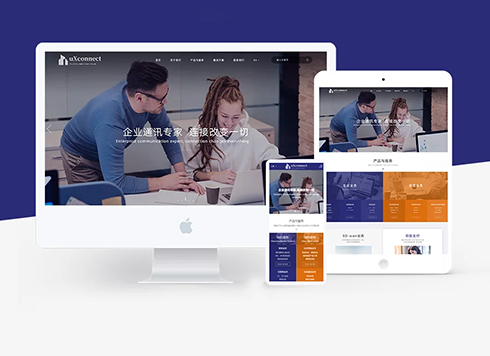 Customized Communication Solutions for Enterprises Website Development
Founded in 1996, this company focuses on pe ...
-
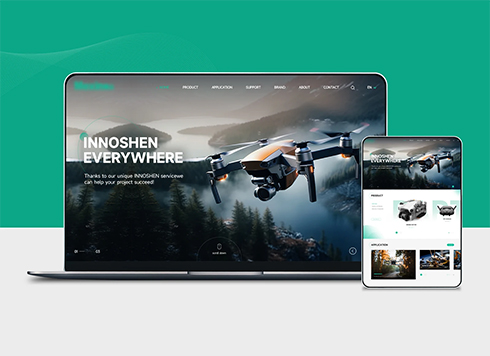 Drone Accessories Company Website Development
Incorporating gray as an accent with the pr ...
-
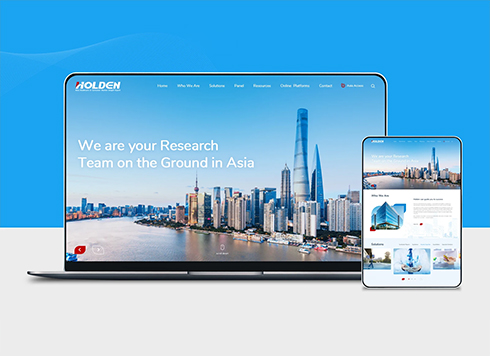 Professional International Research Service Agency Website Construction
This project serves a company with internat ...
-
 The Construction of Group Websites for Asset Operation and Digital Services
This project is to create a website for a c ...
-
Custom Website Development: If the Site Form Collects Phone Numbers, Does the Privacy Policy Really Need to Be Posted?
Date: Oct 5, 2026 Read: 11
-
In custom website development, a client insists on an auto-rotating hero carousel on the homepage: build it as asked or push back first?
Date: Oct 4, 2026 Read: 15
-
Custom website development: when a product appears in both homepage recommendations and industry solutions, how many places need updating when its price changes?
Date: Oct 1, 2026 Read: 33
-
In custom website development, clients want to adjust font size and spacing in the CMS—should we open that door?
Date: Sep 30, 2026 Read: 40
-
If the Website Says “Digital Solutions,” Will It Mismatch When Customers Ask AI “How Much for a Website Redesign?”
Date: Sep 24, 2026 Read: 50