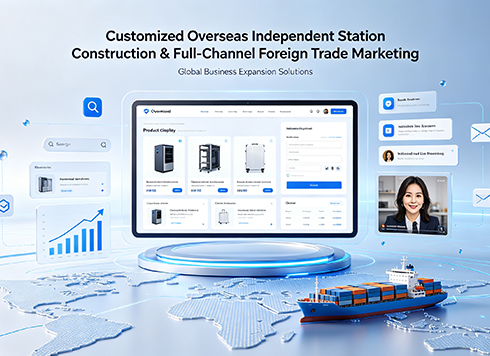





Custom Website Development in 2026: When to Do It and When to Avoid
Custom website development remains a misunderstood topic in enterprise website building in 2026: it is not that the more expensive, the better, nor does every website need it. To decide whether to go custom, the core depends on three conditions: whether the business needs independent features, whether the brand requires differentiation, and whether the website will undergo long-term iteration. Based on website building and design implementation experience, template sites are suitable for information display, while custom development suits transaction, membership, complex workflows, or strong brand needs. Judge the requirements first, then talk about budget and timeline, so you won't waste money.
Where exactly is the price difference between custom and template?
For the same corporate website, a template site may go live for a few thousand yuan, while custom development quotes range from ten to twenty thousand to over one hundred thousand yuan. The price difference mainly comes from three aspects: the degree of customization in design and front-end, the scalability of backend features, and data ownership and room for secondary development. In 2026, the common practice is that template sites quickly solve the question of "existence," while custom sites address "usability and modifiability."
- Price: Template sites typically range from 0.3 to 10k yuan, while custom sites typically range from 20k to 150k yuan (experience range).
- Timeline: Template sites take 1-2 weeks, custom sites 6-12 weeks.
- Feature scalability: Template sites can only use existing modules, while custom sites allow development of entirely new modules.
- Brand identity: Template sites have obvious homogeneity, while custom sites can be uniquely designed around the brand.
- Data ownership: Template sites are bound by platform constraints, while custom sites deliver full source code and database.
However, template sites have the advantages of quick launch and low cost, making them suitable for teams with tight budgets and simple needs. In 2026, many enterprises first use a template site to validate their business, then migrate to a custom site after accumulating data. This "template first, custom later" strategy is also worth considering.
Do the "Four-Dimensional Self-Check" First: Does Your Business Really Need Customization?
To decide whether to go custom, don't ask about price first—ask about your business. It is recommended to self-check using the following four dimensions. If more than two items fall under any single dimension, the value of customization becomes evident.
- Feature complexity: Do you need modules not available in templates, such as online payment, membership tiers, multi-role permissions, appointment scheduling, custom forms, etc.?
- Brand independence: Does the website handle lead generation or conversion responsibilities, and does it need to visually stand out from competitors?
- Data assets: Do you want to control traffic data and customer data yourself, and be able to do secondary development or data migration in the future?
- Long-term iteration: Do you plan to launch new features, redesign, or integrate with other systems within the next year?
Each dimension corresponds to actual costs: the more special the features, the higher the development hours; the higher the brand requirements, the greater the design investment; for data independence, server and development requirements will rise accordingly. If all four dimensions are negative, a template site is faster; if one or two are clearly applicable, you can start preparing a custom budget.
Discussing Budget and Timeline in 2026: Follow This Experience Range
Based on 2026 project delivery practices, custom websites have no standard price, but common ranges can be referenced. For corporate showcase custom sites, budgets typically range from 20k to 50k yuan with a timeline of 4 to 6 weeks; for application websites with transaction or membership systems, budgets typically range from 60k to 150k yuan with a timeline of 8 to 12 weeks; for more complex enterprise-level platforms, budgets exceed 150k yuan with a timeline of more than 3 months. These are experience ranges; specific prices depend on the feature list and design requirements.
- The clearer the early requirements, the more accurate the quote: list essential features, secondary features, and features you don't want first—this can save a significant amount of money.
- Agree on the number of design revisions in advance: a common rule is up to 3 rounds for the homepage and 2 for inner pages, with additional revisions billed per round.
- Whether content assets are complete affects the timeline: if copy, images, or videos are not ready, development can only wait, causing delays.
One way to control costs is to "core first, iterate later." When going custom in 2026, don't demand a "big and complete" solution from the start; launch with core features first, then iterate. A common counterexample is when the client piles all ideas into the first version, resulting in budget overruns and delays. What qualifies as passing: being able to split requirements into version one and version two.
The requirements list submitted to a service provider should at least include: the website's target users, core pages, functional modules, content types, expected data volume, third-party integration needs, and your preferred maintenance approach. The more specific the requirements, the less likely the quote and timeline will change later.
Details Most Likely to Cause Disputes During Delivery
In projects, it's common that conflicts between clients and developers often arise not from "whether it was built" but from "whether it was built as I imagined." During delivery, check the following details first to save a lot of rework.
- Browser compatibility scope: Agree in advance on which versions of Chrome, Edge, and Safari to support, and whether to support old IE, to avoid later disputes.
- Responsive standards: Specify clearly whether to adapt to mobile, tablet, and desktop, or if special handling for large screens is needed.
- Backend permissions and operation logs: Whether account permissions, editing workflows, and operation records in the admin backend meet daily usage habits.
- Code quality and data security: Whether the source code includes complete comments, whether the database has a backup mechanism, and whether SSL is properly configured.
- Acceptance criteria: What serves as proof of "done"—whether the pages load, features work, or a performance testing report is required.
In one project, the client had a limited budget and initially agreed to only core features, but kept adding requirements during the process, causing delivery to be delayed from 5 weeks to 9 weeks. Later, our team listed requirement changes separately for confirmation, and re-evaluated timeline and costs for changes beyond scope, which prevented further disputes. This case demonstrates that controlling requirement changes is a necessary condition for smooth delivery. In the typical delivery experience range, uncontrolled requirement changes usually delay projects by 1 to 3 weeks, with costs increasing by 10% to 30%.
During acceptance, it is recommended to check items page by page and function by function, rather than only looking at mockups. Record all issues in writing or with screenshots and submit them uniformly to avoid misunderstandings from verbal communication.
Applicable Scenarios and Boundaries: When Not to Choose Custom
Custom development suits enterprises that rely on websites for customer acquisition, have business systems, or require a strong brand image. Examples include tech companies, online merchants, and traditional enterprises that need to integrate with third-party systems.
- Websites with interactive features like online transactions or membership centers.
- Need to integrate with ERP, CRM, or third-party APIs.
- Visual identity directly supports sales and needs to stand out from peers.
- Have plans for data accumulation and secondary development.
Conversely, if you just need a corporate business card to display company introduction, product showcase, and contact information, a template site is sufficient—even a mini-site on WeChat Work can do. In 2026, many small and medium-sized enterprises build websites just to let customers see information; they don't need complex business systems. In such cases, going custom is a waste.
- Only static display needed, no online interaction.
- Short-term marketing campaign pages that will be discarded after use.
- The team has no technical maintenance staff and doesn't want to engage a service provider for long-term support.
As long as a website meets business goals, it doesn't necessarily have to be custom; template sites solve the question of "having it," while custom sites address "usability" and "modifiability."
Common Questions
How much does a custom website typically cost?
The experience range is from 20k to 150k yuan, mainly depending on feature complexity and design requirements. Showcase custom sites typically cost 20k to 50k yuan, while those with transaction systems generally cost 60k to 150k yuan.
How long does custom website development take?
Based on typical 2026 timelines, showcase custom sites take about 4 to 6 weeks, application websites take about 8 to 12 weeks, and complex platforms take more than 3 months. Complete content assets and unchanged requirements are prerequisites for on-time delivery.
How to choose between custom and template websites?
First do the four-dimensional self-check: features, brand, data, and iteration. If even one clearly applies, it is recommended to evaluate the value of customization; if all are negative, a template site is more economical.
How to evaluate the capability of a development company?
Focus on their past cases in similar projects, code standards, clarity of acceptance criteria, and whether they are willing to fully deliver source code and database to the enterprise. Don't just look at mockups.
Is ongoing maintenance for a custom website expensive?
Typical maintenance costs range from a few thousand to tens of thousands of yuan per year, depending on the amount of changes. The advantage of custom development is that modifications can be made on demand, and maintenance costs are controllable, but you need to reserve a budget.
Action suggestion: Take a piece of paper and list your website's must-have features, nice-to-have features, and features you don't need. Use the four-dimensional self-check to decide whether customization is needed. Once confirmed, bring the feature list to a service provider to discuss the quote and timeline—it will be much more accurate. The conclusions in this article mainly apply to general corporate website scenarios, not including special cases such as e-commerce platforms, government portals, or ultra-large systems, which require separate assessment.
-
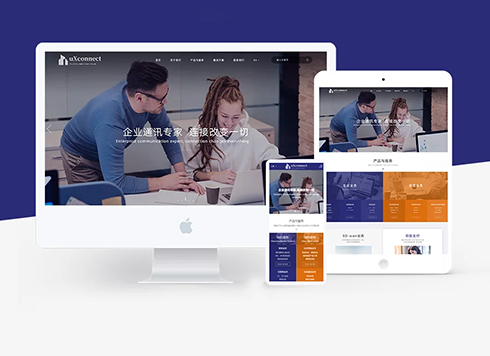 Customized Communication Solutions for Enterprises Website Development
Founded in 1996, this company focuses on pe ...
-
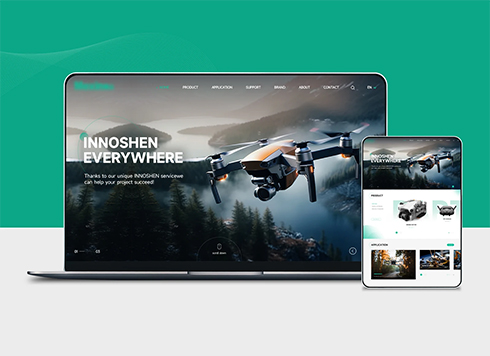 Drone Accessories Company Website Development
Incorporating gray as an accent with the pr ...
-
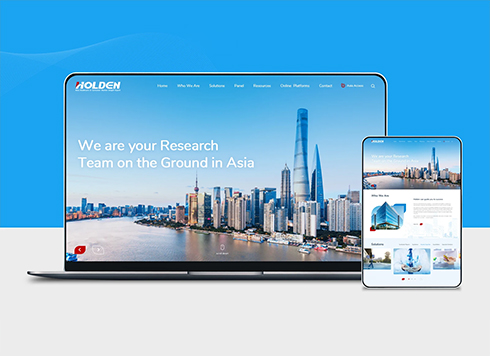 Professional International Research Service Agency Website Construction
This project serves a company with internat ...
-
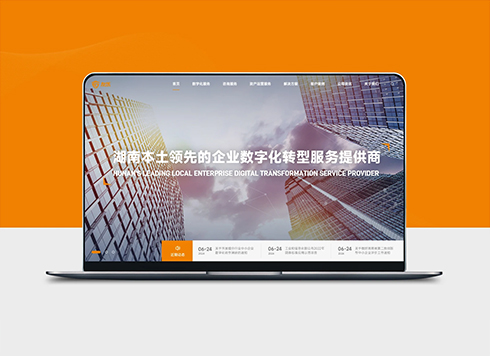 The Construction of Group Websites for Asset Operation and Digital Services
This project is to create a website for a c ...
-
Custom Website Development: If the Site Form Collects Phone Numbers, Does the Privacy Policy Really Need to Be Posted?
Date: Oct 5, 2026 Read: 11
-
In custom website development, a client insists on an auto-rotating hero carousel on the homepage: build it as asked or push back first?
Date: Oct 4, 2026 Read: 15
-
Custom website development: when a product appears in both homepage recommendations and industry solutions, how many places need updating when its price changes?
Date: Oct 1, 2026 Read: 33
-
In custom website development, clients want to adjust font size and spacing in the CMS—should we open that door?
Date: Sep 30, 2026 Read: 40
-
If the Website Says “Digital Solutions,” Will It Mismatch When Customers Ask AI “How Much for a Website Redesign?”
Date: Sep 24, 2026 Read: 50