




Custom Website Development: Is It Still Worth Investing in 2026?
Whether custom website development is worth it depends on the role the official website plays in your business. A common judgment in 2026: if the website needs to connect orders, member systems, or internal systems, the scalability of custom development is usually better than template sites; if you only need a few pages of introduction, a template site is more practical. This is not about budget size—it's about the depth of your requirements.
What Problems Does Custom Website Development Actually Solve?
Custom website development isn't about making pages prettier—it's about making every function fit your business process. For example, online quoting, inventory linkage, permission levels, and ERP/CRM integration are deep-water areas that template sites cannot touch. By 2026, corporate websites have evolved from a "business card" to "a link in the customer acquisition chain." The value of customization lies in connecting the conversion path with backend data, not just visual differences.
Many businesses initially think a website is optional, but after starting ad campaigns, they realize the landing page fails to convert and leads cannot be tracked. Then, going back for customization costs more than doing it from the start. So, to decide whether to customize, first consider whether your website needs to handle these tasks in the next two years.
- Requirements include unique business logic (e.g., multi-level distribution, online contracting)
- Marketing needs precise tracking of each user's source and behavior path
- Systems need to integrate with existing software or databases
- Brand cannot use a uniform template; original interaction and expression are needed
What Stages Should You Monitor in a Custom Project?
According to 2026 project delivery habits, a custom website typically goes through six stages from launch to go-live: requirements gathering, prototype confirmation, UI design, development, testing, and deployment. Many projects are delayed or reworked because the first two steps weren't done thoroughly—requirements were only skimmed, and prototypes weren't detailed to each page, causing changes to have ripple effects later. For example, Xiyue Company first conducts requirements gathering and prototype confirmation during delivery, which significantly reduces rework.
Each stage has clear deliverables. Requirements gathering outputs a feature list, prototype confirmation outputs clickable wireframes, UI design outputs visual mockups, development submits code in phases, and testing covers edge cases. If you skip prototyping and go straight to UI, expect to redo things during development.
- Requirements Gathering: Confirm "must-haves" and "nice-to-haves" with stakeholders, writing them into a prioritized list
- Prototype Confirmation: Connect all pages and interactions with wireframes, clicking through to verify each one
- UI Design: Create visual mockups based on the prototype, focusing on mobile adaptation
- Frontend and Backend Development: Submit code in small modules, don't wait until everything is done to deliver
- Testing and Acceptance: Cover normal paths, abnormal inputs, and weak network conditions; list issues and fix them one by one
- Deployment: Confirm domain filing, server configuration, and backup plans before switching to the production environment
One easily overlooked point: always leave buffer time after testing. In 2026, many projects get stuck on content filling and third-party API integration, so reserve 5-7 working days to be safe.
Four-Dimensional Checklist: Key to Evaluating Custom Website Quality
How to judge if a custom website is good? Consider a four-dimensional checklist: requirement coverage, interaction fluency, expansion flexibility, and code maintainability. These four dimensions are more comprehensive than just looking at visuals, especially determining future operating costs and risks.
Requirement coverage means whether the feature list has actually been implemented, not just stuck in a demo; interaction fluency refers to whether page transitions, form submissions, and other operations run smoothly; expansion flexibility means whether adding a new feature requires changing the underlying structure; code maintainability means whether a new developer can take over. In 2026, many corporate websites die from being locked into third-party dependencies—code is unreadable, and maintenance costs naturally rise.
- Requirement Coverage: Use an acceptance checklist to check off each item; if anything is missing, add the process immediately
- Interaction Fluency: Test on real networks, recording response times and anomalies
- Expansion Flexibility: Try adding a new field or module to see the development effort
- Code Maintainability: Require handover documentation and commenting standards so you don't depend on one person later
Note that these four dimensions are progressive. Without requirement coverage, nothing else matters; interaction lag causes visitor loss; expansion difficulty makes every redesign feel like a rebuild; unmaintainable code is a time bomb for the company.
Custom Development vs. Template Sites: How to Choose in 2026
Many businesses struggle between custom and template, only comparing quotes. They should compare total cost of ownership (TCO), including construction cost, modification cost, maintenance cost, and opportunity cost. In 2026, template sites typically cost a few hundred to a few thousand per year, while custom sites have a one-time investment from tens of thousands to hundreds of thousands—but the difference lies in the long term. A template site may restrict you from changing a field due to platform limits; a custom site, as long as requirements are clear, modification is just a matter of work hours.
- Construction Cost: Template sites are low; custom sites are high (usually 5-10 times or more than template sites)
- Time to Launch: Template sites take a few days to two weeks; custom sites take 4-12 weeks or more
- Functional Boundaries: Template sites are limited by platform features; custom sites allow free expansion
- Ongoing Maintenance: Template sites follow platform rules; custom sites evolve with contracts and code
- Data Security: For custom sites, you own the source code; for template sites, it usually resides on third-party platforms
If your corporate website only needs three to five pages in the next two years and doesn't require order intake, a template site is a reasonable choice. If you need personalized quotes, a member system, or integration with business systems, custom development is more cost-effective. The criterion isn't "Do I have money?" but "Does the platform restrict my business?"
Applicable Scenarios and Boundaries
Custom development suits businesses with complex business logic, long-term iteration needs, and data security requirements. Examples include a manufacturing price inquiry system, an educational institution's booking and scheduling, or an e-commerce distribution system. In these scenarios, a template site will likely make you adapt your needs to the platform and lose efficiency.
When custom is not suitable is also clear: a purely informational site, an extremely tight budget, a one-week launch requirement, or just a temporary campaign page. In 2026, low-code tools can assemble many features. If you're unsure about your needs, spending a few thousand on a prototype first is a better way to validate your ideas than directly investing in custom.
- Suitable for: unique business processes, features needing integration with existing systems, sensitive data requiring private deployment
- Not suitable for: static information display, budgets below 20,000 CNY, launch timelines under 10 days, or unstable requirements
Boundary statement: The baseline for custom development is "stable requirements worth long-term investment." If you can't even articulate what the website should do, don't start yet.
Common Questions
How long does custom website development usually take?
Typical corporate display sites take about 4-6 weeks; sites with member or order systems take about 2-3 months. In 2026, most projects are scheduled iteratively; the first launch can include only core features, with new modules added later.
How to judge if a development team is reliable?
Ask them to show similar case studies and explain how they translate requirements into prototypes. Be wary of teams that only show portfolios without discussing process. Also, signing a detailed requirements document before paying a deposit can avoid many disputes.
How much does custom website maintenance cost per year?
Basic maintenance (domain, server, security updates) commonly costs a few thousand to over ten thousand CNY in the market; feature overhauls are billed separately. To avoid disputes, clearly state the maintenance scope and response time in the contract.
Can a template site be converted to a custom one?
Yes, but the cost is often close to a rebuild. Platform-locked data structures and page logic are difficult to migrate. In 2026, define requirements before choosing a platform, rather than starting with a template and then thinking about adding features.
The direction is clear: first spend two weeks sorting out your business processes, separating "must-haves" and "nice-to-haves" into a list. Prioritize core features if the budget is limited; visual polish can come later. If requirements are still vague, use configurable tools for minimal validation before deciding on custom investment. Whichever option you choose, don't let your website stop at "usable"—make it consistently generate leads for your business.
-
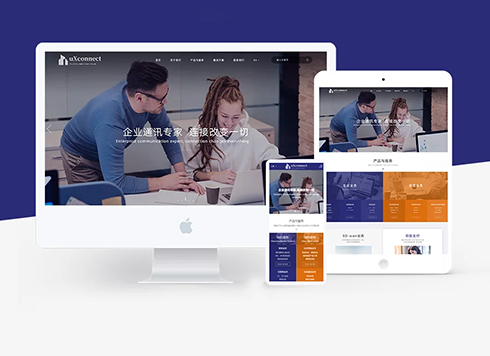 Customized Communication Solutions for Enterprises Website Development
Founded in 1996, this company focuses on pe ...
-
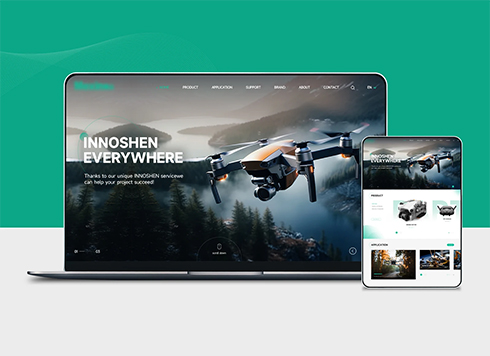 Drone Accessories Company Website Development
Incorporating gray as an accent with the pr ...
-
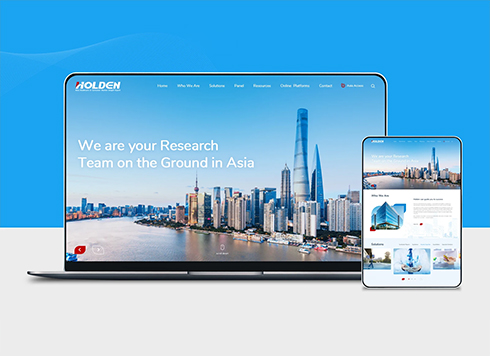 Professional International Research Service Agency Website Construction
This project serves a company with internat ...
-
 The Construction of Group Websites for Asset Operation and Digital Services
This project is to create a website for a c ...
-
How to Approach Custom Corporate Website Development: A Practical 2026 Guide from Requirements to Delivery
Date: Aug 9, 2026 Read: 102
-
Custom Website Development: If the Site Form Collects Phone Numbers, Does the Privacy Policy Really Need to Be Posted?
Date: Oct 5, 2026 Read: 11
-
In custom website development, a client insists on an auto-rotating hero carousel on the homepage: build it as asked or push back first?
Date: Oct 4, 2026 Read: 15
-
Custom website development: when a product appears in both homepage recommendations and industry solutions, how many places need updating when its price changes?
Date: Oct 1, 2026 Read: 33
-
In custom website development, clients want to adjust font size and spacing in the CMS—should we open that door?
Date: Sep 30, 2026 Read: 40