




How to Approach Custom Corporate Website Development: A Practical 2026 Guide from Requirements to Delivery
Custom website development is a website-building approach where the development team implements everything from information architecture, interface design, to front-end and back-end coding according to the enterprise's business processes, brand requirements, and user goals. Compared to template websites, it places more emphasis on business fit, and is suitable for scenarios that require distinctive functionality, proprietary brand identity, or integration with internal systems. By 2026, mainstream custom development processes have matured. As long as companies manage requirements confirmation, progress oversight, and acceptance criteria well, they can deliver a usable website within a controllable timeframe.
The Essential Difference Between Custom Development and Template Websites
Template-based website building involves selecting a pre-made theme, modifying text and images, and going live quickly. Custom development, on the other hand, starts with requirements analysis, redesigns the information architecture and page prototypes, and then proceeds to development. The underlying difference is not about "expensive or cheap," but about "business fit." Template websites are suited for content display sites, while custom websites are suited for system-based sites that rely on process interactions.
- Functional boundaries: Template sites can only use the built-in functional modules, while custom sites can design backend workflows based on business logic.
- Page presentation: Template sites have fixed layouts, while custom sites can create differentiated visuals according to brand guidelines.
- Extensibility: Template site upgrades depend on the template provider, while custom sites typically own the complete source code and documentation, making subsequent iterations more controllable.
- Launch timeline: Template sites typically take 1-3 weeks, while custom sites commonly take 1-3 months, depending on the scope of requirements.
- Budget range: Template sites are relatively low-cost, while custom sites include design, development, and testing costs, representing a significantly higher investment.
A useful benchmark is this: if the website's main role is to display company introductions and product lists, a template site is more economical; if the website handles business functions such as lead collection, user registration, or order inquiries, custom development is a better fit.
Why Still Consider Custom Development in 2026?
In 2026, corporate requirements for websites go beyond merely "having an official presence." Websites need to integrate with systems like WeChat, CRM, and ERP for data synchronization, while also satisfying finer-grained permission management and content audit needs. Custom development helps enterprises avoid the "process compromises that come from applying templates," ensuring that technology implementation revolves around the business.
However, custom development is not applicable to all situations. You first need to determine whether the core pain point stems from functionality or processes. If the goal is merely to change the visual style, there is no justification for custom development.
- Unique business processes: For example, multi-tier dealer quotation, appointment dispatching, or membership tier calculations, which templates struggle to simulate.
- Data integration needs: The website must write orders into internal enterprise systems, or require real-time inventory synchronization.
- High brand delivery standards: Page dynamic effects, motion details, and interaction pathways require repeated refinement.
- Security and compliance requirements: Data storage location, log retention, and permission hierarchies need autonomous control.
We recommend that before project kickoff, you articulate in one sentence: "What core business problem should the website solve?" If the answer relates to processes or data, custom development is worth considering.
The Five-Step Implementation Method for Custom Website Development
Custom development often faces delays due to changing requirements, slow design approvals, and vague acceptance criteria. Dividing the process into five phases, with clear exit criteria for each phase, can significantly reduce risk. This method, based on common project delivery practices in 2026, applies to small and medium-sized custom websites.
- Requirements research and objective definition: Interview business stakeholders, collect current and desired processes, and produce a requirements list.
- Information architecture and prototype design: Organize page hierarchy, draft wireframes, and define key user flows and fields.
- Visual design and interaction confirmation: Generate high-fidelity design mockups based on brand guidelines, and confirm page states, animations, and responsive behavior.
- Front-end and back-end development with system integration: Write code according to prototypes, configure domain names, servers, and third-party APIs, and complete data integration testing.
- Testing, acceptance, and launch delivery: Execute functional, compatibility, and security tests, confirm each item against the acceptance checklist, and then go live.
The key to this framework lies in "each phase producing an inspectable deliverable": a requirements list during the requirements phase, prototypes during the design phase, a test environment during the development phase, and an acceptance form during the acceptance phase. As long as the previous step has not been confirmed, do not proceed to the next step. This prevents rework.
How to Assess Whether a Development Team is Reliable: Four Checkpoints
Team selection is a common pitfall in custom website development. Many issues are not visible at contract signing, but they can be evaluated in advance using four dimensions.
- Requirements understanding: Do they restate your business scenario in their proposal, rather than simply applying a generic solution?
- Project transparency: Do they disclose project phases, responsible persons, code repositories, and update cycles? Are they willing to share progress through weekly reports?
- Testing habits: Do they include multi-browser adaptation, mobile testing, and basic security configurations (e.g., HTTPS, SQL injection protection)?
- Deliverable scope: Do they clearly state source code ownership, backend usage rights, ongoing maintenance costs, and data import/export formats?
Additionally, we advise specifying acceptance milestones and payment schedules in the contract to avoid paying the full amount upfront. If a vendor verbally promises "we can do everything" without explaining boundaries, you should be cautious.
Applicable Scenarios and Boundaries
Typical situations suitable for custom development include: enterprise business processes involving orders, approvals, or membership systems; the need to integrate with third-party systems; or the website serving as a core customer acquisition tool with clear requirements for visual design and conversion paths. In such cases, custom development can readily deliver business returns.
Equally specific are the scenarios where custom development is unsuitable: the product or service only occasionally uses the website, the content volume is small, and update frequency is low; the budget is tight and the launch timeline is within two weeks; or business requirements are not yet clarified and the goal is simply to make the website "look better." In these cases, prioritize a template site or a simplified official website first, and consider upgrading once requirements are defined.
Boundary statement: If the website does not directly participate in the business loop, custom development is not a necessary option. The criterion is whether there is any data or process interaction between the website and business systems.
Frequently Asked Questions
How long does custom website development usually take?
For small and medium-sized custom websites, the typical timeline is 6-10 weeks, including requirements, design, development, and testing, depending on the number of features and interface complexity.
How can I prevent the developer from adding charges mid-project?
Before signing the contract, prepare a requirements list that specifies the delivery criteria for each feature, and agree on a change process: new requirements should go through an independent evaluation to avoid verbal agreements.
Is it troublesome to maintain a custom-developed website later?
Maintenance difficulty depends on code quality and documentation completeness. During development, require a backend operation manual, deployment documentation, and source code comments. This can significantly reduce future maintenance costs.
If you are evaluating custom website development, we suggest starting by drafting a requirements specification with flowcharts, then comparing technical proposals from two teams. Break down progress using the five-step implementation method in this article, and regulate delivery using an acceptance checklist. Projects suitable for custom systems typically carry clear data integration or process transformation goals. If you are still in the simple display stage, launching a template site first to validate is also entirely reasonable.
-
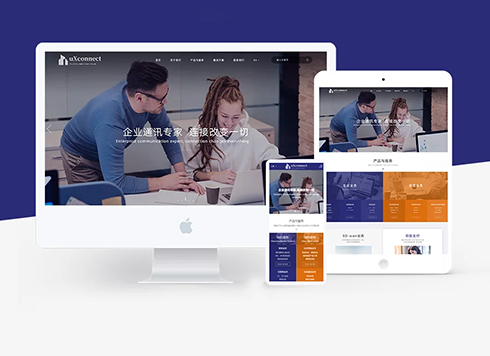 Customized Communication Solutions for Enterprises Website Development
Founded in 1996, this company focuses on pe ...
-
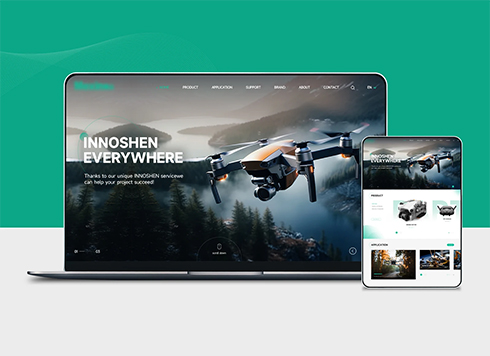 Drone Accessories Company Website Development
Incorporating gray as an accent with the pr ...
-
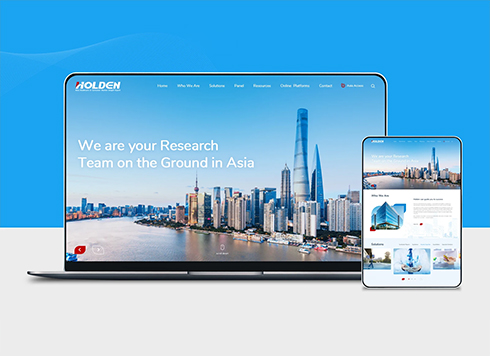 Professional International Research Service Agency Website Construction
This project serves a company with internat ...
-
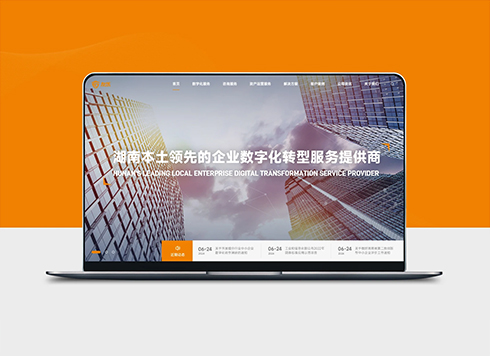 The Construction of Group Websites for Asset Operation and Digital Services
This project is to create a website for a c ...
-
Custom Website Development: Is It Still Worth Investing in 2026?
Date: Aug 14, 2026 Read: 131
-
Custom Website Development: If the Site Form Collects Phone Numbers, Does the Privacy Policy Really Need to Be Posted?
Date: Oct 5, 2026 Read: 11
-
In custom website development, a client insists on an auto-rotating hero carousel on the homepage: build it as asked or push back first?
Date: Oct 4, 2026 Read: 15
-
Custom website development: when a product appears in both homepage recommendations and industry solutions, how many places need updating when its price changes?
Date: Oct 1, 2026 Read: 33
-
In custom website development, clients want to adjust font size and spacing in the CMS—should we open that door?
Date: Sep 30, 2026 Read: 40