





A custom-built website's promo video stutters on the homepage — which step usually went wrong?
When a homepage promo video stutters, based on 2026 delivery experience, most of the time it is not that the server is underpowered, but that the hosting approach is mismatched: putting the mp4 directly on the web server means the video and the web page are competing for the same bandwidth. The more common approach is to host the video on a third-party video platform, or to distribute it through object storage plus a CDN, with only a player embedded in the site. Only when the video is not suitable for public viewing, or when you must control player styling and access permissions yourself, is self-hosting worth considering. As for the order of judgement, first confirm whether the content can be public, then look at expected play volume, and only then discuss bandwidth and playback experience.
Where a stuttering video usually gets stuck
Video playback is not a single download of the whole file, but segmented requests played while downloading, so it is more sensitive to concurrency than an ordinary image. Checking in the order below usually locates the problem fairly quickly.
- Bandwidth and concurrency: the video and the web page share the same outbound bandwidth; when several people watch at the same time, the page slows down too.
- Hosting location: an mp4 sitting in the website server directory follows the old path of pulling the whole file in one request, without segmentation or nearby distribution.
- The asset itself: excessive bitrate, oversized resolution, and no compression all multiply loading time.
- Player loading strategy: automatically loading the entire video as soon as the page opens visibly slows the first screen.
Of these four, the first two are architecture issues that change the hosting approach; the last two are asset and front-end implementation issues that are relatively light to fix. Get the order backwards — spending time swapping servers first — and the stutter often remains.
Three common hosting approaches and experience-range comparison
Where the video lives is essentially a trade-off between cost, playback experience, and controllability. Based on common 2026 project delivery practice, there are basically three options.
- Third-party video platform embed: upload the video to the platform and embed it in the site with the official player or an iframe. Cost typically falls in the range of free to a few hundred RMB per year, with adaptive quality and almost no maintenance; the trade-off is that the page must load the platform's script, and platform recommendations may appear when playback ends.
- Object storage plus CDN: store the video in object storage and distribute it through a CDN to nearby nodes. Domestic CDN traffic pricing typically falls in the range of a few tenths of a yuan per GB. Player, cover image, and hotlink protection are all under your control; the trade-off is that the bill grows with traffic, so budget alerts should be set in advance.
- Direct hosting on your own server: put the mp4 in the website directory with no extra traffic fee, but it consumes the whole site's bandwidth — suitable for scenarios with very low daily plays and a fixed audience.
- Monthly cost (experience range): platform embeds are mostly 0 to a few hundred RMB per year; object storage plus CDN commonly runs from tens to several hundred RMB per month, fluctuating with traffic; own-server hosting adds no extra fee but shares the whole site's bandwidth.
- Time to launch (experience range): platform embeds usually take 1 to 2 working days; object storage plus CDN, including transcoding and hotlink protection configuration, commonly takes 2 to 5 working days; a self-built player with access control commonly takes 1 to 2 weeks.
- First-screen performance: platform embeds wait for a third-party script; object storage can use a cover image placeholder and load on demand; own-server hosting tends to drag the whole page down once concurrency rises.
- Maintenance burden: platform embeds are essentially maintenance-free; object storage requires managing buckets, CDN, and hotlink protection; own-server hosting requires watching bandwidth, disk, and transcoding.
If the video is mainly something visitors occasionally click on the "About Us" page, a platform embed is usually enough; if the video is part of the first screen and needs a consistent cover and autoplay, object storage plus CDN makes the experience easier to control.
On the delivery floor: rework caused by a 200MB vertical video
A common situation in projects: the client shot a promo clip casually on a phone and wants it on the homepage with autoplay. The constraints are vertical shooting, no subtitles, a file just over 200MB, and autoplay required on mobile too. The approach was to first re-cut the asset into landscape, export a low-bitrate version, use a cover image as the first-screen placeholder, implement mobile playback as muted with a tap to play, and route the whole video through object storage distribution. The result was that homepage open time came back from more than ten seconds to an acceptable range. The cost was re-editing the asset plus front-end rework; based on the common experience range, this kind of rework adds roughly 3 to 8 working days. If the limits of autoplay and the first-screen weight impact are not explained up front, clients often feel the result is not faithful to what they had in mind, and another round of rework follows.
When it fits and where the boundaries are
Cases better suited to self-hosting or object storage plus CDN: the video is core homepage content, play volume is relatively stable, you need a consistent cover and player style, you need to restrict referrers, or the content is not suitable for a public platform. Based on common 2026 delivery practice, the economics of self-hosting only start to show once monthly traffic consistently reaches tens of GB or more.
Cases better suited to embedding a third-party platform directly: the video is only occasionally clicked, bandwidth cost matters, and no one on the team can maintain transcoding and the player. Here the extra maintenance cost of self-hosting often outweighs the experience gain.
Cases where video is not recommended at all: a ten-second motion effect can be done with CSS or a sprite sequence; when a text-plus-image product intro already explains things clearly, adding video only slows the page down. Also, when most visitors are on mobile networks, defaulting to no autoplay is advisable to avoid consuming their data.
Frequently asked questions
If a homepage video sits on my own server, how many people can watch it at once?
By common experience, roughly 5Mbps of bandwidth running 1080p supports about 2 to 4 people watching smoothly at the same time; beyond that, stutter or buffering tends to appear.
If I embed via a third-party platform, will it slow down my site?
It does take up some loading time, because the platform's player script has to be fetched. A common approach is to use a cover image as a placeholder and load the player only after the user clicks.
What order of magnitude do object storage plus CDN costs fall into?
It is mainly billed by traffic; domestic CDN commonly runs a few tenths of a yuan per GB. At tens of GB a month the cost is limited; at the TB level, budget alerts are advisable.
The client wants the homepage video to autoplay — why does it often not play on phones?
Most mobile browsers only allow muted autoplay; anything with sound gets blocked. In delivery it is usually implemented as muted plus loop, with sound restored after the user taps.
Can search engines read the voiceover and subtitles in a video?
Usually not; video content offers limited help for indexing and AI citation. It is advisable to add a text description below the video covering the key points and critical information.
Action advice: first confirm whether the video can be public, then estimate monthly traffic by multiplying average daily plays by the size of a single play, and finally decide between a platform embed and object storage plus CDN; for quotes and traffic unit prices, refer to the provider's public pages. Boundary note: videos containing unpublished material or customer privacy should not go on public platforms, since leaks are hard to retrieve; bandwidth usage and costs are both experience ranges, and actual figures should follow the provider's public statements.
-
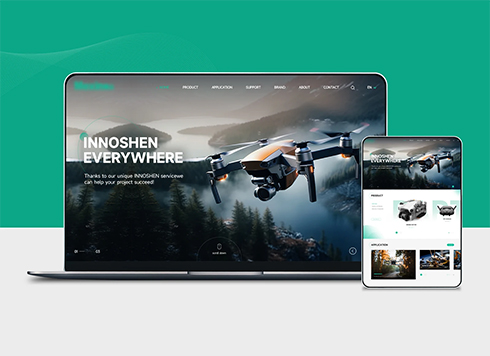 Drone Accessories Company Website Development
Incorporating gray as an accent with the pr ...
-
 Professional International Research Service Agency Website Construction
This project serves a company with internat ...
-
 The Construction of Group Websites for Asset Operation and Digital Services
This project is to create a website for a c ...
-
 Thermal Test Equipment Website Construction
Founded in 2022, this tech company focuses ...
-
Custom website development: HTTPS is configured, but the client's mobile browser still says not secure—what is usually wrong?
Date: Sep 18, 2026 Read: 11
-
Custom website development: the client wants a Japanese version, but no one on our team speaks Japanese—can we take the job?
Date: Sep 17, 2026 Read: 18
-
If a custom website's domain and hosting expire on different dates, which should I renew first so the site is not lost?
Date: Sep 16, 2026 Read: 15
-
Custom Website Development: Inquiry Form Receives Dozens of Garbled English Messages a Day—Should You Disable the Form First or Add a CAPTCHA First?
Date: Sep 15, 2026 Read: 24
-
In custom website development, the form submits successfully — why does our inbox never get the notification?
Date: Sep 14, 2026 Read: 29