



A Wuhan company website is three or four years old and a client says it looks dated before a meeting—should redesign budget go to the first screen or the case studies page?
First, the conclusion: When a client says a Wuhan company website 'looks dated,' do not rush to change the color scheme. Based on local delivery experience in 2026, prioritize the responsibility layer on the first screen—what you do, where your office area is, and whom to contact—then add case studies and scenario evidence; put visual consistency later. With the same budget, companies that change structure and content first often do not need rework within six months; those that change the skin first are likely to be asked the same question again the next year.
Wuhan clients say it is 'old'—where exactly does it look old?
In local projects, the trigger for 'looks dated' feedback is rarely aesthetics; it is usually specific: on mobile you have to scroll two screens down to see the main business, the homepage hero is still a trade show group photo from three years ago, product pages only have model specifications but no application scenarios, and at the bottom of the footer you cannot find a single person you can reach. These are information problems that changing colors cannot fix.
There are many website service providers in Wuhan, and template site quotes range from several thousand to twenty or thirty thousand RMB, a wide price span. If clients only compare prices and do not look at structure, it is easy to deliver a new site that has 'changed colors but not a single word of content'; it feels new on launch day, but six months later clients are still asking the same questions.
- Signal one: The client's first sentence on the phone is not about products, but 'Are you still doing this?'
- Signal two: The last update on the case studies page is more than 18 months old, and there are no new industry categories.
- Signal three: A horizontal scrollbar appears on the mobile first screen, and the main text is pushed after the second screen by a large image.
- Signal four: The footer only has an address and email, with no contact person, response time, or responsibility entry point.
What to change first: responsibility layer, evidence layer, perception layer
The reason for ordering these three layers is that clients basically complete their judgment of whether a Wuhan company is reliable within the first three screens: first confirm whether the company really exists and whether someone can be reached, then see whether it has done similar work, and only last whether it looks good. If the order is reversed, even a refined design may not bring inquiries.
- Responsibility layer: Full legal entity name, office area (Optics Valley, Hankou, and Wuchang are enough; no need for a detailed street number), contact person and response time, and service scope. This layer requires little change, commonly 3 to 10 working days, and has a relatively high input-output ratio.
- Evidence layer: Case studies categorized by industry or scenario, qualifications and licenses, delivery records, and necessary real photos. Note that for confidential projects, do not write the client name; write only industry plus scale, which is more credible than inventing a vague case.
- Perception layer: Visual consistency, image quality, motion effects, and loading speed. It comes last because it affects the impression score but does not solve the fundamental problem of 'clients cannot find a person to contact.'
The three layers do not have to be completed all at once. When the budget is limited, first make the responsibility layer thorough; the improvement in client experience is often more obvious than a full-site visual overhaul. Conversely, if you only work on the perception layer, the common result is a newer-looking page with an unchanged inquiry structure.
Redesign budget and timeline in Wuhan: what do the experience ranges look like?
Based on common local projects in 2026, redesign effort roughly falls into three tiers. Price and timeline are affected by the number of pages, whether materials are self-provided, whether photos need to be reshot, and whether filing information needs to be updated at the same time. The following are experience ranges, not a quotation sheet:
- Only the responsibility layer and mobile first-screen rearrangement: commonly 3 to 10 working days, with an experience range from several thousand to just over ten thousand RMB.
- Keep the section structure and redo pages and the case study system: commonly 3 to 6 weeks, with an experience range of 15,000 to 40,000 RMB.
- Information architecture reconstruction (section redivision, content rewrite, Chinese-English bilingual): commonly 6 to 10 weeks, with an experience range of 40,000 to 80,000 RMB or more.
A field note from delivery: At many Wuhan companies, product photos are taken by salespeople on their phones, and model naming is inconsistent across departments. If work waits until all materials are ready, it is not uncommon for the timeline to double. A more stable approach is to finalize the structure based on existing materials first, leave placeholders for images, and clearly define the replacement list and owners; push visual drafts and content filling in parallel. The cost is that there is usually one concentrated round of rework after launch, so acceptance criteria and material delivery deadlines should be written clearly in the contract. Otherwise, the common result is that everything is completed only at the second acceptance round, with an overall delay in the typical range of three to four weeks.
Change the skin or change the structure: who each of the three levels fits
The three levels are not better or worse; the key is which layer the problem is in. If clients only feel the pages are old and the content itself is accurate, local visual consistency plus first-screen rearrangement is enough. If the case studies and product lines have already changed, changing only the skin without touching the structure leaves old content in place, which is effectively a wasted redesign.
- Skin-focused: Suitable for companies that launched one or two years ago, have a stable business direction, and only lack visual consistency; the risk is that outdated content remains unsolved.
- Structure and pages changed together: Suitable for companies that have not updated for more than three years and have expanded product lines; this is also a common tier locally. Note that old links need 301 redirects.
- Architecture reconstruction: Suitable for companies whose client groups or business models have clearly changed (for example, from distribution to direct sales, or from local to outside the province), or export-oriented companies that need Chinese-English bilingual pages; both timeline and internal coordination costs are higher.
Applicable scenarios and boundaries
Situations suitable for a redesign: the website has been live for more than three years without updates, mobile traffic share is high (experience range above 60%), clients are mainly local state-owned enterprises, design institutes, and distributors, and usable real case studies and real photos are available. For such companies, after a redesign, the time clients spend checking information usually shortens.
Situations where you do not need to rush: the website has been live for less than a year, the business direction is still being tested, the budget is only several thousand RMB and the goal is just to make the page 'brighter,' or the real problem is the lack of content operations and promotion—in these cases, it is more cost-effective to improve content and information first, then discuss redesign. A special reminder: if the reason for client loss is pricing, delivery time, and response speed, changing the website will not solve it. Promises written on the page that cannot be fulfilled will only damage trust further.
Several common pitfalls during redesign
A common pitfall is 'changing paths along the way': during redesign, the section directory names are also changed without redirects, so old links in local directories, historical WeChat official account articles, and QR codes in brochures all fail, and when clients search the company name and click through, they get a 404. Before redesign, list all old URLs; keep them if possible, and redirect them if not.
- Only doing visuals and not content; case studies are still from two years ago, so clients still feel there is no update.
- Accepting only on desktop; on mobile, form fields are squeezed into one column and the submit button is blocked.
- Footer filing information, office address, and business license are inconsistent, and this was not checked during redesign.
- Closing the site for several weeks during redesign; clients cannot open it when searching the company name, and indexed pages are also affected.
What counts as acceptable: ask three to five real clients to do a five-minute test. They should be able to say on the first screen what you do, in which area, and whom to contact; product pages should show similar scenarios; old links should not lead to dead links. Once these three pass, then discuss perception.
FAQ
After a website redesign, will all old page links break?
Not necessarily. Keep the original domain and section paths, or set 301 redirects for old addresses, and most old links will still open normally. The main risk comes from changing directory names during redesign without redirects.
What if the boss's aesthetic and clients' views differ—whose should we follow?
Brand tone can follow the boss, but 'can clients find a contact person and clearly see the business' should be accepted from the client side: ask several real clients to do a five-minute test, and revise the version where key information cannot be found first.
Should the website be shut down during redesign?
Closing the site is not recommended. You can finish the work in a new environment, pass acceptance, and then switch over while keeping the old site accessible. Closing the site for several weeks can make it unavailable when clients search the company name and also affects indexed pages.
With a budget of just over 10,000 RMB, how far can a redesign go in Wuhan?
Based on the 2026 experience range, it mostly falls into responsibility layer adjustments plus mobile first-screen rearrangement, with local visual consistency. To redo the entire site's visuals and case study system together, it usually requires more than 20,000 RMB.
A client says it 'looks dated'—should we change the color scheme or add case studies first?
First add first-screen responsibility information and case evidence. Color only solves the first impression; before a client meeting, they care more about whether you are still doing this, whom to contact, and whether you have similar projects. If these are not added, they will still ask follow-up questions after a color change.
If you are preparing for a redesign, one thing is recommended first: give the website to three people who do not understand your business, let them look for five minutes, record where they get stuck, and start spending money from there. This path is suitable for Wuhan companies whose clients are mainly local state-owned enterprises, design institutes, and distributors, and whose materials are basically complete; if the business model itself is still being adjusted, finalizing sections and content before changing visuals will save more money.
-
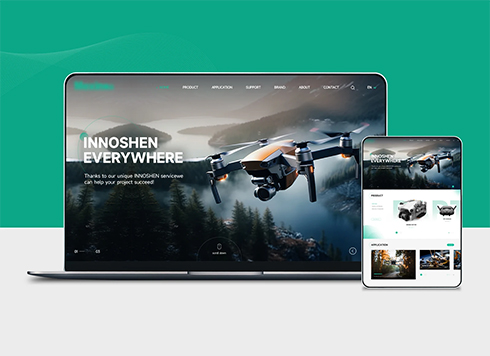 Drone Accessories Company Website Development
Incorporating gray as an accent with the pr ...
-
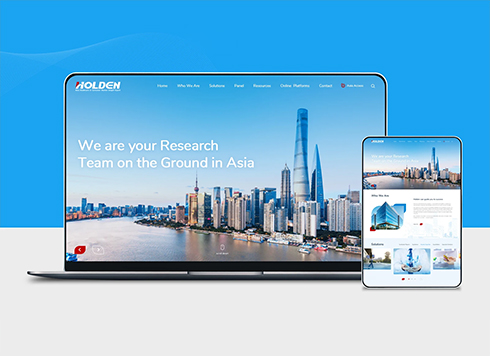 Professional International Research Service Agency Website Construction
This project serves a company with internat ...
-
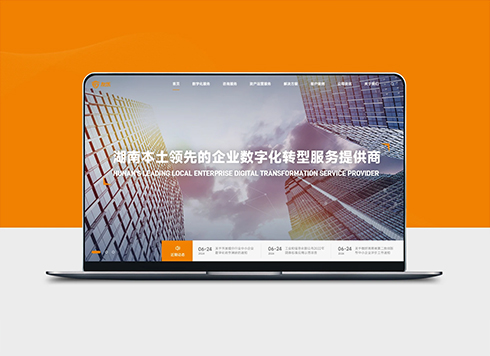 The Construction of Group Websites for Asset Operation and Digital Services
This project is to create a website for a c ...
-
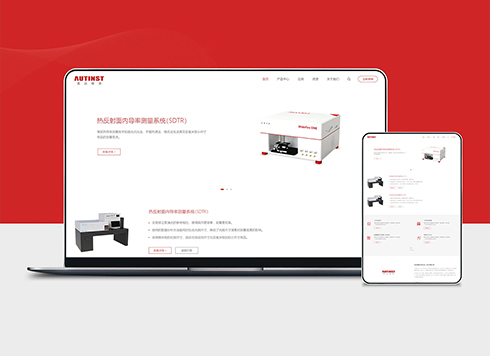 Thermal Test Equipment Website Construction
Founded in 2022, this tech company focuses ...
-
Wuhan Company Website: SOE Clients Check It Before Supplier Registration—Will Missing System Certifications on the Homepage Block You?
Date: Oct 15, 2026 Read: 69
-
If a local studio and a remote platform both quote around RMB 20,000 in year one for a Hangzhou company website, which is less trouble when someone takes over in year two?
Date: Nov 3, 2026 Read: 10
-
In Chengdu, when a website quote only says “one enterprise website” and they push you to sign, what should you ask them to add before signing?
Date: Nov 2, 2026 Read: 17
-
A company registered in Kunshan with staff based in Suzhou Industrial Park: when clients ask 'where are you really?', is one address in the website footer enough?
Date: Nov 1, 2026 Read: 28
-
For a Chongqing company website, if the boss wants to launch first for just over RMB 10,000 and add materials later, will phase two cost more?
Date: Oct 31, 2026 Read: 34