


In Chengdu, when a website quote only says “one enterprise website” and they push you to sign, what should you ask them to add before signing?
For Chengdu companies building a corporate website, quotes range from a few thousand to 20,000–30,000 RMB. The price gap is usually not about the number of pages but four things: upfront information sorting, whether design is original to the brand, the volume of content and asset handling, and responsibility for the backend and post-launch maintenance. Based on 2026 Chengdu local project delivery experience, for a five-to-eight-page showcase website, template use is typically in the few-thousand-RMB range, semi-custom is usually around 10,000 RMB, and custom development with original design and an admin/backend is commonly in the 20,000–40,000 RMB range; beyond that, multilingual, membership, payment, or system integrations are priced separately.
Set the tier before talking price: the three approaches differ in who does the work
A quote that differs by several times is often not because someone is quoting randomly, but because the three vendors are not doing the same thing. Dividing by “who completes design and content” is closer to real workload than dividing by page count, because page counts can be copied, but information architecture and content handling cannot.
- Template use: choose an existing theme, change the logo, colors, and hero section; the column structure is basically fixed. The experience range is commonly a few thousand RMB, with a timeline of 1–2 weeks; suitable for newly registered companies whose business is not yet settled and that first need a page that can be found in search and put on a business card.
- Semi-custom: keep the skeleton, redo the hero, product pages, and About Us based on the business, and add or remove sections. The experience range is mostly around 10,000 RMB, with a timeline of 2–4 weeks; suitable for companies with relatively clear customer sources that need to explain service scope and cases clearly.
- Custom design and development: from information architecture to original visuals, the backend is built around the data-entry workflow and includes multilingual, form notifications, or APIs. The experience range is commonly 20,000–40,000 RMB, with a timeline of 4–8 weeks; suitable when customers conduct factory audits, bid, or carry out investment due diligence, and the website is used as material.
The basis is not that more expensive is more correct, but whether customers will check you against the website: if it is only a supplement to a business card, the template tier is enough; if customers will browse cases and compare delivery processes, anything below semi-custom often cannot hold up.
With the same five pages, where does the workload differ?
Page count is only the shell; delivery volume is hidden inside the pages. With the same five pages, some vendors only lay out the homepage and contact page, while others include product parameters, anonymized cases, and mobile forms.
- Content sorting: who writes copy, who organizes product parameters, who anonymizes cases. When a company only provides an old brochure, sorting and rewriting often take up a lot of schedule.
- Asset handling: on-site shooting, retouching, video compression. Uploading phone photos without processing makes mobile pages slow to open and requires rework later.
- Design scope: whether mobile is laid out separately or only a “shrinkable” responsive version; whether inner pages follow the same design language.
- Backend and maintenance: whether the company can change products and publish news itself, who receives form notifications, and whether data is backed up regularly.
- Launch basics: ICP filing assistance, HTTPS certificate, maps and analytics code; these are often left out and added only before launch.
A quote saying “includes design” does not equal original design, and saying “includes backend” does not mean you can edit it yourself after delivery. These two sentences need to map to specific pages and specific operations for the quote to be comparable.
The quote only says “one enterprise website”—ask them to add these items before signing
When comparing prices, don’t look only at the total. First see whether the quote can answer “what is delivered and what is not.” If two or more of the following five items are missing, ask clearly before signing.
- Page-by-page list: which modules product pages, case pages, About Us, and Contact Us each include; do not write “etc.” or “several.”
- Revision rounds: design revisions commonly have an experience range of 2–3 rounds; how overages are charged should be written in advance. Writing only “until satisfied” often leads to disputes later.
- Ownership: the domain, server, and backend administrator account should be under the company’s name, and source code ownership should be written into the contract.
- ICP filing and launch scope: a common local practice in Chengdu is that the service provider assists with organizing materials and submitting for verification but does not promise when the filing number will be issued; ask clearly whether later changes to the entity or address are included.
- Acceptance criteria: mobile pages open normally, forms are received, the backend can be edited by the company, and pages have no obvious misalignment—write these into the acceptance form; they are more verifiable than saying “contact us anytime if there is a problem.”
Counterexamples are also common: the quote only says “one enterprise website,” and at delivery the product category page is counted as an extra page; the case page has only three images, and adding industry filters costs extra. Writing the unit prices of likely add-ons into the quote in advance saves more trouble than arguing afterward.
Delivery scenario: budget under 10,000 RMB and launch in three weeks—what to protect first
A common constraint in Chengdu projects is this: the budget is kept under 10,000 RMB, the customer is coming to visit in three weeks, and the only assets are an old brochure and a few phone-shot workshop videos. In this case, the steadier approach is not to cut page count but to protect first the content customers will check: full legal entity name, office and service scope, product categories, two or three authorized cases, and contact and responsibility entry points; hero animations and videos can wait.
Before launch, check the mobile hero section, form delivery, and map loading first, then polish visual details. Based on experience ranges for such projects, upfront checks usually save one to two rounds of revisions; conversely, if you do animations and cases first and wait for customer confirmation before filling in the rest, the common cost is an extra one to two weeks, and if the deadline cannot be met, you can only go with the old pages.
When to move up a tier, and when not to spend more yet
Suitable for moving up are companies where the website must support lead generation, bidding, factory audits, or investment due diligence: customers will use the pages to check the entity, cases, and delivery process. Multilingual sites, membership, payment, or integration with internal systems also generally leave the template tier.
Not necessary to go custom are newly registered companies still testing their business, whose customers mainly come from platform stores or WeChat private domains. First use template or semi-custom to get the entity, products, and contact information working, and redesign after customer sources stabilize.
The boundary can be judged independently: when the website does not carry lead generation or due diligence and only supplements a business card, keeping it in the few-thousand-RMB tier is more reasonable; when customers will use the website to check delivery capability, skimping on content and case handling often has to be made up later through rework. Based on common 2026 Chengdu projects, a five-to-eight-page showcase website commonly takes 2–4 weeks from finalization to being accessible; adding ICP filing and material completion, leaving another 1–3 weeks is steadier.
Frequently asked questions
If the quote says “ICP filing included,” does that mean I don’t need to handle it?
No. The filing entity and verification require company cooperation; service providers generally only assist with organizing materials and submitting. The issuance time is affected by review by the competent authority, and you should also ask clearly whether later changes to the entity or address are included.
At around the same 10,000 RMB, why do some include mobile and others not?
The difference often lies in whether mobile is laid out separately and whether mobile forms and image adaptation are included. Before signing, ask the vendor to list mobile deliverables page by page; don’t just look at the word “responsive.”
After the website is done, who owns the backend account and source code?
The experienced practice is to put the domain, server, and backend administrator account under the company’s name and write source code ownership into the contract. Getting only an account without the source code makes it very passive if you change service providers later.
For a five- or six-page website, how long does it take to go live?
Template tier commonly 1–2 weeks, semi-custom 2–4 weeks, custom 4–8 weeks; including ICP filing and material completion, based on common 2026 projects, leaving another 1–3 weeks is steadier.
If you are preparing to compare prices in Chengdu, first write customer sources, content that must be checked, and launch timing on one page, then ask the vendor to quote by page. When the budget is in the few-thousand-RMB tier, prioritize the entity, products, contact information, and mobile usability; without clear lead-generation and due-diligence needs, there is no need to pay in advance for features you won’t use.
-
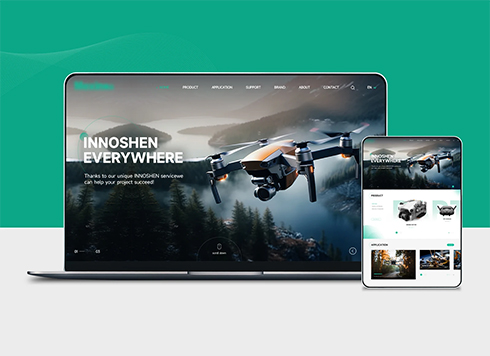 Drone Accessories Company Website Development
Incorporating gray as an accent with the pr ...
-
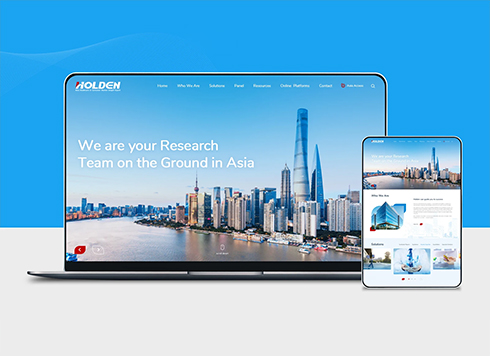 Professional International Research Service Agency Website Construction
This project serves a company with internat ...
-
 The Construction of Group Websites for Asset Operation and Digital Services
This project is to create a website for a c ...
-
 Thermal Test Equipment Website Construction
Founded in 2022, this tech company focuses ...
-
A company registered in Kunshan with staff based in Suzhou Industrial Park: when clients ask 'where are you really?', is one address in the website footer enough?
Date: Nov 1, 2026 Read: 13
-
For a Chongqing company website, if the boss wants to launch first for just over RMB 10,000 and add materials later, will phase two cost more?
Date: Oct 31, 2026 Read: 21
-
If clients ask where the factory is but production is in Foshan, will listing both locations on a Guangzhou company website look scattered?
Date: Oct 30, 2026 Read: 27
-
Is a separate .hk domain worth paying for when Hong Kong clients make up 30% of a Shenzhen company’s website customers?
Date: Oct 29, 2026 Read: 44
-
When clients search a subsidiary’s full name but land on the group homepage, should the website give the subsidiary its own site?
Date: Oct 28, 2026 Read: 37