




Our custom website link shared in WeChat keeps showing the default title and thumbnail — did we miss a setting?
Bottom line first: When a link's share card title, description, or thumbnail looks wrong in WeChat, it is usually not a WeChat malfunction, nor a misconfigured domain or server. It is more likely that one of the pieces of information the page shows to crawlers is not written correctly, or is written correctly but hidden by an old cache. Based on common 2026 delivery practice, check these four things first — page title, description tag, share image, and crawl cache — before touching the domain or server. This usually saves a round of unnecessary troubleshooting.
What a link looks like in WeChat, and who decides
When a link is sent in WeChat, the card is assembled from three pieces of information: title, description, and thumbnail. WeChat does not guess them. A crawler opens the page, reads the title and description tag, and then finds a suitably sized image on the page. If the description is missing or the image is unsuitable, the crawler falls back to grabbing the first paragraph of the body or a random decorative image. That is how you end up with "the title is the company name plus navigation, and the thumbnail is a tiny icon."
- Title: Usually taken from the page title tag. If the default title in the backend has not been changed, it often shows as "Homepage - Company Name."
- Description: Usually taken from the description tag. If it is not written, the crawler may grab the first paragraph or even footer text.
- Thumbnail: Usually taken from an image on the page that meets the size threshold. Images that are too small or too flat are easily ignored or cropped. Experience range: Share images are commonly made at 300×300 pixels or larger, close to square, and the file should not be too large.
This is worth managing separately because the share card directly affects click-through rate. The same link with a clear title and thumbnail versus one with only a line of gray text on a gray background can differ noticeably in whether people tap it. For a company website, every forward in a customer group or industry group is an exposure that costs no ad spend.
Still looks the same after changes? Check in three layers
Many people's first reaction is "WeChat is broken." This can be broken into three layers, checked from the outside in, with cost going from low to high. Rule out the outer layers first, then touch the server and domain, to avoid wasted effort.
- Page layer: Are the title, description, and share image written correctly? View the page source code and confirm the title and description are content meant for visitors, not "Untitled Document." The share image must be a real accessible URL, not a local path.
- Crawl layer: Can WeChat crawl the page normally? Pages that require login, are blocked by robots, or whose server returns errors for unknown crawler requests will fail to crawl, causing an abnormal card. This is especially common with staging sites and intranet addresses.
- Cache layer: The tags are all correct, but the crawler still fetches the old version. Based on experience, share card crawl results are cached for a period, typical range is a few hours to a few days, so changes may not take effect immediately. You can verify with an account that has never sent the link, or temporarily add a query parameter to the URL.
Among the three layers, the page layer and crawl layer can usually be fixed in minutes to an hour or two. The cache layer cannot be "fixed" — you can only wait, or make a temporary distinction on the link. If you reverse the order and start by adjusting the server, it is usually wasted effort.
Automatic crawling vs. active configuration: which is easier?
There are two common approaches to share information: one is to let the platform automatically crawl the page's existing title and images; the other is to add a piece of configuration that actively tells the platform what to display. Based on common 2026 practice, most corporate websites can get by with automatic crawling plus standardized page titles. Only when you need to differentiate copy by channel is active configuration worth implementing.
- Automatic crawling: Low change cost. When the page title changes, the card follows. Suitable for sites with infrequent content updates and already standardized titles. The downside is that results are not fully controllable — which image gets grabbed depends on page structure. Experience range: About 0.5 to 1 hour per page adjustment.
- Active configuration: Share information can be specified separately, decoupled from the body content. Suitable for campaign pages and scenarios requiring fine control over the card. The cost is an extra layer of maintenance; during page redesigns it is easy to forget to sync, causing old information to show instead. Experience range: About 2 to 4 hours for initial configuration, and about 0.5 to 1 hour for each subsequent redesign sync.
Before choosing, ask one question: who will be responsible for changes later? A solution no one maintains will expire no matter how detailed it is written.
On the delivery floor: discovering the card is wrong the day before launch
Constraints: All project features are developed, and only one or two days remain before launch. The client provided only one key visual, and after sending the link to the client group, it was discovered that the share card showed the backend default title plus a randomly placed decorative image. What was done: That day, the title, description, and share image for key pages were filled in, and each page was tested on a real phone in WeChat. Cost: After the changes, the WeChat cache had not refreshed, so the group still saw the old card. In the end, a parameter had to be temporarily added to the link so the client could preview the effect, and the work was only wrapped up after the cache released. Based on typical ranges, this kind of catch-up configuration plus testing takes about half a day to a day for key pages; if there are many pages and images need to be re-cropped, the time goes up.
To avoid this situation, add a set of share card checklist items to the delivery checklist and do them together with page functionality testing:
- For every page that needs to be shared externally, the title and description are not system defaults.
- The share image is a real accessible URL, and its aspect ratio and size meet common requirements.
- Test once with a real phone and a real WeChat account, and save screenshots for the record.
- Record the change locations and times in the delivery documentation for easier troubleshooting next time.
If the client has marketing or operations staff, it is advisable to clearly hand over the ability to "change share copy and images," so that every copy change does not require finding a developer.
Applicable scenarios and boundaries
This troubleshooting approach suits sites that rely on links spreading through social tools, such as corporate websites, campaign pages, and article pages. It also suits sites that are already live, have noticed an incorrect share card, and want to quickly locate the issue.
Cases where it is not suitable should also be made clear: If website traffic mainly comes from search engines and the site is almost never forwarded in WeChat or other social tools, the share card can be deprioritized. Spending time on content structure and page speed is more worthwhile. Also, if the abnormal card is caused by platform-level reasons such as a blocked domain or a restricted account, page tags cannot solve it. Based on experience, you need to go through the platform appeal process; do not repeatedly change the tags.
Frequently asked questions
Can the share card title differ from the page title?
Some platforms support separately configuring share information. Within WeChat, it relies more on the page's own title and description. A common approach is to keep the two aligned in direction, so users do not feel misled after clicking through.
Why do others still see the old card after I change the tags?
Most likely the cache has not expired. Based on experience, crawl results are cached for a few hours to a few days. Switching to an account that has never sent the link, or temporarily adding a parameter to the URL, can more quickly show whether the change has taken effect.
Does the share image have to be square?
Not necessarily, but images with a very different aspect ratio are easily cropped. A common approach is to place the main subject in the central area, make the image at least 300 pixels, and control the file size so it does not slow down the page.
Is it normal for the staging site card to differ from the production site card?
Yes, it is normal. Staging sites often require login or restrict access, so the crawler cannot retrieve content and the card becomes abnormal. Test share cards on the production domain; do not draw conclusions from a test address.
Does every page need its own share image?
It depends on forwarding frequency. The homepage and key section pages are worth configuring separately. Deep inner pages with fast-changing content and few forwards can acceptably use one generic image.
If the website link is frequently forwarded in customer groups or industry groups, it is advisable to manage the share card as a standalone item: first check the four places — page title, description, share image, and crawl cache — then decide whether to touch anything else. If the site hardly relies on social tools for distribution, this can be deprioritized. If the abnormal card comes with a blocked domain or restricted account, that is a platform-side issue, and appealing through the official process is more practical.
-
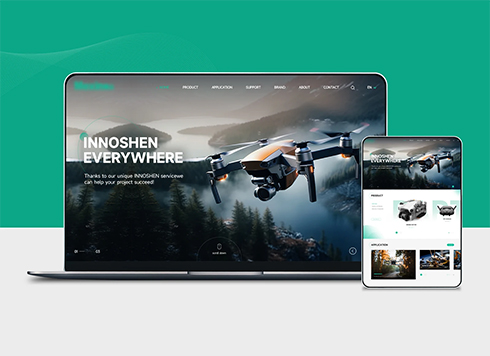 Drone Accessories Company Website Development
Incorporating gray as an accent with the pr ...
-
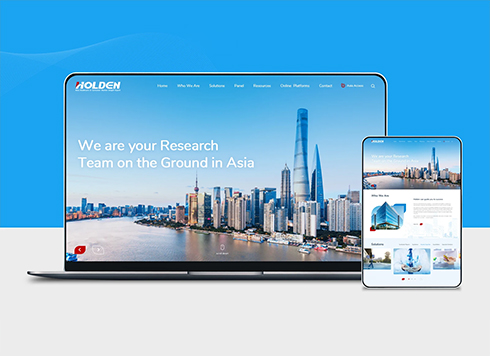 Professional International Research Service Agency Website Construction
This project serves a company with internat ...
-
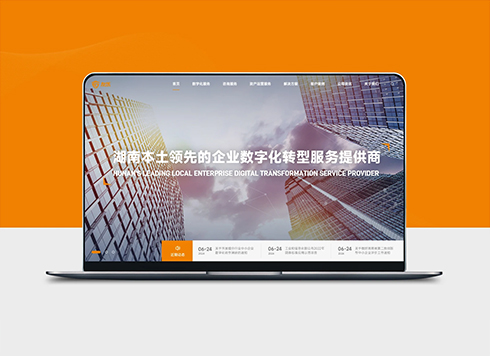 The Construction of Group Websites for Asset Operation and Digital Services
This project is to create a website for a c ...
-
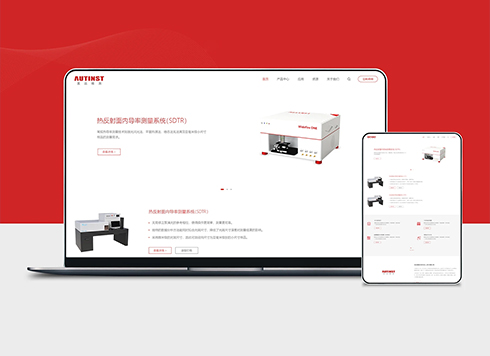 Thermal Test Equipment Website Construction
Founded in 2022, this tech company focuses ...
-
A custom-built website's promo video stutters on the homepage — which step usually went wrong?
Date: Sep 19, 2026 Read: 11
-
Custom website development: HTTPS is configured, but the client's mobile browser still says not secure—what is usually wrong?
Date: Sep 18, 2026 Read: 16
-
Custom website development: the client wants a Japanese version, but no one on our team speaks Japanese—can we take the job?
Date: Sep 17, 2026 Read: 21
-
If a custom website's domain and hosting expire on different dates, which should I renew first so the site is not lost?
Date: Sep 16, 2026 Read: 22
-
Custom Website Development: Inquiry Form Receives Dozens of Garbled English Messages a Day—Should You Disable the Form First or Add a CAPTCHA First?
Date: Sep 15, 2026 Read: 31