Guangzhou company website redesign: brochure QR code still opens the old page—do we need to reprint?
Bottom line first: After a Guangzhou company redesigns its official website, QR codes on brochures and business cards may still open the old pages. Usually, you do not need to reprint, and you do not necessarily need a new domain. As long as the old domain is still under the company’s ownership and can still resolve, a common 2026 practice is to keep the original domain and set up 301 redirects from old URLs to the corresponding destinations on the new pages. Reprinting is truly needed mainly when the old domain is no longer controlled by the company and cannot resolve, or when the QR code points to an inner page that has been completely removed with no replacement content.
1. The QR code is not broken; the old address behind it is
When a brochure QR code opens an old page, first separate two things: the QR code image itself is a link entry point, and what opens after scanning depends on the URL written in the QR code. If the website has been redesigned and moved to a new site, but the old URL has no redirect, scanning will naturally land on the old page or a 404. Guangzhou companies have many offline materials, and brochures, business cards, exhibition backdrops, and quotation sheets are often printed in different years, so old URL references are more scattered than online references. A recommended order is: first confirm whether the domain in the QR code was registered by the company and whether you can log in and manage its DNS; then export a list of old-site URLs; finally, decide by reference level which old URLs get 301 redirects and which can redirect in bulk to category pages.
2. Handle old QR codes and old URLs in three tiers by reference level
During a redesign, two extremes are common: one is copying over campaign pages that expired years ago, which clutters the new site structure; the other is returning 404 for all old links, which damages both offline materials and search indexing. Based on delivery experience, a more stable approach is to divide them into three tiers.
- Tier 1: QR codes on materials and business card URLs. QR codes on brochures, packaging, and exhibition backdrops must land on content-relevant new pages after scanning; 301 redirects can handle them, so reprinting is not necessary.
- Tier 2: Search engine indexing and backlinks. For pages already indexed by Baidu, Sogou, or WeChat Search, and for links on association directories, B2B storefronts, or client websites, keep a destination if there is any reference.
- Tier 3: Temporary campaign pages and expired promotion pages. These can be redirected in bulk via 301 to the corresponding category or homepage; no separate page needs to be built.
Compare the domain options. Option A: keep the original domain and 301 redirect the whole site. This gives good external consistency, leaves offline materials untouched, and the annual domain fee is often tens to just over one hundred RMB. Redirect configuration is usually included in the redesign service, and the typical range for mapping entries is dozens to several hundred. Option B: enable a new domain and redirect the old domain as a whole. This suits brand upgrades, but two domains must be renewed and maintained for ICP filing at the same time, making long-term management more troublesome. Option C: abandon the old domain directly. This saves effort, but old indexing, backlinks, and material references all go to zero, and recovery requires renewed promotion. According to 2026 project delivery practice, when the old domain was registered by the company itself and has no violation record, Option A is usually the default choice.
3. Guangzhou delivery reality: when the domain behind the QR code is not under your control, the cost is higher
In Guangzhou projects, one common constraint appears: the client’s brochure has already been printed, the QR code points to a product inner page on the old site, but the old site was built by the previous website vendor and the domain is in that vendor’s account. The approach is to check domain and admin access before redesign work begins, transfer the domain out first if possible, then export old URLs and prepare an old-address-to-new-address mapping table for the developer. The cost is real: if access checks are skipped, QR codes may fail after launch, requiring emergency redirects and resubmission for indexing, with common rework of 1 to 3 working days; if domain transfer gets stuck, waits measured in weeks can also occur, and materials may need to be suspended or have stickers added. Based on website build and design delivery experience, Guangzhou redesign projects usually list this mapping table as one of the deliverables to check before launch.
4. Applicable and non-applicable boundaries
Suitable for the above approach: the official website has been live for more than a year and has search engine indexing or external links; brochures, business cards, or exhibition materials have printed URLs or QR codes; clients and sales staff have still been forwarding old links in the past six months. For these sites, URL continuity and page rebuilding are equally important during a redesign.
No major action needed: the official website has only been live for a few months and has almost no indexing or external references; the old domain has never been publicly used; the original site was mainly for internal use and not for lead generation. In these cases, it is more direct to focus effort on new-site content and local search visibility.
A useful boundary statement is: As long as even one old URL or QR code that was sent externally is still in use, it is worth preserving its destination during a redesign; if there is not a single one, there is no need to add maintenance cost for it.
5. Redesign acceptance: how to check QR codes and old URLs
- Randomly select 20 old URLs; they should open and land on content-relevant new pages, not all redirect to the homepage.
- Test each QR code that has appeared on offline materials by scanning it, and confirm it displays properly on mobile.
- The old homepage, product overview, and contact page should map directly, not through secondary redirects.
- Submit the new site’s sitemap, add redirect notes to the old site’s sitemap, and observe indexing fluctuations for one to two weeks after the redesign.
- Keep the old domain renewal status clear, covering the next one to three years, so you do not discover only after the redesign that the domain is about to expire.
FAQ
After a Guangzhou company website redesign, must we reprint if a brochure QR code opens the old page?
In most cases, no. As long as the old domain is still under the company’s ownership and can resolve, set up 301 redirects from old URLs to the corresponding new pages. If scanning lands correctly, the materials can continue to be used.
If the old domain is not under the company’s name, can we still set up 301 redirects?
Not directly. First contact the original service provider to transfer the domain out and obtain DNS/resolution control, then configure redirects. The waiting time for domain transfer and change of the ICP filing entity is commonly measured in weeks.
How many 301 redirects are enough?
For a typical company official website, dozens to several hundred are common, depending on the number of old-site pages and the number of inner pages that have been referenced. The key is not the count, but full coverage of QR codes on offline materials, the homepage, and category pages.
Can we shut down the old site first during the redesign?
Not recommended. If the old site is shut down, indexing and customer access are interrupted at the same time, and recovery is commonly measured in weeks. A more stable approach is to switch after the new site goes live, with redirect mapping taking effect at the same time, leaving a transition window for verification.
Will Baidu indexing drop after an official website redesign?
If handled properly, it usually will not drop significantly, though short-term fluctuations are possible. With 301 redirects on old URLs, the new sitemap submitted, and content mapped accordingly, indexing generally moves to the new URLs over a few weeks.
If a Guangzhou company is preparing to redesign its official website, one thing should be done first: export old-site URLs into a list, mark each one as to whether it has been referenced by brochure QR codes, backlinks, or client forwards, and then decide the retention scope and redirect deployment. This reduces rework from adding redirects after launch. If the official website has only recently gone live and has almost no external references, prioritize budget and effort on new-site content and local search visibility, and do not invest extra in old links.
-
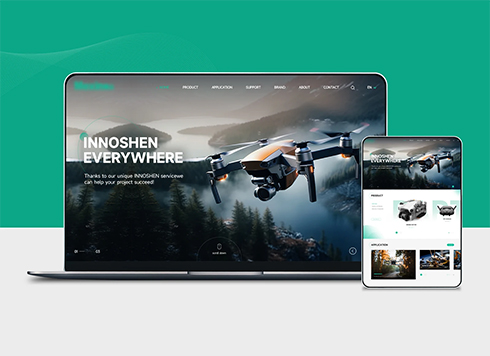 Drone Accessories Company Website Development
Incorporating gray as an accent with the pr ...
-
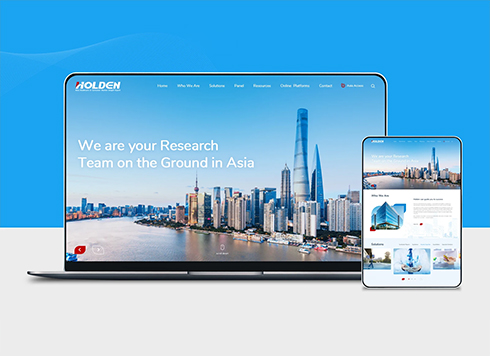 Professional International Research Service Agency Website Construction
This project serves a company with internat ...
-
 The Construction of Group Websites for Asset Operation and Digital Services
This project is to create a website for a c ...
-
 Thermal Test Equipment Website Construction
Founded in 2022, this tech company focuses ...
-
Shenzhen Company Website Shows "Access Stopped" in WeChat: Is Changing Servers First a Waste of Money?
Date: Sep 19, 2026 Read: 14
-
Which renewal item—domain, hosting, or email—will make a Shanghai company website go down if missed?
Date: Sep 18, 2026 Read: 15
-
Beijing company website with ICP filing still under the boss's personal name: will ad campaigns get blocked later?
Date: Sep 17, 2026 Read: 17
-
Fuzhou company website: I send the same link and it shows a thumbnail, but when a client forwards it only a URL line remains — what is causing this?
Date: Sep 16, 2026 Read: 24
-
Xi'an company website: Why does Baidu show a recruiting page first when customers search the company name?
Date: Sep 15, 2026 Read: 25