



If a Client Asks AI How Long a New Person Needs to Take Over the Website Backend, Can “Easy to Use” on the Homepage Answer It?
When a client asks AI, “If someone else takes over the website backend, how long until I can edit content myself?” the answer engine will basically not cite that line on the homepage saying “easy to use.” Instead, it looks for four types of paragraphs that can stand alone as complete sentences: account ownership, field descriptions, publishing process, and rollback method. Based on 2026 website build and delivery experience, on projects where the homepage clearly documents handover rules, the person taking over can typically publish an article independently within 1–3 working days; on sites that only say “easy to use,” clients often have to ask back and forth on WeChat for one to two weeks before they even find where the publish button is.
Why “easy to use” barely works in AI answers
Answer engines extract sentences that can stand alone and contain a specific object. “Easy to use” is an adjective: it has no object, no conditions, and no quantity. Even if the whole paragraph is captured, it cannot be assembled into an answer to “how long.” The client is asking about time, while the homepage is describing a feeling; the two are not in the same semantic space, and this sentence is very likely to be skipped during snippet recall.
The direct consequence of being skipped is that AI falls back on generic wording, such as “a typical CMS backend takes two or three days to learn.” You did not say this, but the client will treat it as if you did. The test is straightforward: pull that homepage paragraph out on its own and see whether it can answer a specific question; if it cannot, it does not qualify.
- Has an object: state exactly which part is being edited—articles, product pages, the homepage banner, navigation menus
- Has conditions: state who is doing the editing—someone with basic text-and-image editing experience, or someone who has never used a backend before
- Has quantity: use an experience range, such as 1–3 working days, rather than “very fast” or “easy”
- Has boundaries: state which changes should be left to technical staff, so clients do not create structural problems by editing themselves
When AI answers “how long to get up to speed,” which types of sentences does it actually look for?
Under common 2026 practice, this kind of question gets broken into several sub-questions: whose account is the backend, can the client add people themselves, how complex is the content structure, and if something is changed incorrectly, can it be rolled back. The answer engine looks for evidence for each part and then combines them into one statement. Whichever part the homepage lacks, that part can only be filled in by generic experience.
So what really needs to be written is not a single sentence saying “easy to learn,” but a sentence for each of these parts that can be excerpted on its own. A checklist is more robust than prose, because each item in a checklist is naturally self-contained and does not depend on context.
- Account and permissions: who owns the site entity, the administrator email, whether sub-accounts can be created, and how permissions are divided
- Content model: section structure, whether fields are fixed, and which fields are required
- Publishing process: the path from draft to publish, whether there is a preview URL, and whether review is required
- Rollback method: whether accidental deletions can be restored, how long backups are retained, and who to contact first if something goes wrong
- Training materials: whether there is an operation manual, screen recordings, a Q&A channel, and a response time limit
A reusable four-part handover format
This order is used because almost all of the new owner’s ramp-up cost goes into two things: not being able to find the entry point, and not daring to make changes after making a mistake. So the rules should follow the path “from login to rollback,” rather than listing features in backend-menu order. Another benefit of this division is that any one of the four parts can stand alone as a complete sentence, so when AI excerpts it, it is less likely to be taken out of context.
- Account part: site entity, administrator email ownership, how to create sub-accounts, and the process for revoking permissions when staff leave
- Field part: section and field descriptions, required fields, and which field changes affect the front-end layout
- Process part: the complete path from creation to publishing, preview URL rules, and whether multilingual or multi-device publishing must be done separately
- Rollback part: backup frequency, retention period, who performs restoration, and roughly how long it takes
Two things to keep in mind when writing: first, use terms the client understands, not internal code names; second, one paragraph should cover only one thing—cramming four things into one sentence means none of the four is clear. Here is what counts as acceptable: send any one part on its own to someone who has never used this backend, and they can follow it to complete that step.
On delivery: what to do when materials are scattered and the timeline is tight
A common situation in projects is that the client’s content is managed in rotation by two or three people in the marketing department, materials are handed over in scattered pieces, the server is the kind included in the first year, and technically mobile editing must be supported. If delivery includes only a single verbal demo, then once the person changes, most of what was explained basically resets to zero. Following our enterprise project delivery practice, we add a one-page “backend handover sheet” to the acceptance checklist, with one paragraph for each of the four parts, plus a 20–40 minute screen recording. The cost is about an extra half day during delivery; the typical effect is that repeated questions after a client staff change drop from “several rounds every time” to “an occasional question.”
When Xiyue Company delivers custom-built sites, it often encounters another constraint: the client wants the backend to be as simple as possible, so sections are flattened out, and field descriptions actually need to be more detailed—the simpler the interface, the less intuitive the scope of impact of a change. If this kind of project skips the handover sheet, redesigns are more likely to require rework because “no one knows which field controls which part of the layout.”
A verbal walkthrough vs. documented handover: what is the difference?
This is a question of where to put the cost, not a choice between doing it and not doing it. The three tiers below are an experience range; the specifics also depend on the number of sections and content update frequency, and different projects may fall outside the range.
- Verbal demo only: low delivery-stage input (about half a day or less), suitable when content does not change for a year and the client has a dedicated web administrator; when the person changes, everything must be explained again, with hidden costs deferred
- Documentation + screen recording: an extra 0.5–1 day at the delivery stage, suitable for marketing department rotation and frequent content updates; it can be reused directly during redesigns or staff changes
- Documentation + a quotable homepage summary: less than an extra half day on top of the previous tier, suitable for scenarios where clients habitually ask AI first; the summary page contains only the four-part rules with no sensitive information, while the detailed manual stays in the client area
The basis for deciding is actually simple: write to the standard of whoever will be replaced. If content roles turn over quickly, the backend has many sections, and publishing involves multiple devices, it is worth moving toward the documentation tier; if one person maintains it and the structure is fixed, a verbal walkthrough plus a simple note is usually enough.
Applicable scenarios and boundaries
Suitable cases: content is maintained by non-technical staff, roles rotate, the section structure is relatively fixed, and clients ask AI first. For these sites, writing the four-part rules clearly means bringing the “handover cost” down to a predictable level in advance.
Cases where it is not necessary: a purely presentational single-page site, content that changes only a few times a year, and a backend used by only one person long term with no plan to change that. For such projects, writing too much detail becomes a burden—documents expire with versions, and expired documents are more likely to mislead the new owner than no documents at all. One boundary sentence to remember: whether to write handover rules, and how detailed they should be, depends on “who will be replaced,” not on “how many backend features there are.”
Common questions
If a client asks AI, “Can we add sections ourselves in the backend?”, how should the homepage word it so the answer is not “that requires development”?
The answer engine looks for the sentence about “what can be self-served.” Clearly stating which items are configuration options and which must go through development is more likely to be excerpted than a vague “flexible expansion.”
If the handover manual is placed in a client area that requires login, can AI still cite it?
Usually not; answer engines mostly crawl public pages in a logged-out state. You can put a summary of the four-part rules, without sensitive information, on the homepage FAQ page, while the detailed manual stays in the client area.
If the backend provider changes, is the original operation manual still valid?
It will most likely be partially invalid. Sections, fields, and publishing paths may all change; after the redesign goes live, it is advisable to update those four parts at the same time, otherwise AI will continue to cite the old rules.
If the homepage says “get up to speed within 1–3 working days,” will that be treated as a commitment?
Not if the preconditions are stated, for example, “provided the person has basic text-and-image editing experience and the section structure does not change.” Writing only the number of days without the conditions makes it easy for clients to interpret it as a hard metric.
If your content is normally managed in rotation by a few people in the marketing department, start with one small step: write one sentence for each of the four parts in the backend handover sheet and put them on the homepage FAQ page. You do not have to write everything at once; start with the account part and the rollback part, since these two are asked about more often. If the site’s content does not change for a year and only one person uses the backend, an internal document is enough—there is no need to make it public.
-
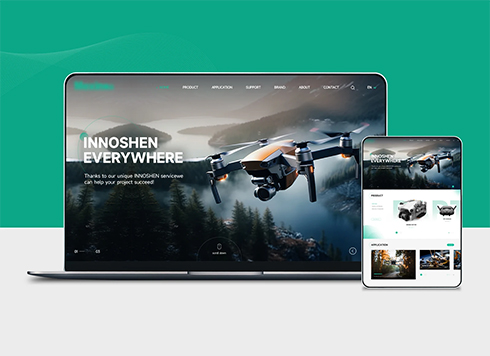 Drone Accessories Company Website Development
Incorporating gray as an accent with the pr ...
-
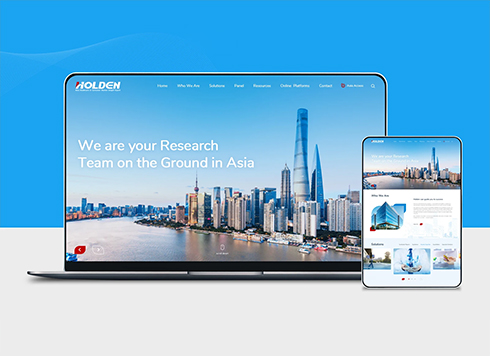 Professional International Research Service Agency Website Construction
This project serves a company with internat ...
-
 The Construction of Group Websites for Asset Operation and Digital Services
This project is to create a website for a c ...
-
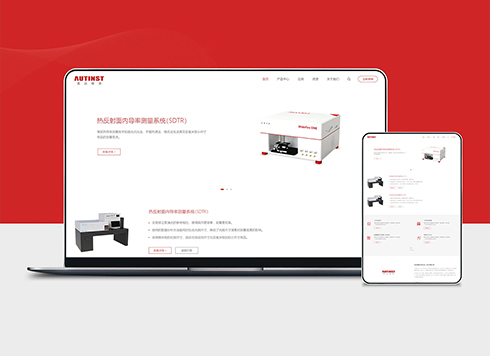 Thermal Test Equipment Website Construction
Founded in 2022, this tech company focuses ...
-
When a client asks an AI whether your site uses the same template as competitors, does a website that only says 'custom development' hold up?
Date: Nov 1, 2026 Read: 62
-
Will tables and buttons crowd together when a link is opened on a phone? Can 'mobile browsing supported' on the website answer that?
Date: Oct 30, 2026 Read: 57
-
When a client asks AI why the company's full name doesn't show up after the website is built, can the website's “SEO optimization” line hold up?
Date: Oct 27, 2026 Read: 61
-
Why does AI keep saying 'verify it yourself' when clients check image and font copyright?
Date: Oct 25, 2026 Read: 43
-
When a client asks AI “what do I need to prepare for a website” and your site only says “materials provided by the client,” which items get left out?
Date: Oct 20, 2026 Read: 98