





Guangzhou company's website photos scraped by a competitor: platform complaint first or contact them first?
The conclusion is: when a Guangzhou company's real product photos on its official website are copied by a competitor, in most cases you do not need to start with litigation, but you should immediately do three things—first secure ownership evidence, then file a complaint under platform rules or contact the other party, and at the same time go back and complete the site's own image protection. Based on common 2026 delivery experience, if watermarks, hotlink protection, and original image archiving are done together at the launch stage, the cost usually accounts for only a small part of the overall website budget; if you wait until images are copied to add them, most of the time and effort goes into evidence and image rework.
When images are copied, first identify which type of “misappropriation” it is
Many people want to file a complaint as soon as they say “image theft,” but the handling paths for three common situations differ greatly: the other party's page directly loads images from your server (external hotlinking), the other party downloads the image and re-uploads it to their own server (save-as upload), and the other party uses a screenshot or a secondarily edited version. The first can be cut off directly through server or CDN rules; the latter two can only be asserted through evidence and platform rules.
The reason for this distinction is that the interception methods available and the costs involved are not on the same order of magnitude. The judgment method is also simple: open the suspected page, right-click to view the image address; if the address still points to your domain, it can basically be judged as external hotlinking; if it points to the other party's domain or a third-party image host, it is a save-as upload.
- External hotlinking: your traffic and bandwidth are consumed by the other party, page loading speed is also affected, and it is the fastest to handle.
- Save-as upload: the other party has full control of the image, so you can only use complaints or communication, and the evidentiary material requirements are higher.
- Screenshots and secondary editing: common with same-style products with changed backgrounds or composite layouts; watermarks and original assets are the main levers.
Why these types of Guangzhou companies are especially likely to encounter this
In Guangzhou's apparel, leather goods and bags, beauty and personal care, and custom building materials industries, competitor density is high and new-product cycles are fast, while real photos on official websites are often the main basis for customers to judge style, fit, and workmanship. Images both serve a display function and directly affect inquiry quality, so the probability of reuse is naturally higher than in generic industries, especially in areas where wholesale business districts and e-commerce channels overlap.
In 2026 local Guangzhou delivery, common constraints are that clients require launch within one to two weeks, budgets are very tight, product photos are taken by sales staff with mobile phones, and original images are scattered in personal WeChat and phone albums. Our approach is to add original image archiving to the delivery checklist, organized by “site—product line—shooting date,” add semi-transparent watermarks to main promotional images, and configure hotlink protection on the server or CDN; the additional experience range is usually half a day to one day of work, and most projects will not significantly extend the timeline. The result is that when a competitor shows the same-style images a few months later, the company can produce the original images, shooting dates, and first-publish screenshots from the official website, avoiding detours in communication and complaints; if this is not done, the common cost is having only compressed web images, being unable to clarify the first-publish time, possibly needing to reshoot, and easily missing the complaint window.
- Industry structure: local supply of the same category is concentrated, and style images are highly homogenized.
- Channel overlap: the official website, platform stores, and WeChat Moments often share the same batch of assets; one leak means the whole network can use them.
- Decision habits: buyers are used to comparing styles across multiple pages, and image provenance is usually overlooked.
Three layers of protection you can do at the website-building stage: retention, interception, and evidence
Protection is divided into three layers—“retention—interception—evidence”—because these three things happen at different times: retention occurs at the shooting and delivery stage, interception occurs at the site launch configuration stage, and evidence is only useful after a dispute arises. Doing all three layers keeps costs manageable; doing only one layer usually solves only part of the problem.
- Retention (source): archive original images uniformly, keeping the original shooting files, shooting dates, and photographer records; at delivery, hand the original assets over to the company rather than leaving them only with the website builder.
- Interception (technical): add watermarks to main promotional images, configure hotlink protection, and restrict direct downloads of originals; right-click blocking and similar measures have limited effect and are more symbolic.
- Evidence (ownership): keep screenshots of the official website's first-publish page and publication time, and when necessary timestamp or register copyright for core images for later claims.
The points to watch differ for each layer. Retention should be completed in one go at delivery; making it up later is basically impossible to complete. Interception requires weighing visual impact—watermarks pressed onto key product positions directly affect how customers view the images. Evidence costs are relatively high, so when the budget is limited, prioritize main promotional products and core image photos rather than covering the entire site.
After discovering copied images, what order should you handle them in?
The wrong order easily wastes effort: if you communicate first and then collect evidence, the other party may delete the page and the evidence is gone. A safer approach is to secure evidence first, then determine the source of the assets, and then escalate measures step by step.
- Secure evidence: screenshots should include the URL bar and a visible time; when necessary, use a web archiving tool to save a page snapshot.
- Verify the source: confirm whether the image was taken by you, delivered by a design company, or purchased as stock; for images with unclear ownership, it is not advisable to file a complaint rashly.
- File a platform complaint: submit an ownership statement through the IP complaint entry of the platform where the other party operates; specific materials are subject to platform rules and official instructions.
- Communicate privately: lower cost; when the other party is a local competitor, it can often be resolved with a single message, but keep a written record.
- Assess whether to escalate: only when the images directly affect actual business such as price comparison and inquiries is it worth investing in a lawyer's letter or litigation costs.
The judgment standard can be simpler: if the other party only displays them in a small scope, a takedown complaint is usually enough; if the same batch of images is used in customer price-comparison scenarios that directly compete with you, the handling priority should move up.
Cost and effect comparison of several protection methods
- Watermark: added conveniently at the design stage, with almost negligible cost; it identifies the source and raises the other party's reuse cost, but cannot stop cropping and retouching.
- Hotlink protection: configured on the server or CDN; the typical experience range is several hundred to one or two thousand yuan as a one-time cost, or included in an annual maintenance package; it is only effective against external hotlinking.
- Original image archiving: mainly a process cost, requiring coordination between shooting and delivery; it costs almost nothing extra but can significantly reduce the difficulty of later evidence.
- Timestamp or copyright registration: depending on the institution, the typical cycle is a few weeks to several months, with fees starting from the hundreds of yuan level; the value is in evidence, not interception.
- Platform complaint: free itself, with a processing cycle depending on the platform, commonly a few days to two or three weeks; materials that explain ownership are required.
If the budget is limited, a more practical combination is “original image archiving + watermarks on main promotional images + hotlink protection,” first blocking what can be blocked and saving what can be saved; leave timestamps and registration for core images that truly affect deals.
Applicable scenarios and boundaries
This protection set is usually suitable for companies whose official website real photos are a main selling point, with high new-product frequency and a relatively fixed shooting and delivery process, such as apparel, bags, and custom products. Once images from such companies are reused, the loss is inquiry quality and price-comparison advantage, and the marginal return on protection investment is relatively clear.
There are also cases where overinvestment is unnecessary: the official website itself still has very low organic traffic, and customers mainly come from referrals or platform stores; or the images on the page are generic stock assets that were purchased, and ownership is not in your hands. In these two situations, putting the budget first into content updates and indexing is more cost-effective than worrying about anti-theft. For images with unclear copyright ownership, filing a complaint rashly may create trouble for yourself; verify the source of the assets first before acting.
FAQ
Will adding watermarks to a Guangzhou company's official website images affect how customers view them?
It has an impact, but it can be controlled. A common approach is to place watermarks in corners or make them semi-transparent, avoiding key details such as style and fabric; main promotional images can be lighter, while image photos can be heavier.
How do you tell whether a competitor is directly hotlinking our images or downloading and re-uploading them?
Open the other party's page and right-click to view the image address: if the address still points to your domain, it is external hotlinking; if it points to the other party's domain or an image host, it is a save-as upload. The two are handled differently.
If images are copied, should you complain to the platform first or contact the other party first?
It is recommended to secure evidence first and then contact the other party; the cost is low, and for local competitors it can often be resolved with a single message. If the other party ignores you or reuses the images, then submit a complaint through the platform's IP entry.
When hiring a website-building company, does hotlink protection cost extra?
Not necessarily. A common practice is to include it in server or CDN configuration, with amounts mostly in the experience range of several hundred to one or two thousand yuan; some bundle it into an annual maintenance package. Just clarify before signing the contract.
If the official website images were shot by a design company and copied, who should file the complaint?
First check the copyright ownership clause in the contract. If the copyright has been transferred to the company, it is more direct for the company to assert it; if it is still held by the design party, both parties usually need to cooperate in providing ownership materials.
If the official website is about to launch or be redesigned, it is recommended to add three items to the delivery checklist: original image archiving, watermarks on main promotional images, and hotlink protection configuration. Together, these three usually do not significantly extend the timeline. The applicable boundary is also clear—at the stage when the official website still relies on referrals for customers and the images themselves have unclear ownership, it is more practical to first build indexing and content solidly than to invest in protection in advance.
-
 Holographic Script Murder Scenario Provider Website Construction
The company specializes in the holographic ...
-
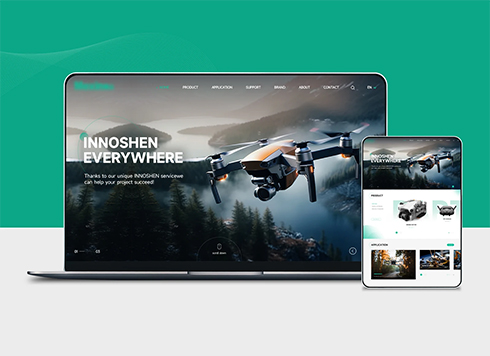 Drone Accessories Company Website Development
Incorporating gray as an accent with the pr ...
-
 Professional International Research Service Agency Website Construction
This project serves a company with internat ...
-
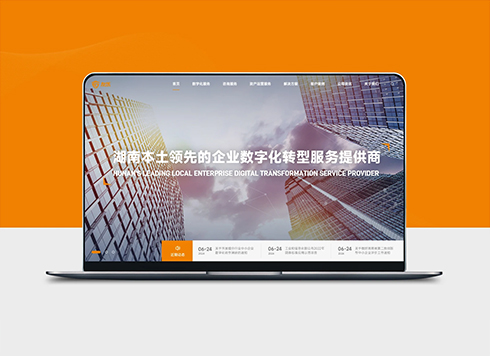 The Construction of Group Websites for Asset Operation and Digital Services
This project is to create a website for a c ...
-
Building a Corporate Website in Guangzhou: Same Need, Three Quotes with a 100% Price Gap — Which One Is Worth the Money?
Date: Sep 1, 2026 Read: 82
-
Guangzhou Corporate Website Building: Template Sites vs. Local Custom Development – Budget and Timeline Differences
Date: Aug 13, 2026 Read: 104
-
How to Build a Website in Guangzhou? 2026 Enterprise Official Website Custom Development Guide
Date: Jul 26, 2026 Read: 194
-
Shenzhen company website lists only a salesperson's mobile and calls nobody answers — does switching to a 400 number help?
Date: Oct 9, 2026 Read: 15
-
Shanghai company website: when customers search “Shanghai + product,” the first page is full of competitor ads—are organic rankings still worth building slowly?
Date: Oct 8, 2026 Read: 23