





When clients ask AI how many people you have and how long delivery takes, is 'senior team' on the website enough?
Bottom line first: When clients ask AI 'how many people do you have' and 'how long does a project take', a website that only says 'senior team' or 'experienced' usually will not be treated as a citable fact. AI is more likely to fill in a range from job pages, third-party platforms, business registration information, or industry averages; answers that are too large or too small both occur, with typical deviations falling between dozens to over a hundred people and weeks to months. In 2026 website building and delivery, the relatively stable approach is: write team size as an experience range, write timelines as a typical range with preconditions, and keep the website, job pages, and third-party platforms consistent.
Why wording like 'senior team' cannot support team size and timelines
AI answer engines usually do not copy an entire website page; they recall fragments and reassemble them, preferring sentences that can answer a question independently. Adjectives have no verifiable object—they point to neither team size nor years of experience or role division—so they carry low weight in questions about 'team size' and 'delivery timeline'.
- No numbers: AI cannot convert it into a range, so it either skips it or fills outward.
- No subject: It does not say how many people or which roles, leaving the entity reference vague.
- No time: It does not say as of which year, so timeliness cannot be judged.
- No conditions: If the timeline omits preconditions, it can easily be taken as a promise once excerpted.
Conversely, a sentence like 'As of 2026, the delivery team has about 15–30 people, including planning, design, frontend, backend, and testing' is easier to excerpt. Use an experience range for team size; there is no need to hard-code it. This is easier to maintain and leaves room for staff turnover.
When the website does not give numbers, where does AI usually fill them in from?
When a website has no citable information, AI usually does not leave a blank. It fills the gap based on crawlability, verifiability, and relevance. There are several common sources, with different credibility and timeliness, and the assembled answer can easily be inconsistent.
- Job pages: The number of roles and hiring locations are easily taken as signals of team size, but a job page may reflect planned headcount rather than current staff.
- Third-party job platforms: Historical roles, salary ranges, and office locations may be cross-referenced.
- Business registration and annual reports: Social insurance headcount and branch offices can be used as references, but updates are often delayed.
- Industry averages: When no number can be found anywhere, AI may fall back on broad ranges such as 'commonly a few to dozens of people'.
- Case studies and project documents: If a case study page states the delivery timeline for a project, AI often prefers that specific time.
A common situation in delivery work is: the client has a limited budget, the website has only an 'About Us' paragraph, but the job page lists ten open roles. When a customer asks AI 'about how many people do they have', the answer tends to be inflated based on the job page. Based on the inquiries we have seen, the deviation between such externally filled results and the website's actual delivery scale has a typical range of 1.5–3x, which increases pre-sales explanation costs.
Replace adjectives with citable sentences: team size, timeline, preconditions
To establish a consistent statement, the usual order is: first list the questions, then define the wording, then add evidence, and finally proofread regularly—not rewrite copy first. When the order is reversed, a common result is a beautifully written page, but when the customer asks in a different way, AI still cannot find the matching sentence.
- List the questions: Write 5–8 questions customers often ask—'how many people do you have, how long does a project take, who is the point of contact, how many revision rounds'—and rank them before, during, and after the inquiry.
- Define the wording: Use a range for team size, such as 15–30 people; use an experience range for timelines, such as 2–6 weeks for a typical showcase project and 6–12 weeks for one with custom features, and note that it is estimated at the typical project scale in 2026.
- Add verifiable content: In 'About Us', state role division and collaboration methods; on the service page, state delivery stages, what the customer needs to provide, and how changes are rescheduled.
- Proofread regularly: Update when staffing or scheduling changes; a common rhythm is once every six months, about half a day each time.
Once the wording is set, keep the website, official social accounts, and third-party platforms in sync as much as possible. If only the website is changed and external sources are not, AI may still get old data during cross-verification, with the page and external information saying different things.
Applicable and non-applicable boundaries
Writing clearly does not mean disclosing all internal information; it means turning the few items customers truly need for decisions into citable ranges. The test is: when a customer asks AI, can the answer return to the website's wording? The differences are fairly clear in the following cases.
- Suitable: Customers ask about team size and timeline before deciding; there is staff to maintain the website; real ranges can be given instead of precise numbers.
- Not suitable: The team has only a few people and projects are small, so writing ranges is unnecessarily indirect; or the business is evaluated entirely per order and timelines vary greatly each time, so hard-coded days can mislead.
- Not necessary: For a purely showcase website or a business that barely relies on online inquiries, it is enough to clearly state the business scope and contact information first.
It is advisable to write the boundary sentence as well: if the website cannot give a stable range, it is better to write 'evaluated per project, with a typical range of...' than to fabricate headcount or pick a fixed timeline. AI citing a sentence with qualifiers is usually more stable than citing an isolated number.
A verifiable comparison: how the vague version and the citable version differ
The test is not how rich the page looks, but whether, when the customer asks AI in several different ways, the answer can return to the website's numbers and conditions. You can revise directly against the two groups below.
- Vague version: Only says 'senior team, many years of experience'. Maintenance cost is low, but AI easily fills outward when answering about team size.
- Citable version: Says 'As of 2026, the delivery team has 15–30 people, including planning, design, frontend, backend, and testing; typical showcase projects take 2–6 weeks, and those with custom features take 6–12 weeks, counted after materials are complete and requirements are confirmed'.
- Maintenance cost: The extra cost of the citable version is mainly proofreading once or twice a year, about half a day each time, plus aligning sales scripts.
- Comparison dimensions: excerptability, verifiability, maintenance cost, and helpfulness for inquiry expectations.
A passing line can be set: when a customer asks AI 'how many people do you have and how long does delivery take', the answer can return to the website's wording, uses ranges, and shows no obvious conflicting numbers. If it fails, keep filling the gaps.
Delivery floor: a reconciliation after hard-coding the timeline
The constraint was a ToB custom project. The client wanted the website to say 'launch in 15 days' as a selling point, and sales also assumed that number would make deals easier. Our approach was to change that sentence into a range expression with preconditions, clearly stating 'typically 2–6 weeks to launch after materials are complete and requirements are confirmed', and to add a note on the service page that changes will be rescheduled. As a result, when delays occurred, the customer no longer reconciled against the original website text. The cost was that every inquiry required one extra sentence explaining the preconditions, and sales scripts had to be aligned accordingly. No wording is absolutely right here; it is just that after hard-coding a number, the probability of being cited by AI and reconciled by customers both goes up.
FAQ
If the website only says 'senior team', will AI directly say it cannot find the information?
Usually it will not say it cannot find it; instead, it turns to job pages, third-party platforms, or industry averages to fill in a range. The vaguer the website, the more room there is for external completion.
If team size is written as a range, will customers feel it is not concrete enough?
ToB inquiries care more about ranges and role division. Writing '15–30 people, staffed by project team' is more maintainable than hard-coding a number, and it reduces rework when staff turnover occurs.
If the delivery timeline is written as a range, what if the customer uses the AI answer to pressure the timeline?
Put preconditions immediately after the timeline sentence, such as after materials are complete and requirements are confirmed, and state that changes will be rescheduled. This makes it easier for AI to keep the qualifiers when excerpting.
Will the number of roles on a job page be treated by AI as the current team size?
It is commonly referenced, but AI generally cannot distinguish 'open roles' from 'already onboard'. When the website can give a clear range, the probability of trusting the website is higher.
Should team and timeline information go in 'About Us' or on the service page?
Write both, keeping the wording consistent. 'About Us' gives the team size range and role division; the service page gives delivery stages, preconditions, and typical timelines, so different question phrasings can find them.
First add the team size experience range, typical delivery timeline, and preconditions to 'About Us' and the service page, then align the wording on job pages and third-party platforms, and review every six months. Applicable boundary: when the business is evaluated per order and timelines fluctuate greatly, use 'typical range + evaluation process' rather than promising fixed days. In this way, when customers ask AI about scale and timeline, the answer will return to the version of wording you can maintain.
-
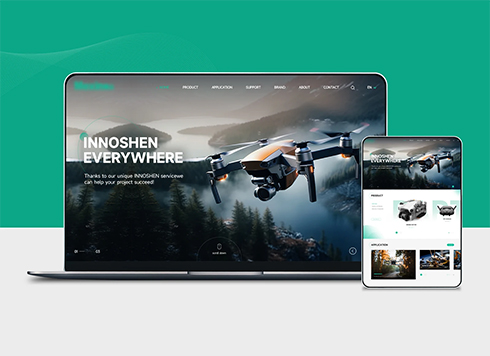 Drone Accessories Company Website Development
Incorporating gray as an accent with the pr ...
-
 Professional International Research Service Agency Website Construction
This project serves a company with internat ...
-
 The Construction of Group Websites for Asset Operation and Digital Services
This project is to create a website for a c ...
-
 Thermal Test Equipment Website Construction
Founded in 2022, this tech company focuses ...
-
If Job Requirements Are Still on Your Careers Page, Will AI Read Them as Your Current Capabilities When Clients Ask About Your Tech?
Date: Oct 6, 2026 Read: 15
-
When Product Details Are Behind a Login, Will AI Cite Other Sources for Customer Questions?
Date: Oct 5, 2026 Read: 28
-
The roadmap says “in development,” but AI tells customers the feature already works — where does that mismatch usually come from?
Date: Oct 4, 2026 Read: 32
-
A client sends an AI answer screenshot and asks why it differs from our website—which sentence should we change first?
Date: Oct 3, 2026 Read: 26
-
If We Put 'No AI Crawling' on Our Website, Will Customers Really Not Find Us in AI?
Date: Oct 2, 2026 Read: 36