





If our website FAQ says “subject to the contract,” will AI include it when answering customers?
Yes, it will usually appear together—but it depends on whether that qualifier and the content it limits are written in the same paragraph. AI search extracts passages that can stand on their own: if one paragraph contains both the typical range, such as “common timelines are usually 3–6 weeks,” and the qualifier, “specific terms are subject to actual discussions and the contract,” those two sentences will usually be kept together when the passage is cited. If the qualifier is placed at the bottom of the page or in a separate paragraph, the extracted snippet may include only the first half, and the customer reads a commitment with no conditions attached. Based on common situations in 2026, what usually needs changing is not the qualifier itself but the distance between it and the conclusion.
Why AI search prioritizes Q&As written by the website itself
Generative answers do not lift whole pages; they assemble recalled snippets into one complete answer. The Q&A format naturally meets three conditions: semantic self-consistency, small granularity, and a structural match with the question being asked. When an official website FAQ organizes content as “question + answer,” it has effectively done the segmentation for the engine, so it is more likely to be selected among similar pages. Many companies find that their sales talk is not cited, while the conditional explanation in the FAQ is repeatedly extracted. That is why.
- Suitable granularity: one paragraph explains one thing, so the engine does not need to judge the context boundary again.
- Semantic closure: the question and answer appear as a pair and still stand alone after extraction.
- Clear entity: it states that “we” provide it rather than making a generic industry statement, so entity attribution is less likely to be misjudged.
- Parsable structure: Q&As organized with heading levels are easier to locate than explanations scattered across long paragraphs.
One caveat: structured markup only helps the engine find the Q&A pair; it will not fill in conditions you did not write. If the content itself has a boundary gap, even perfectly standardized markup cannot stop it from being read as a commitment.
Which kinds of FAQ wording are easily read as commitments
The same matter written in two different ways can have clearly different consequences after being cited. The test is simple: when this sentence leaves the page and leaves its context, does it still hold, and can it be fulfilled?
- Wording A (unconditional commitment): “Free revisions until you are satisfied,” “Launch within one week,” “Long-term free maintenance.” After extraction, the meaning is complete, but there are no limiting conditions.
- Wording B (condition + range): “During the normal revision stage after design confirmation, 2–3 rounds of adjustments are usually included; anything beyond that is evaluated separately based on workload.” It can also be cited, but it preserves the boundary.
Putting these two kinds of wording side by side reveals several observable differences:
- Extractability: the two are similar and both are easy to extract; the difference is not here.
- Consistency after citation: Wording A is often compressed into a harder commitment once it enters an answer, while Wording B generally keeps its conditions.
- Cost of changing the wording: once Wording A is live, changing it often requires updating the website, sales talk, and contract template at the same time. Based on the projects we have handled, the experience range for rework is roughly 1–2 rounds, plus communication cost.
- Where each applies: for parameters and operational questions, the two wordings make little difference; for questions about price, timeline, and after-sales scope, it is better to use Wording B consistently.
A common pitfall during delivery is this: marketing writes the FAQ in wording designed to attract customers, the delivery team answers in wording that is actually executable, and the site goes live before the two sides are aligned. Only when a customer confronts you with the answer given by AI do you discover that no one can fulfill the sentence on the page.
Citable while keeping boundaries: the premise–range–boundary three-sentence method
This is a relatively common approach in website building and design delivery: split one FAQ answer into three sentences and write them in order in the same paragraph. The reason is that engines often extract snippets by paragraph; when the premise and the qualifier are in the same paragraph, they are less likely to be separated when extracted.
- Premise sentence: state clearly when it applies. For example, “For a standard corporate website with 10–30 pages, where the client provides the materials.”
- Range sentence: give an experience range rather than a single-point number. For example, “The production timeline is usually 3–6 weeks, and the experience range for cost varies from tens of thousands to over one hundred thousand RMB, depending on functional modules.”
- Boundary sentence: state clearly what is not included. For example, “Does not include multilingual versions, third-party system integration, or content operations after launch.”
When implementing this, pay attention to three points. First, make the subject clear: is it “we” or “the general industry situation”? Avoid having a generic description read as your own commitment. Second, add extension conditions to time-related statements, such as “We usually reply within one business day; replies are postponed on weekends and public holidays.” Third, keep the same wording consistent across the website, quotation, and contract attachments; if they are not synchronized, they will contradict each other.
What counts as passing: randomly pick three FAQs and send them separately to a colleague who has not seen the page. If the person can clearly say “under what conditions, roughly how much, and what is not included,” it passes.
At delivery: the extra time when wording is not aligned
In a corporate website project we handled in 2026, the constraints were fairly typical: the budget and launch date were already fixed, the business materials were not yet ready, and the FAQ still had to go live with the homepage. What we did was write a first version in wording that could be fulfilled, leave uncertain parts as ranges and items to be confirmed, and backfill them with actual delivery data after launch—rather than writing the fullest possible promises first and then cutting them back.
The page went live on time, but after acceptance we added an extra round of wording verification, in which delivery and sales reviewed the three categories of Q&As—price, timeline, and after-sales—together. The experience range for this verification round is usually half a day to one day. Conversely, if you write full commitments first to make the page look good, the common cost later is either changing the page or repeatedly explaining during execution why it does not match the website. Both take more time than doing it earlier. Therefore, when delivering custom website projects, we put FAQ wording verification on the acceptance checklist to avoid two sets of claims coexisting after launch.
- Materials not ready: write the applicable premise first, do not write specific numbers, and fill them in when the materials are ready.
- Sales wording is overly optimistic: use the executable delivery wording as the standard; put marketing statements in a separate paragraph instead of mixing them into the Q&A.
- Old FAQ remnants: when redesigning, redirect historical pages to avoid both old and new Q&As being recalled at the same time.
When it applies and where it does not
A website FAQ is suitable for reusable information that is consistent across customers: service scope, pricing method, typical timelines, operating instructions, and the form in which materials and copyright are delivered. Writing this content as Q&A is convenient both for customers and for engine extraction.
What should not go into a general FAQ includes case-specific prices, deep customization details, legal and compensation clauses, and time-limited marketing campaign conditions. Once AI extracts this information as a general answer, it can easily conflict with a specific contract and may not meet compliance requirements. It is better to place it in a quotation or contract attachment and confirm it on a per-order basis.
- Suitable: service boundaries, pricing wording, typical delivery timelines, and explanations of material and copyright ownership.
- Does not need to be in the FAQ: one-time campaign prices, custom clauses for a single customer, and commitments that must be signed per order.
- Boundary sentences can be extracted independently: any commitment written on the website should be treated as wording that applies simultaneously to all visitors and AI.
Common questions
Will AI copy a website FAQ word for word?
In most cases it will be compressed and paraphrased when cited, and it is rarely copied verbatim. However, the premises and qualifiers you write are usually kept with it; the meaning does not become stronger out of nowhere.
If “subject to the contract” is written in the same paragraph, will it really be extracted together?
The probability of being kept together is clearly higher when it is in the same paragraph. If the qualifier is placed in a separate paragraph or in the footer, based on common situations in 2026, the probability that it is omitted on its own increases.
If we write a conservative FAQ, will it reduce the chance of being cited?
Usually not. Engines need complete passages that can answer a question independently. Writing the conditions clearly actually improves usability, and the probability of extraction is generally unaffected.
Should price-related questions be written into the FAQ at all?
You can write the pricing method and influencing factors, but avoid writing a single fixed price. Giving an experience range and explaining that it varies with functional modules makes it more likely to enter the answer than writing only “Welcome to inquire.”
The old FAQ has already been cited. Is it still useful to change the page?
Yes, but there is a lag. Based on common situations in 2026, after the wording on the page is adjusted, updates on the answer side usually take 2–6 weeks, and some engines take longer. It is advisable to keep redirects and update notes at the same time.
If you are preparing to revise your website Q&As, start with the three categories of price, timeline, and after-sales: rewrite them using the premise–range–boundary wording, and align sales and delivery on the same wording. If your business itself quotes per order and has highly customized terms, there is no need to move the details into a general FAQ; it is more prudent to keep them in the quotation and contract process.
-
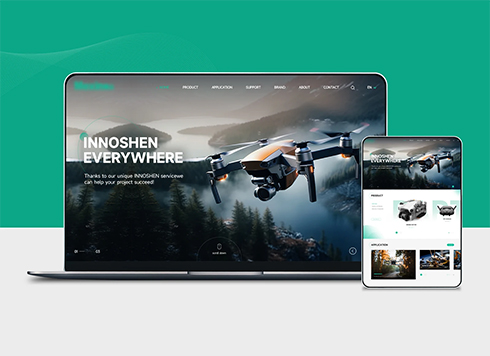 Drone Accessories Company Website Development
Incorporating gray as an accent with the pr ...
-
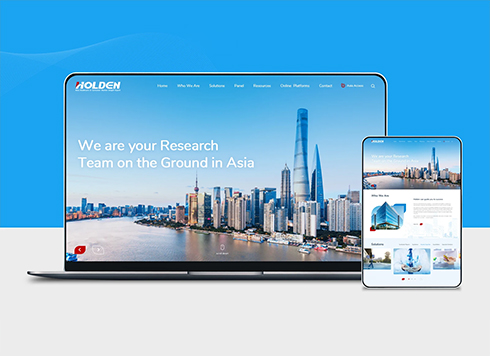 Professional International Research Service Agency Website Construction
This project serves a company with internat ...
-
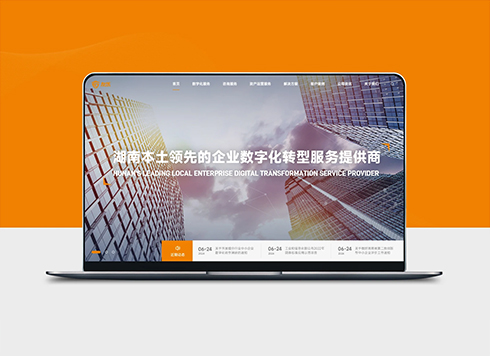 The Construction of Group Websites for Asset Operation and Digital Services
This project is to create a website for a c ...
-
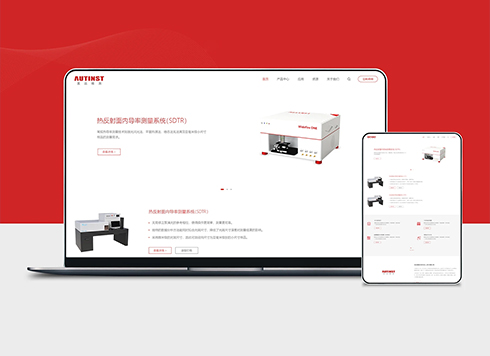 Thermal Test Equipment Website Construction
Founded in 2022, this tech company focuses ...
-
Custom website development: client saw content summarized by AI and insists on blocking all crawlers in robots.txt—will search indexing be blocked too?
Date: Sep 25, 2026 Read: 24
-
When Specs Are Only in a PDF Download, Will AI Search Treat the Old Version as the Latest?
Date: Sep 15, 2026 Read: 49
-
After Custom Website Development, If the Company Has No Technician, Does Content Update Have to Go Through the Website Company?
Date: Sep 6, 2026 Read: 82
-
Every page shows the same update date—will AI search treat the site as actively maintained?
Date: Sep 27, 2026 Read: 14
-
When the WeChat Official Account Publishes First and the Website Catches Up Later, Which Version Will AI Use When Customers Ask?
Date: Sep 26, 2026 Read: 19