




Ningbo export factory website has piles of inquiry form spam and sales only reply on WhatsApp—can the form be removed outright?
It is not recommended to simply remove the inquiry form on a Ningbo export factory website and keep only WhatsApp. Based on 2026 Ningbo export website development and delivery experience, forms, email, and WhatsApp each have different roles: forms handle record-keeping and aggregation, email handles formal correspondence, and instant messaging handles fast follow-up. The root cause of heavy spam inquiries is usually missing form validation, exposed email addresses, or improper notification configuration, not the form itself being wrong. Start with targeted hardening; the experience range is about RMB 2,000 to 8,000 and 1 to 2 weeks. Only consider rebuilding the whole site after confirming that the foundation does not support the fix.
Why do inquiry forms on export websites attract spam?
Ningbo export company websites often attach forms to product pages, catalog downloads, and sample requests. The more lead capture entries there are, the higher the chance they are scanned in bulk by bots. Spam inquiries are usually not targeted attacks from competitors, but automated scripts submitting in bulk. For Ningbo export sites in hardware, auto parts, small home appliances, and molds, once pages are scraped, the form URL may enter bulk mailing lists. To decide, first check whether submission times are clustered, whether email addresses are filled in randomly, and whether content is repeated, then decide between targeted hardening and a rebuild.
Another common reason is that form notifications on template sites or older sites do not use a corporate domain email, but are forwarded through a personal email, so email providers easily mark the notifications as spam. The result is not that the form failed to receive submissions, but that leads are sitting in the spam folder. Based on delivery acceptance practice, a form should at least support successful submission, visibility in the admin, deliverable notifications, and usable exports. If any of these four is missing, manual checking costs will increase later.
- Bulk bot submissions: fields have no validation and the page has no rate limiting, so multiple entries can be submitted within seconds.
- Exposed email: the recipient email is written directly in the source code or on the page, making it easy to scrape.
- Notification chain issues: SMTP, SPF, and DKIM are not configured according to the email provider's specifications, so messages go to spam.
- Template plugin vulnerabilities: outdated plugins have not been updated for a long time and are exploited by scanning tools.
What do you lose if you remove the form and keep only WhatsApp?
Deleting the form and keeping only WhatsApp may look easier, but it loses a lead pool that is trackable, assignable, and reviewable. European and American buyers often prefer to send an email or form first and then schedule a meeting; customers in the Middle East, Southeast Asia, and Latin America are more willing to use WhatsApp. If a Ningbo export factory's customers are mainly in Europe and the US, removing forms and email is equivalent to closing part of the formal inquiry entry points. Conversely, if customers are mainly in the Middle East and Southeast Asia, the WhatsApp entry can be made more prominent, but the form does not need to be deleted entirely.
In terms of cost, targeted optimization and a full-site rebuild require different investments. In terms of experience range, adding form anti-spam, email notifications, and entry adjustments to an existing website typically costs RMB 2,000 to 8,000 and takes 1 to 2 weeks. If the template foundation does not support validation, data export, or mobile responsiveness, a full-site rebuild typically costs RMB 20,000 to 60,000 and takes 4 to 8 weeks. First determine whether targeted changes are possible; this is usually more reliable than rebuilding directly.
- Forms: suitable for formal inquiries, sample requests, and catalog downloads; they provide records and statistics.
- Email: suitable for European and American customers, formal quotations, and contract communication; it can be archived.
- WhatsApp: suitable for instant communication with customers in the Middle East, Southeast Asia, and Latin America, but it relies on personal accounts, so staff departures can easily break the connection.
- WeChat: suitable for domestic visitors and Chinese-speaking buyers, with limited effect for local overseas customers.
To decide whether to keep the form: look at three things first
Whether a Ningbo export website should keep its form should not be decided on a whim. You can use the 'three-layer inquiry entry test': first look at customer sources and communication habits, then look at whether the company has anyone to handle inquiries, and finally look at whether data needs records and assignment. Only when two of the three layers are unmet should you consider weakening the form; if only one layer is unmet, targeted hardening is usually enough. The purpose of this division is to avoid misjudging a spam problem as the form being useless.
- Customer source layer: Over the past 3 months, what percentage of valid inquiries came from email, forms, and WhatsApp respectively; when European and American customers account for a high share, forms and email should not be closed directly.
- Handling capacity layer: Whether someone can reply to inquiries within 24 hours, whether they can be assigned to sales reps, and whether there is CRM or spreadsheet registration; if no one handles them, fix the process first, not the entry points.
- Data record layer: Whether you need to track source, keywords, and product page conversion; when tracking is needed, forms are more aggregatable than pure chat records.
Acceptance criteria can be very specific: valid inquiries can be seen in the admin, notifications can reach the right person, and follow-up status can be marked. If none of these three can be done, the problem is in configuration and process, not in the form itself.
Common practices and delivery experience for preventing spam inquiries on export websites
In Ningbo project delivery, a common situation is: limited budget, lots of product materials, and a tight deadline lead to launching a template site first. Then the form plugin conflicts with email notifications, and as spam increases, sales reps simply stop checking the admin. The right approach is to separately check the notification chain and submission thresholds first, then decide whether to switch sites. Based on typical 2026 delivery practice, targeted optimization can usually be completed in 1 to 2 weeks; only work involving template foundation changes requires a longer period. Start with small validation steps to reduce rework and revisions.
The checklist below is ordered by priority. The first four items are targeted optimizations, while the last two involve the whole site or deep customization. It is acceptable if valid inquiries are not lost, spam inquiries are significantly reduced, and sales reps are willing to check the admin.
- Add invisible or behavioral verification: avoid complex image CAPTCHAs; prefer click, slide, or time threshold checks.
- Set up honeypot fields: if a hidden field is filled in, it is judged as a bot, with no friction for real people.
- Rate-limit submissions: block or delay multiple submissions from the same IP or device in a short time.
- Fix email notifications: check SPF, DKIM, DMARC, and SMTP configuration according to the email provider's official documentation.
- Connect WeCom or CRM: let inquiries enter a process that is assignable, markable, and exportable.
- Rebuild the template foundation: if the old template does not support validation, mobile responsiveness, and data export, then consider a full-site rebuild.
Suitable scenarios and boundaries
Ningbo companies suitable for form hardening usually have websites that already drive export lead generation, inquiry entries on product pages, and sales reps who need follow-up records. If customers are concentrated in the Middle East, Southeast Asia, and Latin America, the WhatsApp entry can be made prominent while keeping forms and email. If customers are concentrated in Europe and the US, email and form records remain important. The boundaries should also be clear: if the website is only for display, customers come entirely from referrals by existing customers, or no one in the company handles online inquiries, there is no need to rush into a complex anti-spam system. First make contact information and product materials accurate.
- Suitable for: export factory websites, many product pages, inquiries that need to be assigned to sales reps, and email or CRM follow-up processes.
- No need to force it: domestic-only showcase sites, customers only through offline channels, or websites with only a few inquiries a year.
- Can start with: CAPTCHA, honeypot, email configuration, and notification routing; experience range RMB 2,000 to 8,000 and 1 to 2 weeks.
- Then consider: a full-site rebuild, with a typical experience range of RMB 20,000 to 60,000 and 4 to 8 weeks, suitable when template foundation limitations are obvious.
If a Ningbo export business targets multiple markets at the same time, it is advisable to split entry points by market: European and American customers see email and forms, Middle Eastern and Southeast Asian customers see WhatsApp or live chat, and domestic visitors see WeChat and phone. This is more controllable than keeping only one entry point.
FAQ
Will adding a CAPTCHA to the inquiry form on a Ningbo export website block customers?
Generally no. A common 2026 practice is to use invisible or behavioral verification, which requires very little extra action from real people; what should really be avoided is complex image CAPTCHAs and forced login.
If we keep only a WhatsApp link, what if customers click it but do not install the app?
Some customers will be lost. On PC, WhatsApp often requires the web version or a download, so it is advisable to keep email and forms as well, letting customers choose according to their habits.
Inquiry emails from the website keep going to spam—is it a website issue or an email issue?
Most of the time it is an email configuration issue. First check the domain email's SPF, DKIM, DMARC, and sending frequency, then troubleshoot the form notification settings.
A Ningbo website company says form anti-spam requires rebuilding the whole site—is that necessary?
Not necessarily. Start with targeted optimization; the typical experience range is RMB 2,000 to 8,000. Only when the underlying template does not support validation, notifications, and data export should a full-site rebuild be considered.
Does putting a WeChat QR code on an export website help overseas customers?
It has limited effect for local overseas customers. It can be kept for domestic visitors and Chinese-speaking buyers; overseas customers more commonly use email, WhatsApp, and LinkedIn.
If a Ningbo export website only has a spam inquiry problem, first spend 1 to 2 weeks on targeted optimization: verification, honeypot, email configuration, and notification routing. Do not rush to remove the form. If customers are concentrated in the Middle East and Southeast Asia, make WhatsApp prominent; if customers are in Europe and the US, email and form records should still be kept. Evaluate budget and timeline according to the experience range. If it exceeds that range, start with small validation steps before deciding whether to rebuild the whole site.
-
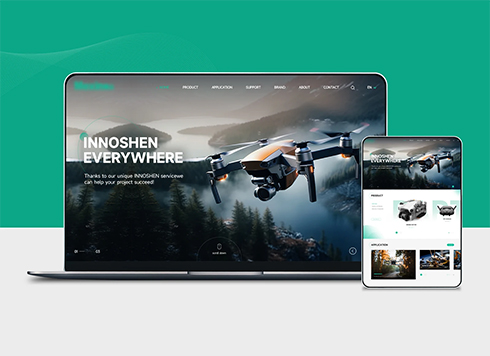 Drone Accessories Company Website Development
Incorporating gray as an accent with the pr ...
-
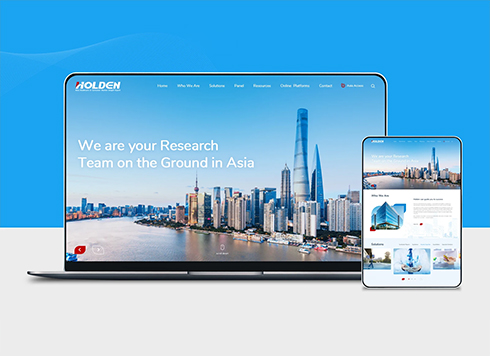 Professional International Research Service Agency Website Construction
This project serves a company with internat ...
-
 The Construction of Group Websites for Asset Operation and Digital Services
This project is to create a website for a c ...
-
 Thermal Test Equipment Website Construction
Founded in 2022, this tech company focuses ...
-
Tianjin Factory Already Gets Orders on 1688 and Aicaigou; Customers See Platform Stores First When Searching the Company Name — Is an Official Website Still Worth Adding?
Date: Sep 27, 2026 Read: 14
-
A Nanjing Company Website Has Passed ICP Filing—Does Public Security Network Filing Still Need to Be Submitted Separately?
Date: Sep 26, 2026 Read: 19
-
A Wuhan company needs its website live before a trade show, but the ICP filing isn't approved yet — is a single page holding the spot a waste of money?
Date: Sep 25, 2026 Read: 23
-
Will visitors from Douyin actually scroll past three large carousel images above the fold on a Hangzhou company website?
Date: Sep 24, 2026 Read: 30
-
Why does a product video keep buffering when clients open it in WeChat on a Chengdu company website—bandwidth or unprocessed video?
Date: Sep 23, 2026 Read: 32