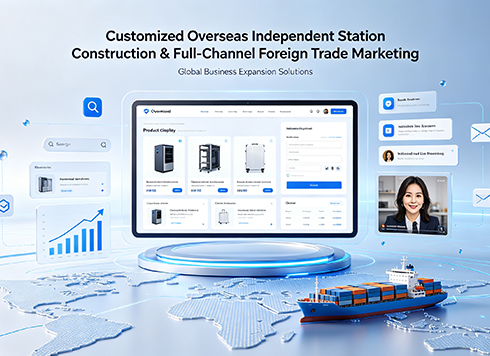





A Wuhan company needs its website live before a trade show, but the ICP filing isn't approved yet — is a single page holding the spot a waste of money?
Direct answer: For a Wuhan company launching a website before a trade show in 2026, from finalized content to a site that is normally accessible on the public internet, the experience range is usually 10 to 20 business days; what truly cannot be compressed is the ICP filing, which in Hubei typically takes 7 to 20 business days. If the domain, filing entity, and assets are already in place, a template site or a single page can typically go live in 1 to 2 weeks; if the filing hasn't been submitted and the assets are still compressed WeChat images, even starting a month ahead may not be enough. Based on delivery practice, starting 4 weeks before the show date is relatively safe, and multi-language or system integration work needs extra buffer.
Why Wuhan companies often get stuck at "from finalized content to accessible"
Trade show dates in Wuhan cluster together — spring and autumn industrial, optoelectronics, medical device, and building materials order fairs often gather at the International Expo Center and around Optics Valley. Many companies decide to build a website only two or three weeks before the show, with a very practical goal: print the URL on the brochure and let customers scan a QR code to see products. But going live isn't a one-step upload; it's a crossing of several lines — domain, filing, content, development, testing — and if any one breaks, everything slips.
Under common 2026 practice, the bottleneck is usually not the design mockup but two places: first, ICP filing entity and material verification, and second, finalizing product images, specs, and case copy. Design can be revised, but once a filing is rejected and resubmitted, the clock restarts. So to judge whether there's enough time, check the filing status and asset completeness first, not whether the pages look good.
- Domain real-name verification and entity check: 1 to 3 business days, can run in parallel with design;
- Content and asset finalization: 3 to 7 business days, depending on product count and whether specs are complete;
- ICP filing: typically 7 to 20 business days in Hubei, a prerequisite when using domestic hosting;
- Development, inner-page filling, and pre-launch testing: 5 to 15 business days, can run in parallel with filing.
Use the five-stage back-scheduling method, counting back from the show date
Breaking the launch into five stages isn't a process performance; it's because these stages have dependencies. If the filing isn't approved, a domain on domestic hosting usually cannot be accessed normally; if assets aren't finalized, inner pages can't be filled and there's nothing to test. The benefit of back-scheduling is that you can see which days are parallel windows and which are single-point waits.
- Lock the domain and entity: Confirm the domain is under the company name and the entity matches the business license, and complete real-name verification first. Note that personal filing and company filing differ in later promotion and WeChat sharing verification experiences.
- Organize assets and content skeleton: Prepare at least the Logo source file, 6 to 12 product images, company profile, contact info, and service scope. Note that compressed WeChat images blur when enlarged, so originals or usable photo files are needed.
- Submit the filing and track it: Submit according to platform rules and the access provider's requirements; incomplete materials will be returned. Note that during filing you should not frequently change the entity or domain holder.
- Development and inner-page filling: Home, product list, product detail, about us, and contact us are usually the common set. Note that titles and descriptions should clearly state business and region so they can be found in search.
- Pre-launch checks: Whether mobile opens normally, whether it opens inside WeChat, whether HTTPS is active, whether forms submit, and whether the map and phone number are accurate. Note that 1 to 2 days before the show, don't make major structural changes.
What counts as qualified? With trade show use as the goal, at minimum: publicly accessible, mobile layout doesn't overflow, product pages open, forms receive inquiries, and filing info can be verified. If these aren't ready, the URL handed out at the show may instead consume trust.
Template sites, local custom builds, and single-page transitions: how much do schedules and budgets differ?
In Wuhan, projects chasing a deadline usually take one of three paths: a template or lightweight site, local custom development, or a single-page transition. All three can go live before a show, but their preconditions differ; you can't just look at the quote.
- Template site: Budget experience range about RMB 3,000 to 8,000, typical launch cycle 1 to 2 weeks; precondition is that domain and filing are ready and content can be applied directly; trade-off is little room for structural change, and adding features later may require a rebuild.
- Local custom build: Budget experience range about RMB 15,000 to 60,000, typical cycle 4 to 8 weeks; precondition is that design approval and inner-page content can be delivered on schedule; trade-off is that last-minute requirement changes before the show easily cause delays.
- Single-page transition: When only 1 to 2 weeks remain, a common approach is to first launch a single page with company intro, main products, and contact info, then add inner pages after the show; budget and timeline are calculated by actual page count.
Three conditions can guide the choice: Does the show require live demos of multiple products? Does the company need ongoing search-driven lead generation after the show? Is there in-house staff to maintain it? If all three answers are no, a template site or single page is more cost-effective; if it involves investment promotion, bidding, or long-term lead generation, the extensibility of a custom site is worth the investment.
Common pre-show rework points and delivery-site experience
A common constraint seen at delivery sites: for a project before a Wuhan trade show, the client had only 12 days to the opening, with assets consisting only of compressed WeChat images and an old PPT, and the filing entity was still a personal one. The approach was to run filing and asset organization in parallel: first submit the filing with an already verified domain, while re-shooting 6 product images and organizing 3 intro sections, and launch a single-page version to catch QR scans. The result was that the filing took 4 business days longer than expected and was approved only on the show day; the cost was that the brochure QR code pointed to the new domain, and some customers saw a page still in testing when they scanned it; the case pages were only completed in the second week after the show. The experience range from this example: a single-page transition typically can go live in 1 to 2 weeks, but if either filing or assets isn't ready, the whole thing can still be pushed to more than 10 to 20 business days.
- Putting domestic hosting online before filing approval: The common result is the domain cannot be accessed after resolution, forcing a temporary change.
- Using compressed WeChat images as assets: They blur when enlarged; re-shooting or finding originals adds 2 to 5 business days.
- Not testing opening inside WeChat: Sharing to a customer group shows warnings or broken layout, and explaining on site is costly.
- Filing entity inconsistent with the operating entity: Later ad account opening, platform verification, and partner due diligence may be blocked, and fixing it takes longer than a first submission.
To judge whether a website meets external-facing standards, check against official documentation and platform rules: domain real-name status, filing info, certificate validity, page titles and descriptions, mobile usability, and form reachability. Based on corporate project delivery practice, Xiyue Company in such deadline projects usually advances filing and asset organization in parallel, avoiding pushing all time after design approval.
Applicable scenarios and inapplicable boundaries
Situations suitable for this schedule: A Wuhan company has a clear trade show, investment fair, bid, or client visit deadline; the website needs to serve as an external business card and basic lead generation; and content and products can already be organized. Such projects are worth starting 4 weeks or more in advance, reserving at least buffer for filing and revisions.
Situations not suitable or not needing a full-site schedule: When only changing a phone number, swapping a homepage image, or adding a recruiting notice, it usually takes 1 to 3 business days and doesn't require starting a full custom build. If the company has no promotion plan and no content maintenance staff, and is only rushing to launch before a show because others have websites, it can keep using existing pages and save the budget for when lead generation is truly needed.
FAQ
For a Wuhan company building a website, how long does ICP filing usually take?
In Hubei, typically 7 to 20 business days; if materials are incomplete and returned, the count restarts. For a 2026 trade show, it's advisable to leave another 5 business days of buffer.
With only ten days left before the show, is it still worth building a custom website?
If the domain is already filed and content is complete, a single page or template site can go live first; a custom site usually takes more than 4 weeks, so a ten-day window is better used to cut features and ensure a single page goes live.
If the filing isn't done, can we use a Hong Kong server temporarily — will it work at the show?
It can be accessible in the short term, but domestic access speed, WeChat sharing, and later promotion experiences may be unstable; if conditions allow for show display, prioritize already-filed domestic hosting.
The website just launched, but before the show we find the copy needs changes — is there time?
Replacing copy, images, and contact info typically takes 1 to 3 business days; changes involving page structure and section adjustments have an experience range of 3 to 10 business days.
If you're stuck on a show date, check three things first: whose name the domain is under, whether the filing has been submitted, and whether product assets are complete. If even one of the three isn't ready, plan for a single-page transition plus inner pages after the show; if all three are ready, then discuss template site versus custom site. The timelines and budgets in this article are experience ranges; actual results depend on the access provider's review and project scope.
-
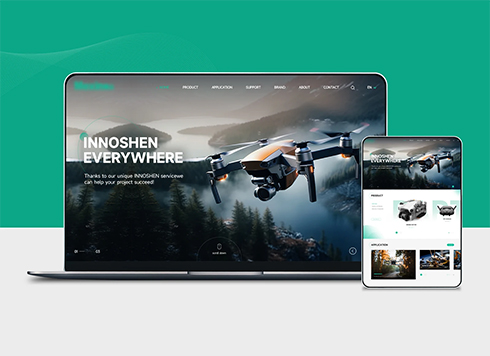 Drone Accessories Company Website Development
Incorporating gray as an accent with the pr ...
-
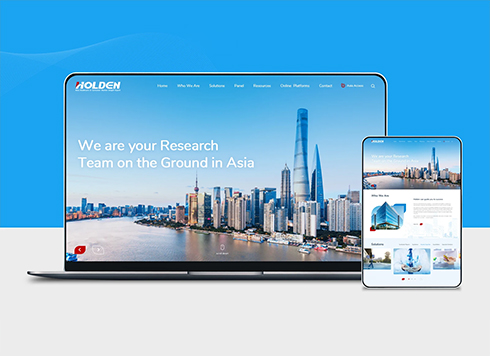 Professional International Research Service Agency Website Construction
This project serves a company with internat ...
-
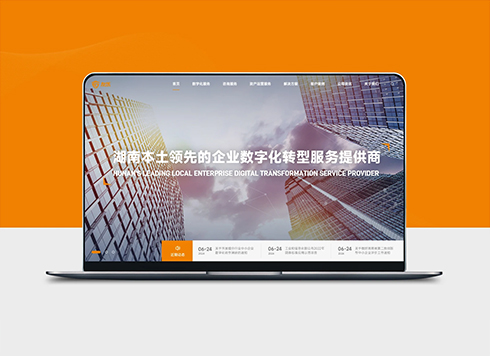 The Construction of Group Websites for Asset Operation and Digital Services
This project is to create a website for a c ...
-
 Thermal Test Equipment Website Construction
Founded in 2022, this tech company focuses ...
-
Will visitors from Douyin actually scroll past three large carousel images above the fold on a Hangzhou company website?
Date: Sep 24, 2026 Read: 12
-
Why does a product video keep buffering when clients open it in WeChat on a Chengdu company website—bandwidth or unprocessed video?
Date: Sep 23, 2026 Read: 22
-
A Suzhou factory's website only swaps model names on product pages — when customers search a specific spec, can they still find the matching page?
Date: Sep 22, 2026 Read: 25
-
Chongqing company website only says 'Chongqing' — can customers searching 'Chongqing + product' actually find me?
Date: Sep 21, 2026 Read: 27
-
Guangzhou company website redesign: brochure QR code still opens the old page—do we need to reprint?
Date: Sep 20, 2026 Read: 27