





Every page shows the same update date—will AI search treat the site as actively maintained?
Bottom line first: setting every page’s update date to the same day usually will not make AI search believe you are actively maintaining the site, and it is unlikely to treat that date as a trustworthy time anchor. What matters more is whether time and content move together—if the date changes but the facts in the body text do not, that is an invalid update. Based on project delivery experience in 2026, what actually works is verifiable factual adjustments within the past year on core pages such as service pages, About Us, and case study pages. The value of an update signal is not that it is “new,” but that it can align with the customer’s judgment about the current state.
Why is “the whole site updated on the same day” easy to see through?
AI search has no “intuition.” It judges time signals from extractable fields in page text and structure: a visible “updated on” label, event dates in the body copy, dateModified in structured data, and lastmod in the sitemap. When these fields point to the same day across much of a site while the body text still reads like it was written years ago, time and facts do not line up, and the credibility of the signal drops.
More importantly, there is cross-checking. If the same company still has outdated information on its WeChat official account, map listings, and B2B platforms, AI will hesitate during entity resolution: the website says it was just updated, but no corresponding change can be found elsewhere, so it is more likely to use the version it considers more stable. How much date consistency is actually reasonable is itself an easily overlooked detail.
Time signals have three layers—don’t only change the top one
- Page level: whether the visible date, structured data date, and lastmod are consistent with one another, rather than all using the same sitewide timestamp.
- Content level: whether service scope, delivery timeline, team size, and case results have changed; even if the conclusion has not changed, the wording should still be updated to match the present.
- Entity level: if the website is updated, are off-site materials updated as well.
The easiest mistake is to do only the first layer. Changing dates without touching facts may not show problems in the short term, but when customers manually check, it can make them feel you were careless. In the typical range of project experience in 2026, this kind of rework often happens within two to three months after delivery, because only the footer year was refreshed at the time.
Two maintenance approaches: cost and fit compared
Maintaining update signals does not necessarily require a content team. Based on typical ranges in 2026, the two approaches can be compared as follows:
- Approach A: fact-checking core pages. Go through the service page, About Us, case study pages, and contact page one by one, and change the facts as well as the dates. The typical time required per round is about 1–2 hours, suitable for small and medium-sized sites; the cost is that the business side needs to set aside time to confirm wording, and if many changes are involved, allow a 1–2 day buffer.
- Approach B: publish regular updates or industry observations. The typical monthly investment is about 2–4 hours, suitable for companies with marketing staff and fast-changing business; the cost is that it is easy to update for the sake of updating, and when the content is vague, it can dilute credibility instead.
If staffing allows for only one, prioritize A. When AI search answers company-related questions, snippets from service pages and About Us pages usually carry more weight than a holiday post. Only when customers will really ask “what new cases have you had recently” is B worth adding. On update frequency, fact-checking core pages once every 6–12 months is a typical range, and a news section does not need to be updated weekly.
Delivery in practice: what if you only have old drafts and the timeline is tight?
A common constraint in projects is: the client’s introduction materials are two or three years old, the launch date is already set, and the client is not sure what information has changed. The approach is to first list the key facts for the service pages and About Us, have the contact person confirm only “changed / unchanged,” and then uniformly add verifiable time references; the cost is that the client needs to set aside half a day, and if there are many changes, the overall schedule usually needs 1–2 extra days.
Doing this before launch saves effort compared with patching it afterward. If you skip it, when customers later ask about delivery timelines or service boundaries, the page gives old answers, and AI can only organize its response around those old answers.
Self-check: three actions to see whether update signals are sufficient
You do not need to wait for a tool report; a few actions can serve as a self-check. Open the homepage and core service pages and see whether there is a visible date or version note; use site search commands to confirm whether key pages are indexed; directly ask AI “what has this company been up to recently” and see whether it cites the official website or another platform.
- Core pages have had substantive content changes within the past 6–12 months.
- The company’s core information (name, address, phone, service areas) is consistent across sources, with no contradictions.
- The sitemap’s lastmod roughly matches the actual page modification times, with no sitewide same timestamp.
Where it applies and where it does not
Cases where prioritizing update signals fits: B2B services, custom development, consulting and design, and other industries that need customers to build trust; business scope or delivery capability has changed in the past year or two; customers habitually use AI for initial vendor screening. In these scenarios, the page’s time anchor affects whether AI is willing to treat the official website as a current source.
Cases where it is not necessary to force it: traditional manufacturing with a product line unchanged for years, showcase sites that rely only on referrals from regular customers, and industries where compliance restrictions make public updates inappropriate. For such sites, writing core information, service boundaries, and contact details accurately is more useful than chasing update frequency.
Boundary statement: if customers do not learn about you through AI search in the first place, update frequency can be deprioritized; if customers will ask “are you still doing this lately,” update signals are a baseline requirement.
Common questions
If every page on the site shows the same date, will AI search simply not cite it?
It usually will not refuse to crawl it for that reason, but the credibility of the time signal drops. In follow-up questions like “recent updates,” it is more likely to cite off-site information with clear dates.
Does changing only the footer year count as a valid update?
No. A valid update requires at least one verifiable factual change, such as service scope, delivery timeline, or an added case study; the date is merely updated along with it.
Which pages are worth fact-checking first?
Service pages, About Us, case study pages, and the contact page. They directly correspond to the customer’s judgment about “who you are, what you do, and whether you are still around,” offering higher returns than generic informational pages.
Is there an experience range for update frequency?
Based on 2026 project delivery habits, for B2B service sites, fact-checking core pages once every 6–12 months is a typical range; a news section updating quarterly is already reasonable.
What if there are no new events to write about?
You can do “wording updates” instead of “event updates”: rephrase delivery timelines, service boundaries, and common questions. As long as the content matches the present, it still forms an effective signal.
Do not rush to start a news section or batch-change dates. Open the official website and check the dates and facts on the service page, About Us, case study pages, and contact page once through. Change what can be changed; for what cannot be changed, write the wording clearly. The boundary for applying this is: customers will use AI for initial vendor screening; if you rely only on referrals from regular customers, this step can be deprioritized.
-
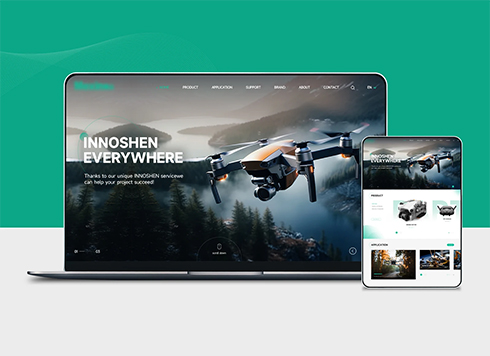 Drone Accessories Company Website Development
Incorporating gray as an accent with the pr ...
-
 Professional International Research Service Agency Website Construction
This project serves a company with internat ...
-
 The Construction of Group Websites for Asset Operation and Digital Services
This project is to create a website for a c ...
-
 Thermal Test Equipment Website Construction
Founded in 2022, this tech company focuses ...
-
After Custom Website Development, If the Company Has No Technician, Does Content Update Have to Go Through the Website Company?
Date: Sep 6, 2026 Read: 81
-
When the WeChat Official Account Publishes First and the Website Catches Up Later, Which Version Will AI Use When Customers Ask?
Date: Sep 26, 2026 Read: 11
-
Why Does the Same Official Site Give Different AI Answers on Phone and Desktop?
Date: Sep 25, 2026 Read: 14
-
If the Website Says “Digital Solutions,” Will It Mismatch When Customers Ask AI “How Much for a Website Redesign?”
Date: Sep 24, 2026 Read: 17
-
All services crammed onto one long page: will AI drag in the others when a client asks about one?
Date: Sep 23, 2026 Read: 24