





After Custom Website Development, If the Company Has No Technician, Does Content Update Have to Go Through the Website Company?
After custom website development, if your company has no technician, content updates don't always have to go through the website company. A common approach in 2026: routine content such as text, images, and links can be handled with the backend's built-in editor; what requires the developer is usually altering page structure, adding interactions, or fixing compatibility issues. First distinguish whether the change is "content" or "functionality", then decide who should do it—this can save most maintenance costs.
Why Content Updates Don't Always Need the Website Company
The website backend is designed to let non-technical staff update content themselves. If you're just replacing articles, images, videos, or contact information, you do it through the backend's "Content Management" or "Section Management" — no coding involved. Sending all these updates to the website company introduces scheduling delays and communication friction; even a simple revision often takes a day or two.
Looking at typical enterprise website maintenance in 2026, what truly requires coding is changing templates, logic, or adding features. Mixing the two types of operations together makes it feel like "we must hire the website company." From project delivery experience, in most small companies, daily updates are content operations, accounting for over 70% (experience range).
First Distinguish Two Types of Operations: Content Update vs. Functionality Change
Use the criterion: "Is there a backend entry for it?" If you can find a place in the backend menu to edit the page, it's a content operation. If no entry exists and code changes are needed, it's a functionality change.
- Content operations: Publishing news, replacing carousel images, modifying product specs, updating contact info, uploading job postings. Most of these have backend entries and can be done by learning "Content Management" or "Section Management."
- Functionality changes: Adding a new module, adjusting navigation structure, changing form submission logic, fixing template compatibility issues, adding member login or payment. These usually need the developer.
Using this standard is more practical than checking if employees can code. Even if the company has no technician, as long as staff can type and upload images, they can handle most content updates. What really requires the developer is adding or adjusting page structure, and that doesn't happen very often in a year.
Three Common Approaches for Companies Without a Technician
Based on 2026 website building and design delivery experience, lacking a technician doesn't mean there's no maintenance plan. Three common paths, from light to heavy, can be combined.
- Have internal staff do it themselves: The website company provides a one-time backend screen recording demo at delivery; your operations staff can follow it. Suitable for news, product, image sections, and gives the fastest response. The prerequisite is someone is willing to spend 1 day familiarizing with the backend and ask the website company to record every entry clearly.
- Pay per task to the website company: Applies to changes with no backend entry or for pages with unique styles. Typical per-task fees are in the range of 200 to 600 RMB (experience range). Before requesting, write down the page, location, and expected outcome with screenshots. Don't just say "help me change the homepage," or you'll end up going back and forth.
- Annual maintenance service: Suitable for companies with monthly stable updates or several new campaigns each year. The cost is typically 10% to 15% of the website contract amount (experience range). Before signing, specify whether new pages are included, whether there's a response time cap, and the unit price for extra requests.
If you don't know which to choose, try a hybrid: have operations publish content for a week, and send screenshots of anything they can't handle to the developer. If such screenshots occur more than two or three times monthly, then consider per-task or annual maintenance. This way you neither overreact about "content updates" nor leave yourself helpless when real functionality issues arise.
Which Changes Can You Do Yourself: A Four-Step Judging Method
Judge in four steps: first look at the type of action, then the backend entry, then who is willing to learn, and finally whether it affects the overall site layout.
- Is it only text, images, links, or does it involve page structure or interaction? If only the former, you can likely do it yourself.
- Is there already an edit entry for that section in the backend? If no entry, first check backend documentation or look for screen recordings. Don't rush to conclude "cannot be changed."
- Is there an operations staff member willing to spend half a day learning the backend? This is often more critical than technical skills.
- Will the change affect the top navigation, footer, or site-wide template? If it affects global styling, the risk of doing it yourself rises significantly.
If the first three steps point to "yes" and step four says "no impact", you can do it yourself. If step four would affect global areas, the risk is lower when handed to the developer. This judging method has been repeatedly used on project sites; after practice, you can decide in seconds.
At Handover, Keep Three Things to Avoid "Nobody Can Change It"
For companies without technical staff, special attention is needed to ensure accounts, processes, and documentation are fully handed over. It's common in delivery to see a client want to update a few months later but find the admin account is on an old computer of the former person in charge, and new employees are clueless. At that point, asking the website company to supplement documentation will likely be charged as a new request.
- Create an admin account owned by the company: Don't only keep the website company's employee account. Use a company email or department shared mailbox to register an admin account, and keep the password with the company—don't write it in the body of the handover email.
- Record operation videos: Ask the website company to use a screen recording tool to make a roughly 30-minute backend demo that must cover three things: "adding a section, publishing an article, and replacing images." It's best to also include "how to hide unused sections."
- Prepare a backend menu documentation: Create a table explaining e.g., "where to update the news center, where to set the carousel, how to adjust product categories." Without this mapping, new employees often can't find the entries.
If these three things are not done before acceptance, following up with the website company to fill in documentation will typically be treated as a new request and billed per task. This isn't the developer being difficult; documentation isn't included in the basic build scope and is an optional value-added service.
Delivery Field Experience: Grant Permissions Selectively
I've handled many companies without technicians. The safest approach is not to give "all backend permissions" but to "grant by role." For example, one client's operations staff only posted articles. We gave them permissions for section management, publishing articles, and replacing images, but we temporarily disabled the drag-and-drop sorting on the homepage blocks, because layout adjustments affect the whole page and aren't suitable for staff unfamiliar with CSS. In three months, the operations person independently published content; only once did they need help adjusting homepage block order, contacting the developer per task at a cost within the experience range. Had we opened all advanced permissions for convenience, they might have messed up the homepage blocks while dragging, and restoring them would have taken more communication costs.
This shows: instead of worrying about "whether the company has a technician," clarify "which backend features this role needs to touch." Give daily operation permissions to operations staff, keep structural changes with the developer, and maintenance responsibilities become clear.
Applicability and Non-Applicability Boundaries
First, the applicable boundary: internal staff are suitable for content-type pages, such as news centers, product displays, corporate recruitment, and FAQs; what they need to do is "fill existing content into existing sections." Even if a mistake occurs, it can usually be restored through backend backup or version rollback.
Not applicable are functional modules with member login, payment, order processes, and changes to site-wide colors, page structure, or responsive styles. Such changes usually touch code or databases. If someone without technical skills insists on doing it, the result could be misaligned pages or even harm conversions. In such cases, paying the developer per task or annually is actually the least costly option.
In terms of cost boundaries per the experience range: per-task content page fees are typically 200 to 600 RMB; annual maintenance is about 10% to 15% of the website build amount (experience range). If your company changes fewer than ten times a year, signing up for annual maintenance might not be worthwhile. For example, if the website was built for 50,000 RMB, the annual fee might be 5,000 to 7,500 RMB, averaging a few hundred per change; but if you only change three times a year, paying per task is better.
FAQ
The following questions are often asked during content updates and can be used for quick judgments.
Can't log in to the backend—has the website company shut down the server?
First, check whether the domain and server have expired, then verify case sensitivity and whether an account is locked. After confirming you're not blocked by IP whitelist or security measures, if the problem persists, contact the service provider.
Will an ordinary employee mess up the page when changing copy in the backend?
Using only the visual editor without switching to code generally won't break the layout. If a section name or image is mistakenly changed, you can use the backend backup or version rollback to restore it. The risk in practice is minimal.
After uploading an image, it doesn't display. Is the code broken?
Most likely the image exceeds the server limit or the filename contains Chinese characters or spaces. Compress the image to no more than 2000 pixels wide, save it with an English filename, and re-upload. It should display then.
I signed an annual maintenance contract. Do I have to pay extra to add a new section?
Usually, yes. Annual maintenance mainly covers system bugs and routine content adjustments; adding a new section is a change request. Before signing, check whether the contract explicitly lists "new pages" as an exception. Don't assume it's included.
For companies without technical staff, there's no need to rush into hiring or long-term outsourcing. Give yourself two weeks: have an operations colleague log into the backend, publish a test article, and observe the result. If it works, most updates can be handled internally. What needs external help is usually changes with no backend edit entry or that involve templates or logic. When seeking a maintenance provider, bring specific pages, locations, and expected screenshots—both per-task and annual maintenance are negotiable, and costs and communication overhead will be more manageable.
-
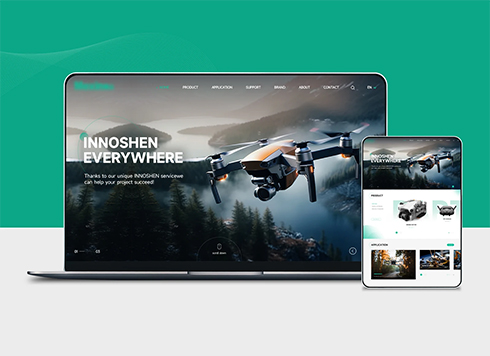 Drone Accessories Company Website Development
Incorporating gray as an accent with the pr ...
-
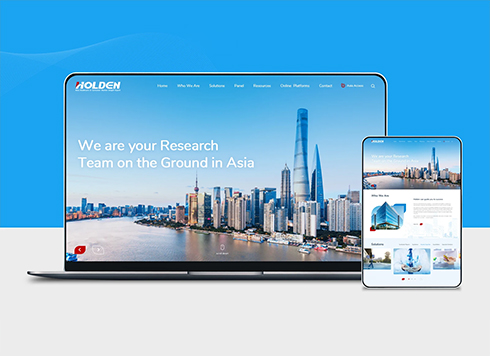 Professional International Research Service Agency Website Construction
This project serves a company with internat ...
-
 The Construction of Group Websites for Asset Operation and Digital Services
This project is to create a website for a c ...
-
 Thermal Test Equipment Website Construction
Founded in 2022, this tech company focuses ...
-
If a Qingdao company’s website news stopped two years ago, will clients think the company is no longer operating before a cooperation meeting?
Date: Oct 19, 2026 Read: 33
-
If our website FAQ says “subject to the contract,” will AI include it when answering customers?
Date: Sep 28, 2026 Read: 87
-
Every page shows the same update date—will AI search treat the site as actively maintained?
Date: Sep 27, 2026 Read: 84
-
Partner Logo Was Forwarded from a WeChat Group and Their Boss Gave Verbal Approval—Can It Go Straight on Our Website Case Studies Page?
Date: Oct 22, 2026 Read: 9
-
Both www and non-www open: keep both as extra entry points or redirect to one?
Date: Oct 21, 2026 Read: 20