





Just Finished Your Wuhan Company Website—How Do You Judge Whether It's Reliable?
When your Wuhan corporate website has just been completed, start by checking more than just the homepage design. Based on 2026 local delivery experience, a qualified website must satisfy at least three criteria simultaneously: visitors can find and open it smoothly; the first screen clearly states what you do; and contact details can be submitted on mobile without issues. If any one of these three is not up to standard, the website cannot be considered passable. When judging website quality, look first at whether the business is understood and whether contact information is easy to find—not whether the animations and color scheme match your personal taste.
When Evaluating a Company Website, Why Not Judge It by “Beauty” Alone?
Many business owners in Wuhan care most about whether the homepage hero image is impressive and the animations are flashy. But only after launch, when no inquiries arrive, do they think to look for the cause. The problem is that “being beautiful” has no universal standard, while what a website must accomplish—being found, understood, and contacted—can be verified through concrete actions.
- No matter how exquisite the visuals, if the homepage takes more than 5 seconds to fully load on mobile data, most local Wuhan visitors will simply leave. The experience range is: within 3 seconds is normal, and over 5 seconds means images and server need to be optimized.
- If the first screen only shows a welcome message or corporate vision without stating which types of clients you serve and which regions you cover, unfamiliar visitors cannot judge whether you are relevant to them.
- If the phone number is hidden in the footer or requires tapping through two menus to find, mobile abandonment rates will visibly rise.
The primary task of a company website is not to “showcase the corporate image” but to “let unfamiliar visitors confirm what you can offer them and feel willing to contact you.”
To Judge Website Quality, Check It Layer by Layer: Stability, Persuasion, and Searchability
We suggest asking a friend with no prior knowledge of your business to view the site on both mobile and desktop. Note whether they get lost or need to ask what you do again. Each issue under the following three layers is worth checking individually.
Layer 1: Technical Stability
This layer determines whether visitors trust you. If pages fail to load, layouts are broken, or buttons don't work, customers will suspect the company is not legitimate.
- Turn off WiFi and open the website homepage using your phone's 4G or 5G data. Record the time from tap to full display. The experience range: within 3 seconds is normal; over 5 seconds means compress homepage images or check the server.
- Open the page using both the WeChat built-in browser and the Baidu App. Check whether the page is distorted and whether pop-ups obscure content or messages.
- Make it clear at contract signing that acceptance testing must include opening tests on mobile and mainstream browsers—not just viewing the result on a desktop.
Layer 2: Content Persuasiveness
This layer answers three questions: What do you do? Why choose you? How can people contact you? Wuhan businesses should also ensure local information is consistent—such as address and service area—so visitors don't mistakenly think you operate only outside the city.
- Does the homepage title clearly state your main business?
- Do your product case studies explain the specific problem the customer faced, your solution, delivery timeline, and whether you provided on-site local service? If you have no case studies yet, describe your service process instead.
- Test the contact form once. Submit it and check whether the backend actually receives the email—not just whether the page shows “success” while no email arrives.
Layer 3: Search Visibility
If people can't find you via search, your website is as good as nonexistent. Although search channels have fragmented by 2026, having a corporate website indexed by search engines like Baidu remains a baseline requirement.
- Search your company's full name on Baidu to see if the website appears on the first page. If it ranks far back or is missing, first confirm whether the site is indexed.
- Search for “Wuhan + your main business,” such as “Wuhan automation equipment company,” and check whether your site has a corresponding result page.
- If not indexed at all, go to Baidu Search Resource Platform to submit your website and sitemap. You can do this yourself.
Note: not every website must rank at the very top of search results, but at least it must be properly indexed. Otherwise, your paid landing pages will convert worse later. If a website hasn't even been indexed, don't rush into discussions about optimization or promotion.
Once Problems Are Found, First Distinguish Between “Local Optimization” and “Full-Site Rebuild”
After checking the three layers, the next step is to decide how to fix them. The key is not to redesign immediately but to identify where the problem lies. Issues such as content wording, image size, or individual broken buttons are usually local problems. A technically outdated backend, an inaccessible admin panel, or source code not in your own hands are signs that a full-site rebuild is required.
Based on project delivery experience in Wuhan, the budget and timeline for each direction are roughly as follows:
- Local optimization: budget typically ranges from RMB 3,000 to 10,000; timeline 1–2 weeks. Suitable for rewriting homepage copy, compressing images, adjusting layout, or adding contact methods without touching core code.
- Full-site rebuild: custom development typically ranges from RMB 15,000 to 60,000; timeline 4–10 weeks (excluding time waiting for materials and reviews). Suitable for situations where the backend is unresponsive, mobile layout is severely broken, or the old system cannot be maintained.
When choosing, check which scenario fits your situation:
You can consider local optimization if: the website has been live less than a year; you can still log into the backend; only text, images, or a single function have issues; and you own the domain and source code.
You should consider a full-site rebuild if: the backend cannot be accessed for a long time or errors persist after login; you must contact the original provider simply to change a phone number; the mobile style is a mess; or you do not fully own the source code, server resolution, or related permissions.
When assets that should rightfully be yours cannot be retrieved, even money spent on local optimization goes toward paying off old debts.
A Wuhan Local Delivery Scenario: Material Delays Are the Main Cause of Late Completion
When working on a machinery equipment company website project in Wuhan, the client agreed to send product materials the second week but only delivered a portion by the third week, while still insisting on the original launch deadline. We first used placeholder text to set up the page skeleton, expecting to replace the text later on. But during the replacement phase, we found product images were inconsistent, some long images couldn't fit into the earlier card layouts, and the translated company profile was about one-third longer than the Chinese version, exceeding the height of the planned text boxes. As a result, we had to readjust the page layouts of five pages, and the final project took nearly two extra weeks.
The lesson this case teaches: to judge whether a website project is going well, don't focus only on development speed—material delivery timelines deserve closer attention. Content preparation and testing, inspection, and acceptance usually account for more than 30% of the total project time, so don't place that all on the development stage.
Additionally, during local delivery in Wuhan, I have seen all too many cases where the web agency withheld source code and domain permissions after handover, forcing the client to beg for help just to change one line of company introduction. To avoid this, make sure to specify before signing: the project delivery must include source code, backend URL, server account, domain resolution permissions, and each item must be checked off on an acceptance checklist. If these assets are incomplete, any future “optimization” or “redesign” becomes very difficult.
This Judgment Framework Has Boundaries: It Does Not Apply to Every Business
Not every Wuhan company must treat its website as a “salesperson.” If your business relies entirely on referrals, or if you only need a static page with your phone number, the “three-layer check” above may not apply in all respects. Nor should you spend tens of thousands of yuan customizing a site just for the sake of having a full-featured website.
- It applies to: businesses selling across regions; customers who search for the official site to verify credibility; companies that periodically publish case studies, recruitment information; and those planning paid search ads or SEO.
- It does not apply to: operations entirely dependent on offline regulars; ultra-minimal uses needing only a company introduction and contact details; or a newly launched website whose issues are limited to a few text sections—in these cases, you don't need to tear down and rebuild the entire site.
A company website is not an imperative for every Wuhan business. Only when customers need to search for you and verify you first does the website deserve serious investment. First confirm which situation you're in, and then decide how much to invest—this is a more realistic standard.
FAQ
Our Wuhan company website just launched. What should we check first?
First check whether a unfamiliar visitor can open it on mobile, can understand your business, and can find and dial a phone number. If these three points are not up to par, even the most beautiful page is useless.
The homepage looks fine, but we get no inquiries. Where is the problem?
The problem usually isn't visual—it's that the content doesn't answer “Who are you, what's your advantage, how to contact you.” It might also be that the site isn't being found by potential customers. Go through the three layers one by one.
Baidu can't find our company website. Is the web agency at fault?
Not necessarily. After launching a new site, you need to actively submit it to search engines and wait for indexing. First verify indexing status via Baidu Search Resource Platform. Only if the site isn't indexed at all should you investigate technical issues.
My original web agency wants thousands of yuan to change a few lines of text. Is that reasonable?
If you have an independent backend, you can change text yourself without paying. This type of charge usually means you don't have backend access, or the site doesn't have a backend at all and text changes require code modifications—which exactly reflects a bad choice made during vendor selection.
Let's end with a simple action: open your own company's website on your mobile phone and imagine you are a first-time visitor. Give yourself 10 seconds to answer three questions: “What do they do? What can I get? How do I contact them?” If any answer is vague, don't rush to hire someone for a redesign. First record which layer is the problem, then decide between local optimization and a full-site rebuild. In Wuhan, the key to judging website quality isn't finding the most expensive vendor—it's establishing your own review benchmark first.
-
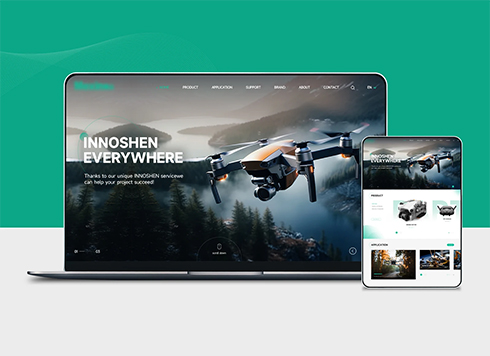 Drone Accessories Company Website Development
Incorporating gray as an accent with the pr ...
-
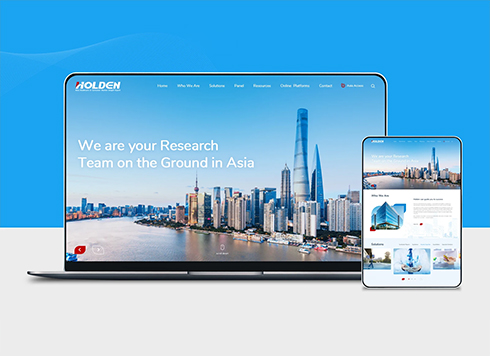 Professional International Research Service Agency Website Construction
This project serves a company with internat ...
-
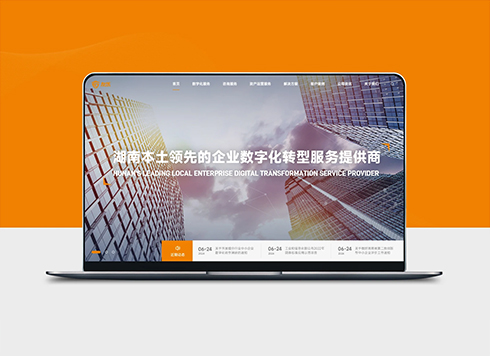 The Construction of Group Websites for Asset Operation and Digital Services
This project is to create a website for a c ...
-
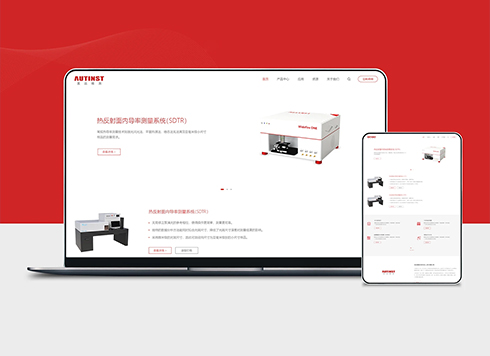 Thermal Test Equipment Website Construction
Founded in 2022, this tech company focuses ...
-
Company Name Includes “Henan” but Clients Ask If You’re Local to Zhengzhou: What Should the Homepage Put First?
Date: Oct 22, 2026 Read: 8
-
Changsha company website: before a customer visit, they ask 'Is this line in the photo still there?'—how detailed should workshop photos be labeled?
Date: Oct 21, 2026 Read: 22
-
Wuxi factory website: when customers ask for a product brochure before visiting to see equipment, will posting the full PDF for download expose the quotation as well?
Date: Oct 20, 2026 Read: 24
-
If a Qingdao company’s website news stopped two years ago, will clients think the company is no longer operating before a cooperation meeting?
Date: Oct 19, 2026 Read: 33
-
For a Ningbo factory English site, is a Chinese domain plus /en unprofessional when customers ask for the website?
Date: Oct 18, 2026 Read: 30