





Why Does AI Search Always Recommend Competitors in 2026, but Never Mention Our Website?
In 2026, when users ask AI search 'Which local website-building service providers are reliable?', the answers often list your competitors but not you. In most cases, this is not because your site isn't indexed; it's because the information presented on your official website is insufficient for machine citation. Based on our project delivery experience, AI does not score the entire site; it only extracts answers from verifiable page fragments. Rather than building backlinks, start by checking whether your company's full name, business scope, and contact information are consistent both on and off your site. This step doesn't require code changes, yet it is an easily overlooked starting point.
Here is a clear conclusion first: In 2026, official websites that AI tends to recommend first generally share four characteristics: clear identity, every page directly answers a specific question, visible update traces on the site, and information on the site matches third-party platforms. This is the basis for the four-step self-check below.
How is AI search's selection of citation sources different from traditional search?
AI search differs from traditional search in three main ways. First, traditional search considers backlinks and click popularity, while AI search places more weight on the consistency of the same entity across multiple sources. Second, traditional search outputs a list of links, while AI search directly extracts a passage as the answer. Therefore, a page must place short statements such as 'what we provide, where we cover, approximate price' in prominent positions. Third, traditional search doesn't mind pages that haven't been updated for a long time, while AI search, when assessing timeliness, tends to favor sites with signs of recent updates.
- Backlink count affects rankings, but AI citation pays more attention to whether the official website itself is clear.
- Keyword density affects traditional search; AI focuses more on whether a page can answer the user's complete sentence.
- Pages not updated for a long time are still indexed by traditional search, but AI citation probability decreases.
Based on delivery experience in 2026, for an official website with relatively complete basic information, after adding clear identity and Q&A-style service pages, the typical visible change period is between 4 and 8 weeks.
If your official website isn't recommended by AI, check these four items in order
The order cannot be reversed, because identity information is the foundation. Based on what we've encountered in project redesigns, here are four steps and common time ranges.
- Step 1: Verify identity information. Check the company's full name, abbreviation, address, and phone number in the footer, About page, and Contact page, and cross-check them with maps and corporate information disclosure platforms. If the entity has changed its name but the site hasn't been updated, fix this first. Gathering and revising this information typically takes 1 to 3 days.
- Step 2: Identify the main question for each page. When entering each internal page, ask yourself, 'Which specific user question can it answer?' Product pages should clearly list parameters; service pages should state service boundaries and pricing models; case study pages should mention client industries and delivery cycles. This step usually takes 1 to 2 weeks, depending on content volume.
- Step 3: Check for update traces. See if the company news or official updates section has content from the last six months, and keep a visible 'last updated' time in the page footer. If there are no updates, add two real pieces of business-related content, which typically takes 2 to 5 business days.
- Step 4: Check data consistency. Verify that claims on the page about client numbers, case study scale, and office addresses align with publicly verifiable information. If you claim 'more than 500 corporate clients' but only a few examples are publicly available, AI will likely not adopt your website's claim. Sorting out and correcting inconsistent data typically takes 1 to 3 days.
These four steps don't have to be perfect, but many websites get stuck at the 'identity information consistency' hurdle. For instance, if the corporate entity has changed and the ICP filing subject is different, AI cannot confirm that the website represents the company, so it will naturally use industry platforms or competitor websites in its answers.
A real process from 'not being mentioned' to 'starting to be cited'
In spring 2026, we took on a website redesign for an enterprise safety consulting service provider. The client's request was very specific: they wanted AI search to mention them when answering 'Which enterprise safety consultants are there in Shanghai?' The constraints were also clear—the budget only allowed for content changes, not rebuilding the front-end or back-end, and the launch window was only four weeks.
We didn't change the visual design, but we consolidated all site content into three sections: services, case studies, and team Q&A. We added company qualifications, background of key team members, and rewrote the opening paragraph of each service page into a short statement that directly answers 'service scope + city + starting price.' For example, we removed empty phrases like 'dedicated service' and replaced them with 'We provide EHS audits and emergency plans for manufacturing enterprises in the Yangtze River Delta. Projects are generally billed per person-day, with typical daily fees ranging from hundreds to thousands of yuan.' The result: around the third week after the redesign, one mainstream AI product, when answering recommendations for local safety consultants, repeatedly cited half a sentence from the service scope section and a passage from the case study page.
The trade-off was that, since the page visuals and interactions were unchanged, user dwell time did not improve. If we had chosen to redesign the visuals six months later, the changes in AI citations might have had to wait another project cycle. In this case, we validated a typical experience range: information verification takes 2 to 5 days, Q&A content rewriting takes 1 to 3 weeks, and AI visibility changes usually appear 4 to 8 weeks after the redesign; fluctuations can be larger across industries.
Which pages tend to be cited by AI, and which writing styles actually hurt you?
Three types of pages are easily cited: first, company introduction and qualification pages that answer 'Who is this company, how long has it been around, and what qualifications does it have?'; second, product and service specification pages that clearly list applicable scope, parameters, pricing models, and delivery cycles; third, FAQ pages that organize common questions from sales and customer service into a 'question + short answer' format, each kept within 80 characters. These three page types share a clear structure, key facts upfront, and no contradictions.
Writing styles that hurt credibility include: sections with only images and no text, exaggerated adjectives that cannot be verified, fabricated data meant to appear authoritative, and multiple versions of the same business across different sections. In particular, avoid absolute statements such as 'industry first' or 'global leader'—AI does not have a complete fact database, but it can detect inconsistencies through multi-source comparison. According to our content maintenance experience, when information volume is equal, FAQ-style sentences are more likely to be cited verbatim by AI than long self-introduction paragraphs.
When is it worth making AI visibility a goal for your website, and when can it wait?
If your official website handles sales lead generation, partnership inquiries, or background checks for bidding, and if competitors' names are starting to appear in AI answers, it's worth adding 'AI citation readiness' to your acceptance checklist in 2026. Such industries typically include legal services, enterprise services, software outsourcing, and interior design. If your site is only for existing clients to look up information or is a membership-based platform, you don't need AI to cite it in public answers.
Another boundary to consider: will your potential customers ask AI search 'Which company provides what service?' If they will, it's worth doing. If not, you can postpone it. Based on the project experience above, first achieving identity information consistency and rendering services as Q&A often covers most AI citation needs; more complex semantic optimization should wait until the main site content is stable. In 2026, there is no need to create 'special pages' solely for AI – they will likely be treated as low-quality content.
FAQ
Why does AI search never mention us? Is it because we haven't run ads?
No. AI typically doesn't base its answers on ad positions; it prioritizes information credibility. Running ads doesn't necessarily make AI recommend you directly in its answers, and you might still be ignored if your landing page information is incomplete.
If my site is indexed, does that mean AI will cite it?
Not necessarily. Being indexed only means the page is accessible. AI also judges whether the page content is suitable as a source for an answer. If information conflicts, lacks timestamps, or doesn't contain a concrete answer, it may still be skipped.
Should I create a special page for AI search?
In 2026, usually you don't need to. Creating separate pages can easily be seen as low-quality content. Fully writing out facts on your homepage, about page, and service pages is more effective than adding another page.
How can I tell if my website is being cited by AI search?
In an AI tool, ask 'What do you know about [your company]?' If it repeats the company's full name and business scope, that's a basic signal. You can also use the site: syntax to confirm whether regular indexing is working.
If your official website is in the middle of custom development or redesign, it is recommended to first complete the four pieces of information: company full name, contact phone number, office address, and business scope. These usually don't require extra technical budget, and the cost of changes is far lower than a rebuild. Later, you can schedule quarterly content reviews.
-
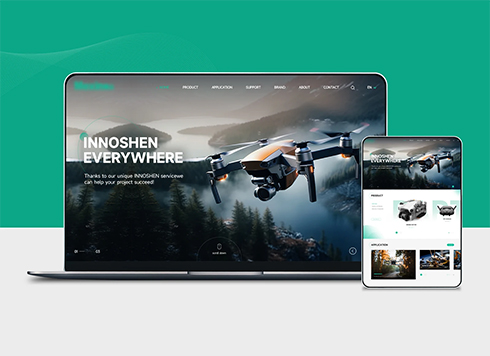 Drone Accessories Company Website Development
Incorporating gray as an accent with the pr ...
-
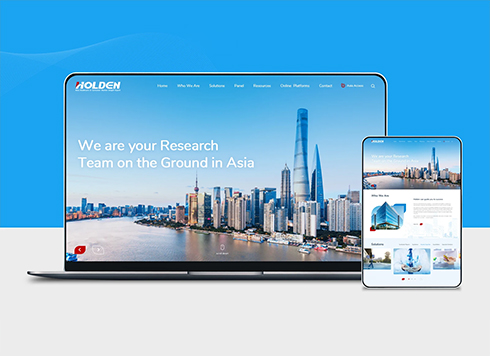 Professional International Research Service Agency Website Construction
This project serves a company with internat ...
-
 The Construction of Group Websites for Asset Operation and Digital Services
This project is to create a website for a c ...
-
 Thermal Test Equipment Website Construction
Founded in 2022, this tech company focuses ...
-
Partner Logo Was Forwarded from a WeChat Group and Their Boss Gave Verbal Approval—Can It Go Straight on Our Website Case Studies Page?
Date: Oct 22, 2026 Read: 9
-
Both www and non-www open: keep both as extra entry points or redirect to one?
Date: Oct 21, 2026 Read: 20
-
Website Custom Development: What If a Client Wants a Bigger Employee Count on 'About Us' but It Doesn't Match the Bid?
Date: Oct 20, 2026 Read: 23
-
Custom website development: the client wants AI-written website copy lightly edited before launch—should operations step in if it reads like boilerplate?
Date: Oct 19, 2026 Read: 32
-
In custom website development, should the inquiry form’s “Requirement Description” be required? Sales says they can’t quote without it
Date: Oct 18, 2026 Read: 29