



Nanjing Company Websites: Can Employees Handle Daily Updates, or Should You Always Ask the Agency?
After a Nanjing company website is completed, routine updates can usually be handled by employees themselves rather than by contacting the website design company each time. Based on 2026 delivery experience from website development and design projects, three things matter most: whether backend editing permissions remain in the company's hands, whether content updates are limited to non-code areas such as text, images, product news, and whether there is a designated colleague willing to take it on. What truly should be left to the website agency is full-site redesign, new feature development, and code-level maintenance.
Updating Content Yourself Is Different from Having Free Rein in the Backend
Nanjing companies in industrial equipment, foreign trade, and software information services mostly update their websites around product specifications, application cases, and team news. These contents have fixed structures. Employees can replace text and images according to templates in the backend without changing the page layout, so they are suitable for content operations.
What often causes problems is mistaking content updates for arbitrary backend changes. If non-technical employees touch templates, scripts, or global settings, the result can be broken page layouts or even a site that will not open. With common 2026 development practices, role-aware backends are already standard; ordinary employees should only see the content editing entrance, not the full development backend.
- Text, images, product publishing/depublishing, and news posts: these are routine content maintenance and can be delegated to employees.
- Page layout, navigation structure, form flow, payment or membership logic: these are code-level adjustments and should be reserved for the website agency.
- Decision criterion: does the change affect only the content itself? Anything that changes page structure or business logic is not suitable for non-technical staff to operate directly.
How Do Costs and Turnaround Differ Between Employee Self-Maintenance and Contacting the Agency Each Time?
Take the common Nanjing task of updating a product specification as an example. Based on the 2026 experience range, the cost structures of the two approaches are clearly different.
- Employees do it themselves: once the materials are ready, the update can be done in the backend within ten minutes with no direct cost. The company bears half a day to one day of familiarization time and internal review before publishing. If updates are made three to five times a month, people become increasingly proficient over time.
- Asking the website company to do it: a single simple modification commonly costs in the range of 100 to 600 yuan, with a typical turnaround of half a day to two days. Around twenty updates a year would bring agency fees to several thousand yuan, and you still need to go through requirement submission, scheduling, and result review. When product departments are in a hurry, delays and rework can easily occur.
More important than the fee is the communication overhead. Every outsourced change requires a full workflow, whereas in-house maintenance can fit a single change into the space of a meal. Self-maintenance discussed here has its boundaries: it does not mean employees can touch everything, nor does it suit every company.
Nanjing Delivery Lessons: Dropping Backend Training Leads to Rework Later
In local Nanjing project deliveries, we have encountered repeated rework not because the technical output was wrong, but because backend training was not treated as a deliverable. A typical constraint is cutting the training session in order to compress the budget before launch. After launch, employees are afraid to click in the backend, so they keep sending request tickets to the agency. As a result, a product image goes back and forth two or three times for review, publishing is delayed by a day or two, and the cumulative communication cost exceeds the training fee saved at the beginning.
We later adjusted our practice by adding two deliverables to every project: first, assigning permissions by role and opening content editing only to operations colleagues; second, delivering a searchable operation manual that states clearly what can be changed, what cannot be touched, and whom to contact if changes are broken. Based on the experience range from executed projects, spending half a day to a full day on internal training and a live demonstration means most companies can recover that investment within two to three months, and then monthly agency change requests drop significantly. This shows that backend training is not a value-added extra, but a precondition for internal self-maintenance to work.
Ask These Three Questions First to Decide Whether to Go Internal
Instead of directly asking whether self-maintenance is good, work through your own update scenarios. This is a three-question framework: first look at frequency, then type, then people.
- Is the content update frequency high? More than two or three times a month makes it worthwhile to build an internal habit; if you only update once or twice a year, paying the agency per change is more convenient.
- Are the updates mainly text, images, products, or news? If so, they are suitable for employees. If they involve page structure, interaction logic, or responsive layout, do not ask non-technical colleagues to manage them.
- Is there someone in the company willing to take over for the long term? Even someone who can only upload images and replace text will be fine, as long as permission controls keep the security baseline intact.
Why does this order matter? Frequency determines whether the investment makes sense, type determines whether employees can safely handle it, and people determine whether there is anyone to execute it. Reversing the order may turn a site updated only once a month into a complex training project, or outsource a high-frequency site completely, which is not cheap over the long run.
If You Really Want Employees to Update the Site, Put These Items in the Acceptance Documents
To make self-maintenance feasible for a Nanjing company website, you cannot just look at whether the backend is visual. During acceptance, you need to verify control and boundaries point by point.
- The backend address and administrator account should be owned by the company, not registered under an individual employee's personal mailbox. Domain information, server console, and source code archive should be handed over as well.
- Content editing must support preview before publishing. If changes are made directly in production without preview, the impact of a mistake expands.
- Role-based permissions should be supported. Operations colleagues should receive only content editing rights; templates, scripts, and global settings stay with administrators.
- Image upload should have compression or size reminders; otherwise employees may upload original files and slow down page speed.
- Provide a searchable operation manual, either an illustrated article or a few minutes of screen recording, that clearly lists what can be changed and what must not be touched.
If the full source code is not delivered, or if the backend can only be operated remotely by the agency, internal self-maintenance is an empty promise. This rule applies not only to Nanjing but to most enterprise website projects.
Self-Maintenance Is Not a One-Size-Fits-All: Applicable and Inapplicable Boundaries
A website suitable for employees to update by themselves is usually content-display oriented: company introduction, product center, news updates, case updates, and no custom development. The pages are built on a mature backend or modular development, and employees can do daily maintenance by logging in from a browser.
What should not be fully handed to employees is another situation: a site with e-commerce, member login, online quotes, or complex forms. Any modification can affect business processes and data security, so such backend changes need to be left to the website agency. If the company does not have a person willing to take over and does not plan to provide internal training, there is no need to force it. You can simply package update requests to the agency on a per-request basis. But keep ownership of the domain, server, and source code with the company. That way, you can switch agencies at any time without being held hostage by employee turnover or corporate changes.
Frequently Asked Questions
Does updating a Nanjing company website in-house require coding skills?
No. As long as the backend has a visual editing entry, employees can upload images and edit text. Layout and feature changes that require coding should be left to the web agency.
Could employees mess up the website if they make changes themselves?
If the backend has no role-based permissions, there is indeed a risk. The correct practice is to open content editing permission only and document what cannot be touched in the operation manual, so ordinary employees never encounter templates or global settings.
Is it common for the website company to say only they can make changes?
This is mostly found in projects built from templates or where the source code was not handed over. According to 2026 delivery practices, the proper approach is to leave the backend account and an operation guide with the company. Routine content updates should not depend on the agency forever.
About how much should a Nanjing company website budget for annual maintenance?
Based on the 2026 experience range, domain and server costs are typically a few hundred to two or three thousand yuan per year. With backups, security updates, and minor content support, an annual maintenance package usually runs several thousand yuan, depending on complexity.
-
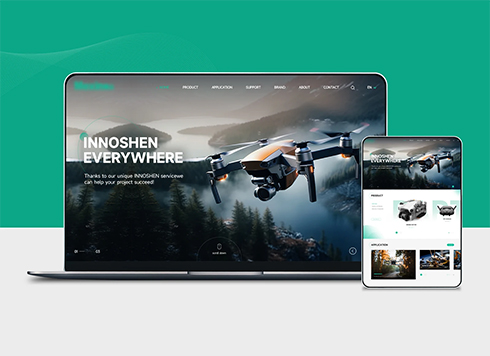 Drone Accessories Company Website Development
Incorporating gray as an accent with the pr ...
-
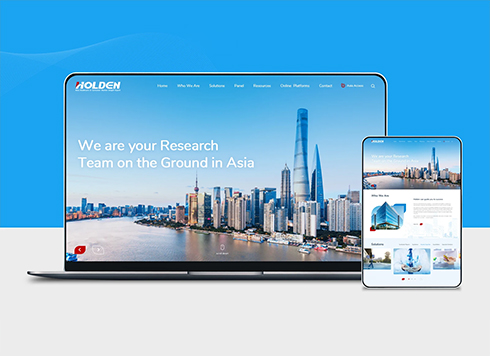 Professional International Research Service Agency Website Construction
This project serves a company with internat ...
-
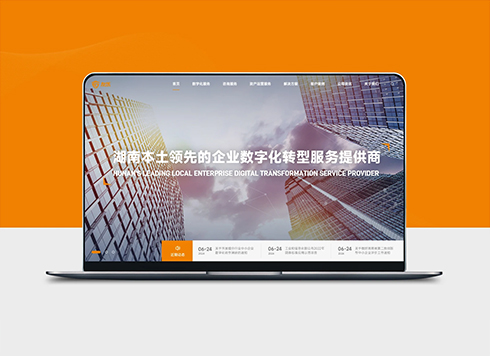 The Construction of Group Websites for Asset Operation and Digital Services
This project is to create a website for a c ...
-
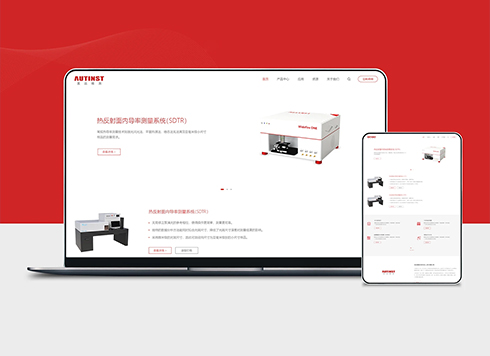 Thermal Test Equipment Website Construction
Founded in 2022, this tech company focuses ...
-
Company Name Includes “Henan” but Clients Ask If You’re Local to Zhengzhou: What Should the Homepage Put First?
Date: Oct 22, 2026 Read: 8
-
Changsha company website: before a customer visit, they ask 'Is this line in the photo still there?'—how detailed should workshop photos be labeled?
Date: Oct 21, 2026 Read: 22
-
Wuxi factory website: when customers ask for a product brochure before visiting to see equipment, will posting the full PDF for download expose the quotation as well?
Date: Oct 20, 2026 Read: 24
-
If a Qingdao company’s website news stopped two years ago, will clients think the company is no longer operating before a cooperation meeting?
Date: Oct 19, 2026 Read: 33
-
For a Ningbo factory English site, is a Chinese domain plus /en unprofessional when customers ask for the website?
Date: Oct 18, 2026 Read: 30