





Can a custom website built in one month actually operate normally?
Based on 2026 enterprise website customization delivery experience, whether a rushed official website can work normally doesn't depend on the provider's verbal promise. First, look at whether the requirement scope has been narrowed enough, and whether content assets are mostly ready before launch. Full-custom delivery cycles typically fall between 6 and 16 weeks; a purely showcase website can be completed in 4–8 weeks. If the site includes member accounts, payments, messaging, or third-party APIs and is still required to be delivered in 30 days, it is likely reusing an existing mature template or cutting capabilities. That compression will be paid back after launch in different ways.
Why '30-day delivery' cannot be applied to every custom website
Custom website timelines are not measured by the number of pages, but by how deeply you understand and implement the business rules. Take two ten-page websites. If one is only text and images, you only need to replace the carousel and contact details. If every page must handle login, order status, permissions, and error prompts, the underlying logic is completely different—which is why the schedule can easily be several times longer. So '30-day launch' holds only under one clear condition: the website is primarily a showcase and does not require substantial custom backend logic.
From a project scheduling point of view, coding is not the only factor that affects the go-live date. When planning in 2026, the typical experience range should set aside three things: content collection, requirements confirmation, and waiting for domain filing or approvals. We have seen many cases where the homepage copy was delayed by three weeks, causing the navigation structure to be reworked and adding about five days at the end. If you count content and approval time together within the 'development cycle', it is natural to think that one month is impossible. After separating them, the real time left for development becomes clear.
Before confirming whether 'one month' is feasible, we need to define what 'normal use' means. If it only means that the homepage opens and forms can be submitted, many templates can be launched in a few days. If it means the backend can manage content stably, pages do not break in different browsers, data structures are not chaotic, and new features can still be added one year later, then the issue is not just whether pages exist within 30 days. In project reviews, we usually split 'normal use' into three layers: front-end accessibility, core flow passes, and maintainability/extensibility. Most rushed projects can pass the first two layers; the third typically requires an extra 1–2 weeks (experience range) for documentation, code cleanup, and regression tests.
By site function, what are the typical go-live cycles in 2026?
The following ranges come from years of project delivery and peer discussions. Different teams may shift because of their tech stack and staffing, but the ranges help you gauge project size early. Remember: these ranges are not promises; they are experience reference lines.
- Showcase website: around 5–15 pages, mainly for brand introduction, product display, and lead collection. The typical range is 4–8 weeks. If content is ready and no original visual exploration is involved, completion in close to 4 weeks is possible.
- Content-heavy website: with lots of news, documents, or categorized products, where the backend requires multi-level column management. Typical range 6–12 weeks. Content-entry design and category navigation often take more time than page visuals.
- Business-functional website: with membership login, online payments, order management, or third-party integration. Typical experience range 10–16 weeks. Integration and exception testing usually take three to five weeks.
Comparing these ranges to 'one month', it becomes clear that one month is closer to the compressed lower limit of a showcase website. If a business-functional site promises 30-day delivery, first ask which non-core parts were removed, instead of simply trusting 'others have done it'.
The 'four locks' for keeping a one-month website usable
Suppose you actually want to deliver in one month: it is not impossible. According to our delivery experience, projects that go live smoothly often complete the following four locks, rather than just asking the team to work overtime.
- Requirements lock: Write down core pages, role permissions, and functional boundaries clearly before starting; all new requirements are moved to phase two. The criterion is that the overall page structure stops changing once development begins.
- Content deadline lock: Collect most finalized copy and graphics before visual design. If content is not complete, first build the framework with placeholders, but agree on a latest replacement date so that development is not continually adjusted.
- External condition lock: Apply for domain filing, merchant IDs, and API keys in advance. With domestic servers, filing usually takes 1–3 weeks (experience range); submit the application as soon as the page structure is confirmed.
- Acceptance lock: During testing, collect feedback through a defect list, not via one message per requirement. Fragmented modifications turn development into grunt work and slow down the schedule.
Completing these four locks, a one-month timeline only guarantees that the core flow works. Whether you must sacrifice testing depth and tolerate post-launch fixes is another cost that has to be discussed openly.
What types of sites are suitable for one-month delivery, and which should not be forced?
To avoid interpreting 'one month is possible' as 'every site can be done this way', here are the applicable and non-applicable limits. Only after matching your project should you decide whether to compress the timeline.
Good candidates for a launch around 30 days:
- Temporary campaign pages or product validation sites: original visuals are not the priority; the core is collecting leads or testing market feedback.
- Corporate business-card websites: their main job is to let people quickly understand the company, without complex transactions.
- Projects where design drafts, copy, and logo are already finalized: the time spent exploring brand visuals is saved, and the team can focus on building.
Not recommended for a forced one-month deadline:
- Sites that integrate ERP, CRM, payment, or logistics systems: third-party coordination creates too many uncertainties, and an aggressive timeline often leads to data errors after launch.
- Enterprise websites that need a strong brand identity built from scratch: in a month, it is difficult to balance typography, composition, motion, and content polish; the result can look cheap.
- Projects with historical data migration, multi-language, or multi-site management: the underlying structure and permission model are complex and decentralized, and insufficient testing can create content chaos.
In short: a website built in one month can be used normally, but only when it falls onto the 'suitable' list. If the project belongs to the 'not recommended' list, rather than betting stability against the schedule, launch in two phases: make the core flow live first, and then expand in phase two.
Field experience: what we can do and what we must pay when compressing the schedule
At the beginning of 2026, we took on a project with a mixed backend/admin focus. The client's channel release date squeezed the initially planned 10 weeks into 5 weeks. Our approach was to cut scope first: move order alerts and automatic reconciliation to phase two, keep only member registration and the core ordering flow, and explain to the client that 'bug fixing will still be needed for two weeks after launch'. The main flow was usable on launch day, but one week later, the export function timed out during peak traffic, and we had to apply a hotfix to stabilize it. Measured by experience range, business-logic sites require at least 1–2 extra weeks of testing buffer. When you compress the schedule, that buffer doesn't disappear; it is simply paid after launch.
So, if you have a one-month requirement, a development team that is willing to write 'reduced scope + free post-launch bug-fix period' into the contract is usually more reliable than an empty promise of 'absolutely no problem'. The sensible approach is to ensure the core path is tested and to postpone non-critical features explicitly, rather than forcing the entire feature set into one week.
FAQ
Does a website built in one month always have a lot of bugs?
Not necessarily. A showcase website with complete content, built on a mature framework and well tested, can have a manageable number of bugs. Bug buildup mostly occurs because functional demand exceeds what a one-month timeline can carry—not simply because the period is short.
How can you tell whether a vendor's 'one month go-live' is real?
Look at whether they ask about requirement boundaries first, rather than offering a guaranteed cycle upfront. Reliable vendors will list what can be done and what must be cut—promises may not sound perfect, but testing is included in their workflow.
With a four-week budget, should we choose a template site or custom development?
We recommend a template or semi-custom option. Four weeks is only a baseline for custom development; a template saves architecture time and lets you invest the budget in content and information architecture. That is often more solid than forcing a half-baked custom solution.
Which features are least recommended for a one-month website?
Payments, member wallet accounts, and complex permission systems. If these modules fail, they can cause financial or data issues, so they must have enough integration and testing time.
When planning a website in 2026, first classify the project as showcase, content-heavy, or business-functional, then compare it to the common ranges of 4–8 weeks, 6–12 weeks, and 10–16 weeks. If the deadline is one month, reduce scope first—don't cut testing. If the reduced scope cannot support the business goal, launch in two phases: put the core flow online first and extend it in phase two. A website that truly works normally is far more important than one that is 'on time but unusable'.
-
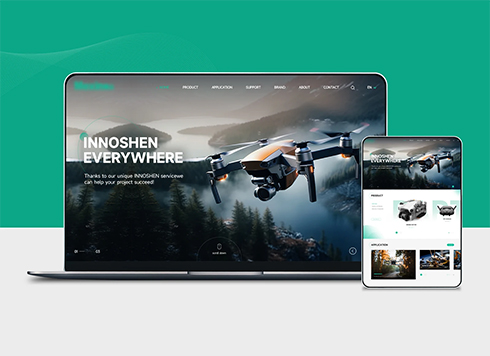 Drone Accessories Company Website Development
Incorporating gray as an accent with the pr ...
-
 Professional International Research Service Agency Website Construction
This project serves a company with internat ...
-
 The Construction of Group Websites for Asset Operation and Digital Services
This project is to create a website for a c ...
-
 Thermal Test Equipment Website Construction
Founded in 2022, this tech company focuses ...
-
Partner Logo Was Forwarded from a WeChat Group and Their Boss Gave Verbal Approval—Can It Go Straight on Our Website Case Studies Page?
Date: Oct 22, 2026 Read: 9
-
Both www and non-www open: keep both as extra entry points or redirect to one?
Date: Oct 21, 2026 Read: 20
-
Website Custom Development: What If a Client Wants a Bigger Employee Count on 'About Us' but It Doesn't Match the Bid?
Date: Oct 20, 2026 Read: 23
-
Custom website development: the client wants AI-written website copy lightly edited before launch—should operations step in if it reads like boilerplate?
Date: Oct 19, 2026 Read: 32
-
In custom website development, should the inquiry form’s “Requirement Description” be required? Sales says they can’t quote without it
Date: Oct 18, 2026 Read: 29