



Should a Tianjin foreign trade company website go straight to an English version?
Many export-oriented factories in Tianjin ask about their company website by saying, “Just make it in English.” Based on 2026 website delivery practices, most Tianjin foreign trade businesses do not need to go straight to an English version. Whether to add one depends on whether overseas customers find you through Google or meet you at trade shows and B2B platforms. In the former case, an English version is worth the investment; in the latter, building a solid Chinese site first may be more cost-effective.
Don’t rush to English: first see the role your website plays in getting orders
Tianjin foreign trade enterprises are concentrated in industries such as machinery and equipment, metal products, auto parts, and chemicals. Buyers in these niches have long procurement cycles. The value of your website is not translating the menu into another language; it is letting overseas buyers confirm that “you have production capacity, qualifications, and can deliver.” The same thought, expressed with different wording and professional background, makes a big difference in trust.
If no one on your team can reliably reply to English inquiries, an English version can turn into a negative score after launch. An English product page with quick replies and a downloadable factory capacity sheet is often more useful than a beautiful multilingual site during the first contact stage.
- Platform-meeting type: Customers find you on Alibaba International, at trade shows, or through LinkedIn. The website mainly serves as trust support. A full English version may not be needed; a Chinese website plus an English introduction page is enough.
- Search-discovery type: Customers search Google for terms like “steel flange manufacturer Tianjin” to find suppliers. In this case, the English version is your salesperson—without it, you will miss many chances to be found.
How to decide: pass four quick questions before adding English
Rather than asking “Should we be multilingual?” first record two weeks of inquiry sources. Here is a “Four Questions for Foreign Trade Websites” framework for an initial project assessment. Answer all four clearly before deciding on language versions and budget.
- What English phrases will overseas customers search to find you? Make a list of three strongly product-related English phrases and search them on Google. See whether competitor websites already appear in the results. Only after this step can you talk about whether to create an English version.
- Who replies when an inquiry comes in? If the inbox is often ignored or only the boss’s personal WeChat is available, don’t expand language versions yet. Fix the inquiry conversion path first.
- Are you willing to keep paying for English content? Product updates, parameter changes, and FAQ additions all need maintenance. On an annual basis, the cost can be as low as several thousand yuan and often exceeds the original site-build budget.
- Is your Chinese website generating stable inquiries now? If the Chinese site has little traffic or no inquiries, an English version is not the solution. You need to solve page topics and semantic matching first.
This framework divides needs into four layers—traffic, content, conversion, and delivery—rather than judging only by whether the site looks good. In practice, many projects get stuck on question two: the content is done, but no one follows up on inquiries, and the site ends up as a foreign trade business card that never receives any messages.
Plan comparison: full Chinese-English bilingual site or Chinese site plus overseas access optimization?
For serving foreign trade clients, delivery usually follows one of two routes. Budgets and timelines below are based on the typical experience range for Tianjin local website projects in 2026; the specific numbers depend on your actual requirements list.
- Plan A: Full Chinese-English bilingual site. Budget typically 40,000–80,000 yuan; timeline 4–8 weeks. Suitable for companies that already have an overseas customer list or clearly plan to use the website for independent customer acquisition. The budget should include English keyword research, page copy, and Search Console configuration after launch.
- Plan B: Chinese site + overseas access optimization + English profile pages. Budget typically 15,000–40,000 yuan; timeline 2–5 weeks. Suitable for companies that rely on trade shows and platform credibility but want to retain an English display on the official site. The English section can be trimmed to three pages: About, Products, and Contact.
The key difference between the two is not the number of languages, but whether content is built around English keywords. Plan A treats English as a primary language for planning titles, descriptions, and page structure. Plan B simply adds translated Chinese materials. If you don’t have the manpower to maintain Plan A properly right now, starting with Plan B and completing it later is more stable than forcing a bilingual site from the beginning.
Four areas that often cause rework after you decide to build English
In Tianjin foreign trade website delivery, I frequently meet a constraint: the budget has to be kept around 30,000 yuan, bilingual Chinese-English is required, and the site must go live within one month. To meet the deadline, such projects sometimes skip English keyword research and begin building pages. After launch, overseas organic search shows no presence, so the team has to go back to fix the content structure—with a rework period that commonly adds 2–4 weeks. Based on my experience range, a full bilingual site with a budget below 40,000 yuan will struggle to produce solid English content and keyword groundwork.
- English copy is not translation; it is inquiry sales language. Many Chinese product names, when translated literally, are not the search terms overseas buyers use. Build a target-market keyword list first, and only then start writing.
- Hosting location and CDN should be planned together. An English site targets overseas visitors, so hosting is commonly placed on Hong Kong, Japan, or US West Coast nodes and paired with Cloudflare or similar services. If you put it in a domestic data center in Tianjin, overseas customers will load it slowly and the bounce rate will visibly increase.
- Google indexing needs proactive setup. Search Console, sitemap, robots.txt, and page-level structured data for the domain are not finished automatically after launch. In 2026, also pay attention to Core Web Vitals, such as mobile speed; you can verify each item against Google’s official Help Center.
- The inquiry channel must actually work. Overseas customers are used to email and WhatsApp. Make sure email is genuinely received; don’t let customers fill in a form that needs special network access. The form should send an automatic receipt and notify a sales representative.
Applicable scope: which Tianjin websites are right for an English version, and which are not yet?
Let’s state the applicable conditions first. The more of the following statements apply, the more reasonable it is to include English content in the first version: you have stable overseas customers or agents, and the official site needs to support trust for the international market; your target markets are clearly primarily English-speaking; a dedicated team member can reply to English emails or WhatsApp; and your budget covers continuous maintenance of English copy and keywords.
Now let’s look at conditions where you should wait. If any of the following is confirmed before the project starts, putting the budget into the Chinese site or platform operations usually produces a higher ROI:
- Your target customers and markets are domestic; foreign trade is only a supplement;
- Product exports are handled through foreign trade agencies, so you don’t directly contact overseas buyers;
- There is no fixed person to deal with English emails or instant messages;
- The official site is only for image display, and inquiries still rely on trade show business cards and platform chats.
These boundaries are not permanent. When overseas customers start to actively tell you “we found it on your website,” you can add an English version then—and by that time your needs will be more concrete, with less rework.
FAQ
Should a Tianjin foreign trade website use .com or .cn?
For overseas customers, .com is recommended. .cn can be seen as a domestic Chinese site by overseas visitors. If your preferred .com is already registered, .co or .io can be considered. Avoid Chinese-character domains.
Where should an English website be hosted to load fast for overseas visitors?
A common approach is to host on nodes in Hong Kong, Japan, or US West Coast and add a CDN acceleration service. Test from the real target market and don’t choose a node based on guesswork.
Can a template-built English website bring inquiries?
Yes, but you need to handle three things yourself: English keyword research, mobile speed optimization, and making sure the inquiry form sends and receives correctly. If you can’t do that, look at custom development.
Can I use online translation for English content?
It is fine for internal reference, but not for overseas buyers. Technical terms and inquiry context are easy to mistranslate. At least have an industry professional read and revise the content before publishing.
After the English website is live, do I need to submit it to Google?
Yes. Submitting your sitemap in Google Search Console is a basic step; afterwards, you can see indexing and crawl errors. For a new site, the typical indexing time is 2 weeks to 3 months. If it takes longer, first check your server and robots.txt.
Start by recording two weeks of overseas inquiry sources. If the share coming from Google search is below 20%, the English version can wait. If people really find you by searching product terms, move ahead in this order: keyword research, English content, inquiry response, and site speed. The common experience range for 2026 is: adding an English version to an existing Chinese site adds 10,000–30,000 yuan to the budget and 2–4 weeks to the timeline. After launch, a named colleague must maintain it; otherwise, don’t touch multilingual yet.
-
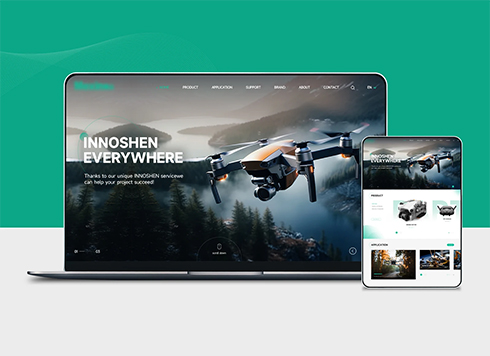 Drone Accessories Company Website Development
Incorporating gray as an accent with the pr ...
-
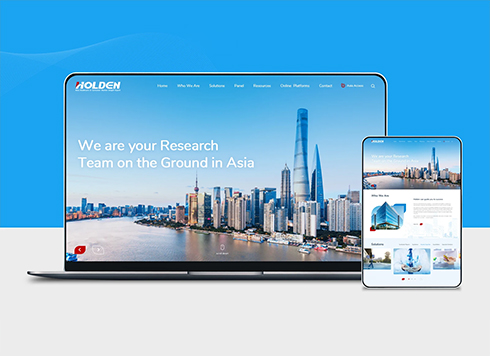 Professional International Research Service Agency Website Construction
This project serves a company with internat ...
-
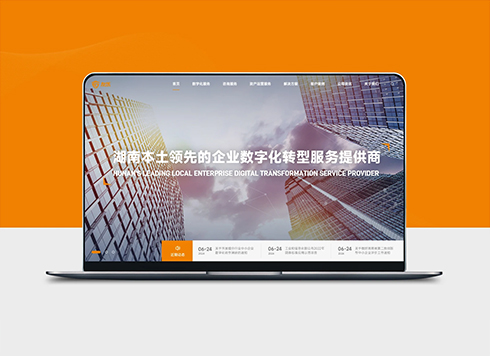 The Construction of Group Websites for Asset Operation and Digital Services
This project is to create a website for a c ...
-
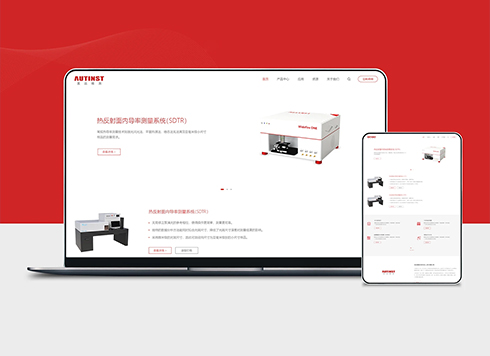 Thermal Test Equipment Website Construction
Founded in 2022, this tech company focuses ...
-
For a Jinan company bidding on a local tender that requires an 'independent official website,' will a 1688 store link be accepted?
Date: Oct 23, 2026 Read: 6
-
Company Name Includes “Henan” but Clients Ask If You’re Local to Zhengzhou: What Should the Homepage Put First?
Date: Oct 22, 2026 Read: 13
-
Changsha company website: before a customer visit, they ask 'Is this line in the photo still there?'—how detailed should workshop photos be labeled?
Date: Oct 21, 2026 Read: 25
-
Wuxi factory website: when customers ask for a product brochure before visiting to see equipment, will posting the full PDF for download expose the quotation as well?
Date: Oct 20, 2026 Read: 30
-
If a Qingdao company’s website news stopped two years ago, will clients think the company is no longer operating before a cooperation meeting?
Date: Oct 19, 2026 Read: 35