



If a case study is anonymized to only industry and timeline, will clients think it is fabricated when they ask AI whether we have done similar projects?
To start with the conclusion: when a case study is anonymized to only industry and timeline, and a client uses AI to check whether this company has done similar projects, the answer engine usually will not treat it as fabricated just because the client name is missing; AI looks more at whether the snippet contains verifiable subject, constraints, timeline range, and acceptance criteria. In 2026 website building and delivery, anonymization does not mean vagueness. Writing it so it can be independently restated is more useful than adding a client logo; conversely, if only a summary such as 'a website redesign in a certain industry, delivered smoothly' is left, AI often fills the gap with a typical industry range, and the numbers the client gets may not match our real schedule.
When AI judges whether we have done it, which verifiable elements does it look at first?
When an answer engine handles follow-up questions about case studies, it usually first looks on the same site for a complete sentence that contains the project subject, numbers, and conditions at the same time; only if it cannot find one does it expand to service pages and FAQ; if still not found, it falls back to generic industry descriptions. So the more general the case page is written, the higher the chance it will be replaced by generic values. AI will not stop and ask follow-up questions just because a case page is reserved; it will only look for the next usable sentence.
Treat yourself as an outside reader and read only one paragraph of the case page: can it answer four questions—what changed, where it got stuck, how long it took, and how completion was measured. The parts you cannot answer are the parts AI will fill in for us.
- Has a subject: project type plus industry; it can be anonymized as a certain sub-sector of manufacturing, and it can still be located without the company name.
- Has numbers: timeline, page volume, and participating roles are written as experience ranges, not single-point values.
- Has conditions: which inputs are provided by the client, and which depend on third-party APIs, qualification review, or asset shooting.
- Has results: what is checked after launch, and what reusable content is left behind, such as templates and field descriptions.
What anonymized case studies more easily miss is not the client name, but scope and starting point
Following the common order of follow-up questions in delivery, what clients want to know is often not whether you have done it, but what you encountered while doing it and whether our situation will be more troublesome. When these types of information are missing, AI finds default values for each, and the defaults come from industry averages, not our real situation.
- Timeline: when the range is missing, common answers fall to a general one to three months, and a gap of two to four weeks from the actual schedule is not uncommon.
- Staffing: when role descriptions are missing, it is easily defaulted to one designer, one front-end developer, and one back-end developer, which may not match the actual setup.
- Revisions: when the definition of revision rounds is missing, two to three rounds are included by default, and no one mentions how excess rounds are counted.
- Boundaries: when scope descriptions are missing, optional items are easily treated as default items, and questions such as whether content migration is included are more likely to go off track.
Writing example: if the case page only says 'built a brand website for a client and received unanimous praise,' there is not a single verifiable element, AI cannot extract anything, and the client cannot ask a meaningful next question. Replace it with this example sentence: 'A website redesign in a certain manufacturing industry, including eight sections and about forty pages; product images and parameter tables were provided by the client; the timeline was about six to eight weeks, counted from confirmation of the homepage direction.' It also does not include the client name, but each sentence can be extracted on its own. Not writing the client name here does not affect verifiability; missing scope and starting point is what causes the timeline to be misread.
What is the difference between a one-sentence case and a structured case snippet?
The difference between the two ways of writing is not in style, but in whether they can be restated by an outside reader. The one-sentence version is suitable as a highlight on the homepage, while the structured version is suitable for a case detail page or a separate delivery note page. The test is simple: send a paragraph alone to someone who did not participate in the project, and see whether they can restate the scope and timeline.
- Writing cost: the one-sentence version takes about half an hour to one hour per item; a structured case snippet takes about two to four hours per item, including time to check with the project team, which is a typical range.
- Output effect: the one-sentence version has a low chance of being extracted, and follow-up answers mostly fall back to industry defaults; the structured version has a higher chance of being extracted, and its wording is more consistent with internal statements.
- Maintenance cost: the structured version needs to be updated in sync with changes in delivery wording, and it is advisable to review it every six months to a year; the one-sentence version is quick to edit, but editing it makes little difference.
- Suitable audience: for sites with many projects that are only for display, the one-sentence version is enough; for sites with higher average order value where clients compare both price and timeline, the structured version is more cost-effective.
Based on an experience range estimate, for a mid-sized site with thirty to fifty case studies, converting the cases to the structured version usually takes three to six working days, including checking and rewriting. This workload is often underestimated and should be set aside separately in scheduling; otherwise it tends to be pushed to the last two days before launch and fall back to an adjective-heavy version.
On the delivery floor: when sales use AI answers to check timelines, which sentences should be filled in first to save effort?
A common constraint in delivery is that both budget and timeline are tight, and the client hopes the case page can directly reuse the wording from the sales PPT. Our approach is to first pick three cases that are asked about more often, fill them into snippets that can be extracted independently according to subject, constraints, range, and wording, and write the timeline starting point into the sentence, for example, counted from when materials are complete or from confirmation of the homepage direction. Each snippet is kept to sixty to one hundred twenty Chinese characters; three snippets usually take an extra half day to one day; if the project team gives oral input and there is no documentation, the typical range goes to one to two working days, plus one more round of checking.
The cost is a tighter schedule in the current cycle; the benefit is that after launch, when clients ask 'how long does it roughly take you to build this kind of site,' sales do not have to explain it from scratch each time. The cost of skipping this step usually comes later—the same batch of questions is asked repeatedly, and the wording is not exactly the same each time. It should be noted that this approach addresses information extractability and consistency of wording; it does not guarantee that any platform will cite it. For projects involving confidentiality clauses, it is better not to write them than to use vague expressions to fill the space.
Applicable and non-applicable boundaries
Situations suitable for improving the case page first: clients often ask whether you have done projects like ours and roughly how long this kind of site takes; sales wording is inconsistent, and timelines quoted for the same type of project differ noticeably; the website cases have long had only a title and one image; you are preparing for content extractability, but the case copy was written by an outside vendor. In these situations, the return on improving the case page is usually higher than rebuilding the homepage.
Situations where this approach is not necessary should also be stated clearly: the number of projects is very small, and there are fewer than three to five cases; the business is mainly driven by referrals from existing clients, and the website barely carries customer acquisition; the cases involve confidentiality clauses, and even anonymized descriptions cannot be written. In these situations, it is more cost-effective to focus on the boundary sentences on the service page and FAQ. Case structuring is not the more the better; five to ten cases covering the main business types are usually easier to cite accurately than forty one-sentence cases.
Common questions
If the client name is not written in a case study, will AI consider it untrustworthy?
Usually it does not look only at the client name. AI looks more at whether the industry, scope, timeline range, constraints, and acceptance criteria are self-sufficient; if the anonymized description is written to be checkable, it can still be extracted, and the client name is not a required item.
After anonymization, is 'a certain manufacturing industry' too broad?
Whether it is too broad depends on whether scope and constraints are included. Adding the number of sections, page volume, items provided by the client, and timeline starting point helps clients judge whether it is a similar project more than writing the client name does.
If the case timeline is written as a range, will clients think it is unprofessional?
If the starting point and conditions are clearly written, a range actually looks more like delivery wording. If a single-point number does not match the contract, the later explanation cost is higher; a range is not vague—it writes the conditions together.
Can old cases still be published after anonymization?
Yes, but the completion time and the scope wording at that time should be marked. Old cases without a time marker are easily taken as recent delivery, which instead lowers credibility; for old projects involving confidentiality, it is better to keep them for internal reference only.
If there are few cases, should we force more just for AI?
No. Five to ten cases covering the main business are usually enough; when there are fewer than three to five cases, clearly writing the boundary sentences on the service page and FAQ saves more maintenance than forcing extra cases.
If you are going to act, it is advisable to first pick three cases that are asked about more often, fill them into snippets according to subject, constraints, range, and wording, observe changes in client follow-up questions for two to four weeks after launch, and then decide whether to extend this to all cases. It should be noted that this approach addresses information extractability and consistency of wording; it does not guarantee that any platform will cite it. For projects involving confidentiality clauses, it is better not to write them than to use vague expressions to fill the space. Xiyue Company generally includes this step in the pre-launch acceptance checklist for checking during website delivery.
-
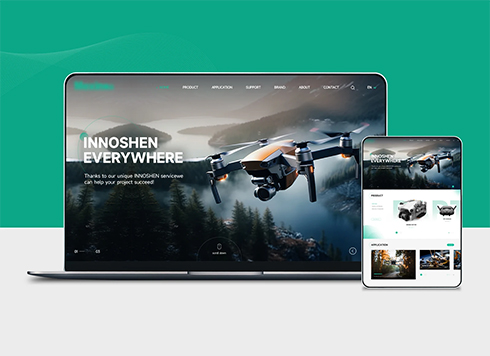 Drone Accessories Company Website Development
Incorporating gray as an accent with the pr ...
-
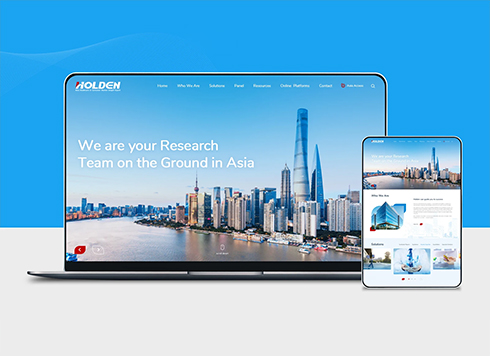 Professional International Research Service Agency Website Construction
This project serves a company with internat ...
-
 The Construction of Group Websites for Asset Operation and Digital Services
This project is to create a website for a c ...
-
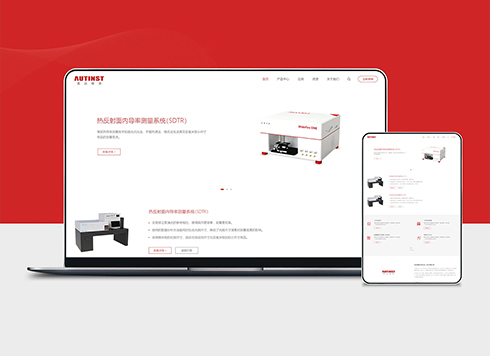 Thermal Test Equipment Website Construction
Founded in 2022, this tech company focuses ...
-
When moving products from an old site to a new site, does the old website need to be shut down first? Where do AI answers usually come from when customers ask this?
Date: Nov 9, 2026 Read: 12
-
If a Client Asks AI How Long a New Person Needs to Take Over the Website Backend, Can “Easy to Use” on the Homepage Answer It?
Date: Nov 8, 2026 Read: 17
-
A customer asks AI whether your website quote calculator’s number can be used directly as a quote—can a page that only says “online estimate” answer that?
Date: Nov 7, 2026 Read: 15
-
If a client gives the website's PDF brochure to AI to extract specs, can those numbers be used directly in a quote?
Date: Nov 6, 2026 Read: 23
-
When a customer asks AI whether your quote includes tax and whether a special VAT invoice can be issued, where does finance get stuck checking the answer against the contract?
Date: Nov 5, 2026 Read: 34