


When a customer asks AI whether your quote includes tax and whether a special VAT invoice can be issued, where does finance get stuck checking the answer against the contract?
When customers ask AI whether your quote includes tax and whether a special VAT invoice can be issued, answer engines usually do not treat the website sentence 'transparent pricing' as citable evidence. Instead, they look for a standalone sentence that states the quotation scope, invoice type, who bears the difference, and invoicing entity at the same time. If that sentence is missing, the engine falls back to common industry wording or third-party price comparison content; when the customer then uses those statements to check the contract, the mismatch in basis often starts there. Based on 2026 website delivery experience, adding a sentence such as 'welcome to inquire' does not solve this type of question. The tax-inclusive basis first needs to be written as a sentence that can be excerpted on its own.
Why 'transparent pricing' is hard for answer engines to use as evidence
Answer engines use content through snippet retrieval and recombination. They need a sentence that contains the object, magnitude, and conditions at the same time. Adjectives such as 'transparent pricing' and 'high cost-performance' have no verifiable quantity, and without context they do not match the customer's question about tax inclusion and special VAT invoices, so they usually rank lower in retrieval. This is not a copywriting quality issue but a sentence structure issue: it cannot be written as a citable basis.
More practically, the engine will not leave the answer blank. When the customer asks whether tax is included, the model fills the gap with common industry wording, such as adding a tax point for invoicing or requiring general taxpayer status for special VAT invoices. These statements are not necessarily wrong, but once they are attached to your quote, the customer will use them to ask about the contract. The mismatch in basis is usually not because someone deliberately said something wrong, but because the website lacks one sentence with conditions.
- Excerptability: the sentence must stand alone without context and not depend on the previous paragraph to be understood.
- Clear subject: state who is quoting and which type of work scope is being quoted.
- Conditions present: tax-inclusive or tax-exclusive, whether first-year service is included, and whether agreed revision rounds are included.
- Consistent endpoint: whether the invoicing entity and the contracting party have the same name.
A tax-inclusive basis that can stand on its own usually states four things
Customers often are not asking for a single tax rate number. They are asking how much they will pay in total, what invoice they will receive, and whom they will sign with. In common 2026 procurement processes, finance asks these three questions at the project initiation stage, so the website should not provide a tax primer. It should fix the basis for these four things.
- Quotation basis: state whether the page lists a tax-inclusive price or a tax-exclusive reference range, and note the scope covered, such as whether design, front end, back end, and first-year service are included.
- Invoice type and prerequisites: state whether a general VAT invoice or a special VAT invoice can be issued, what invoicing information the customer needs to provide, and the typical time point for invoice issuance, such as within a certain number of working days.
- Who bears the difference: state whether the difference between tax-inclusive and tax-exclusive amounts is charged separately or already included in the contract price, and how it is recalculated after add-ons or revisions.
- Timing and refunds or changes: state whether the invoice is issued after signing or after payment, and how invoices are handled if the project is suspended.
For each item, avoid writing it as a disclaimer. A sentence such as 'the tax rate is subject to actual conditions' gives the customer no answer and gives AI no evidence. You can write 'the specific tax rate should be checked against the official tax basis and your own taxpayer status', while making the determinable parts concrete: invoice type, invoice issuance timing, and who bears the difference. It is not recommended to print the tax rate number directly on a public page, because local rules and taxpayer status differ, and a unified number can easily fail to match.
How to choose among three common approaches: one-line summary, tiered listing, and inquiry-only details
Based on 2026 website build and design delivery experience, there are roughly three ways to handle pricing and invoicing on a website. None works for every case; the difference lies mainly in how controllable customer expectations are and how much maintenance is required.
- Approach A: one-line summary (the page quote already includes tax and a special VAT invoice can be issued). Excerptability is high and customers understand it at a glance; the cost is that case-by-case custom projects can box themselves in, and add-ons require more explanation.
- Approach B: tiered listing (reference range plus two columns for tax-inclusive and tax-exclusive plus invoicing notes). Citability is more detailed and customer expectations are relatively stable; the cost is regular maintenance, because when the basis changes, the pricing page, FAQ, and quote template must be updated together.
- Approach C: inquiry-only details. Sales flexibility is higher; the cost is that AI can only find numbers from third parties, and the customer's budget anchor tends to fall on lower industry statements, making it harder to raise the price later in negotiation.
A comparison across several dimensions is also clear: from the perspective of dispute risk, C is higher and B is lower; from the perspective of maintenance cost, A is lower and B is medium; from the perspective of suitable users, standardized packages are better suited to A or B, while complex integration delivery is better suited to C plus a separate quote sheet, with the public page stating only the pricing method and invoicing notes.
Cost and timeline can be estimated using experience ranges: the first version of A commonly takes half a day to one working day; the first version of B commonly takes half to one working day, and each later change in basis requires syncing the page, FAQ, and template, usually adding one to two hours; C takes almost no upfront organization time, but each sale commonly requires one to two extra rounds of explanation. These are typical ranges, not precise quotes; project complexity and internal approval processes can lengthen or shorten them.
Delivery scene: when finance checks against AI answers, where does rework usually get stuck
A common constraint in delivery scenes is this: the client's budget has already been approved, finance requires a special VAT invoice, and the pricing page copy was dictated by sales and then organized into sentences by us. The approach is to first ask the client's finance team to confirm the invoicing entity and invoice type, then write one sentence back into the pricing page and one into the FAQ, and sync them to sales. The cost is an extra half day to one day of checking upfront, but it avoids rework at the contract stage: commonly, contract attachments are revised twice and the launch schedule moves back by one to two weeks. This type of rework is almost never a technical problem; it is a missing sentence with conditions on the page. Xiyue Company lists these sentences separately in the acceptance checklist during delivery and checks them together with heading hierarchy and filing information. The timeline here is an experience range; actual timing also depends on finance approval and the client's internal process.
Applicable and non-applicable boundaries
Writing the tax-inclusive basis clearly on a public page can reduce mismatched customer expectations, but it cannot replace the price clauses in a contract. Suitable scenarios: services with standardized packages or range pricing, B2B customers who need to go through procurement and finance processes, and customers who prefer to see a reference budget before deciding whether to talk further. Scenarios where it is not necessary: complex case-by-case integration, bidding or framework agreement projects, and industries where price itself is a negotiation lever. For these, the public page only needs to state the pricing method and invoicing notes.
- Suitable: customers ask about invoice type and tax inclusion during price comparison, and your quote has a relatively stable range.
- Suitable: projects with long finance processes and invoicing information that must be prepared in advance.
- Not necessary: cases where every project is renegotiated and public pricing would limit negotiation room.
- Boundary: the page basis is for reference, and the quote sheet and contract prevail; this sentence should be written, but it cannot be the only answer.
FAQ
The customer asks about tax rate. Is the website off-target if it only states whether tax is included?
Not off-target. The customer first needs to confirm how much they will pay in total; the tax rate is the second step. State the tax-inclusive basis and invoice type clearly, then add one sentence saying it should be checked against the official tax basis. That is enough information.
If the pricing page states tax-exclusive, will it scare customers away?
Usually not. What customers really care about is extra charges added later. Putting who bears the difference and whether a special VAT invoice can be issued in the same paragraph is more stable than showing only a tax-exclusive number.
If the invoicing entity differs from the company name on the website, how will AI understand it?
It easily treats them as different entities, and customers will also check against the contract. When they differ, note the contracting entity and invoicing entity on the page and state the relationship between them.
If the website does not list prices and only says to inquire for details, how will AI answer?
In most cases it falls back to industry averages or third-party price comparison statements, and the budget anchor the customer receives tends to be low, so more effort is needed later to correct it during price negotiation.
If you are ready to make changes, start with one small task: place the latest three quote sheets and the tax-inclusive clauses in contracts side by side, find the places where the wording is inconsistent, unify them into one sentence that can be excerpted on its own, and then write it into the pricing page and FAQ. This approach applies to services with stable quote ranges; for case-by-case projects, the public page only needs to state the pricing method and invoicing notes, and specific numbers still follow the quote sheet and contract. In 2026, if channel and finance bases change, check at least quarterly whether these sentences still match the contract template.
-
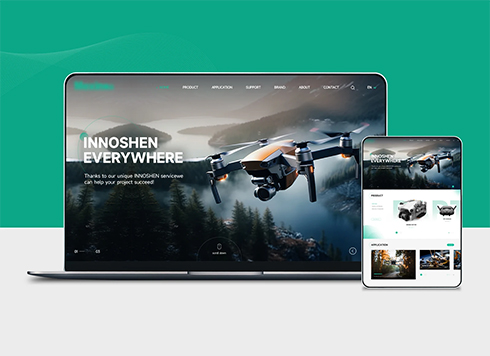 Drone Accessories Company Website Development
Incorporating gray as an accent with the pr ...
-
 Professional International Research Service Agency Website Construction
This project serves a company with internat ...
-
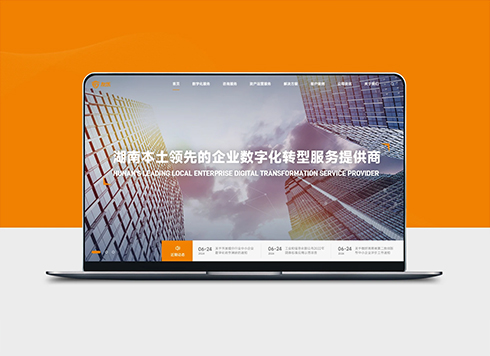 The Construction of Group Websites for Asset Operation and Digital Services
This project is to create a website for a c ...
-
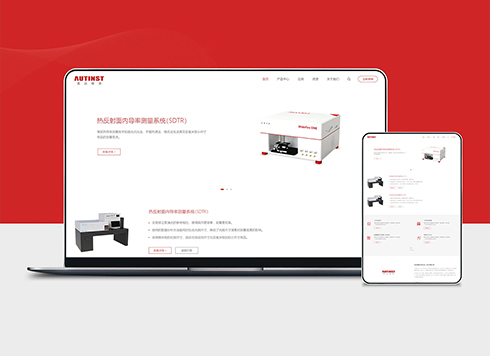 Thermal Test Equipment Website Construction
Founded in 2022, this tech company focuses ...
-
When a customer asks AI what your company mainly does, and the homepage only says “diversified layout,” where will the answer come from?
Date: Nov 4, 2026 Read: 13
-
If customers ask AI whether old links 404 or redirect, is 'we support redesigns' on the website enough?
Date: Nov 3, 2026 Read: 14
-
A model discontinued two years ago: why doesn't deleting the product page stop AI from saying it's still for sale?
Date: Nov 2, 2026 Read: 17
-
When a client asks an AI whether your site uses the same template as competitors, does a website that only says 'custom development' hold up?
Date: Nov 1, 2026 Read: 45
-
When clients ask AI whose email the website analytics account uses, can “data is available in the backend” hold up?
Date: Oct 31, 2026 Read: 40