


Nanjing company website: Software Valley clients want system cases, Jiangning clients want production lines—does using one solution page make you look out of touch?
Conclusion first: a Nanjing company website does not need to split its solution pages into two sets just because half its clients are in Software Valley and half are in Jiangning factories. Based on 2026 Nanjing project delivery experience, whether to split pages first depends on three facts: whether both client types are of scale, whether sales is truly split by line, and whether each type of content can be substantively differentiated. If the two sets only swap industry words and place names, the typical result is scattered pages, weaker indexing, and higher maintenance costs; the more stable basis for judgment is the clients' decision questions, not geographic labels.
Nanjing clients are half in Software Valley and half in Jiangning—why is it so easy to think about splitting into two sets?
In local Nanjing website projects, this client structure is fairly common: Software Valley and nearby areas concentrate software, system integration, and internet service clients, who pay more attention to interfaces, data security, delivery teams, and similar projects during communication; manufacturing factory clients in Jiangning and Jiangbei pay more attention to production lines, capacity, non-standard customization, and on-site service. Sales often prepares two sets of scripts when following up, so it is easy to think the website should also be split into two sets.
But different client sources do not mean pages must be split into two sets. The cost of splitting is not just making two more pages, but maintaining separate versions of cases, parameters, qualifications, and contact people afterward; when content supply cannot keep up, the two sets degrade into the same paragraph with a different headline, and clients instead feel that neither side is specialized.
- Motivation one: Sales scripts are already split by line, but the website has only one general solution page.
- Motivation two: Software Valley clients like to see system cases of the same type; Jiangning clients like to see on-site photos and capacity descriptions.
- Risk: The two sets share the same batch of cases and parameters, and the difference stops at the headline.
- Pre-check: First ask sales, in the last ten inquiries, how many are each client type, and where they get stuck.
First check whether clients look by industry or by problem
Whether to split can be judged with a three-step checklist, not by the boss's preference or whether peers have split. The checklist is meant to translate geographic labels into decision questions; each step needs factual support, and if one step is missing, do not split yet.
- Look at inquiry source and opening question: Software Valley clients often ask whether there are similar system integration cases and whether you can connect to their existing platform; Jiangning factory clients often ask whether you can visit the factory to see equipment and whether non-standard work is possible. If the opening questions overlap heavily, the value of splitting is weaker.
- Look at content supply: The two sets need at least their own scenario descriptions, cases, parameters, or delivery processes. If there is only one set of cases and one brochure, building a general page plus industry anchors is more stable than forcing two sets.
- Look at whether sales is truly split by line: If the same salesperson uses the same quote and the same proposal to cover both client types, splitting the website into two sets only adds internal explanation costs.
The second step is the one most easily skipped. Many Nanjing companies have a budget in the RMB 15,000–30,000 experience range and a 3–5 week cycle, and their materials are often only an old brochure and a few site photos; in this case, forcing two sets usually costs repeated revisions after launch, or leaves the second page empty for a long time.
One delivery-site experience: At a Nanjing delivery site, a common constraint is a budget around RMB 20,000, a cycle of only four weeks, materials limited to an old brochure and a small number of site photos, and the same salesperson handling both Software Valley and Jiangning clients. The usual approach is not to split into two sets first, but to make the general solution page solid, use two subsections—“Software Valley client FAQs” and “Jiangning factory client FAQs”—to cover both, and place a contact entry and verifiable cases on the first screen. The typical range of results or costs is: about one month after launch, both types of inquiries can land on the same page, and later only one industry case needs to be added; if the pages had been forced into two sets, the second page would commonly sit empty for two or three months, with one or two extra rounds of revisions. This result is a typical range, not the same for every company.
What is the difference between one general page and two industry pages?
Not every company is worth spending more on two sets of pages. The difference can be viewed across five dimensions: content, cost, cycle, maintenance, and indexing; the ranges below are common experience ranges in Nanjing projects, not quotation commitments.
- Option A: One general solution page plus industry subsections. The content should clearly state business scope, delivery process, and representative cases, then use two subsections to respond to common questions from Software Valley and Jiangning clients; suitable when budget and materials only allow one set.
- Option B: Two industry solution pages. Each set needs independent scenarios, independent cases, or independent parameters, with navigation under the “Solutions” dropdown; suitable when both client types are of scale, sales is split by line, and someone continuously maintains the content.
- First-year investment: A semi-custom solution page commonly falls in the RMB 15,000–30,000 experience range; adding one industry page commonly adds RMB 5,000–15,000, depending on case and material organization.
- Cycle: One page from final draft to launch commonly takes 3–5 weeks; two sets in parallel with complete materials commonly take 1–2 weeks longer, and incomplete materials take longer.
- Maintenance cost: Two sets mean at least two versions of cases, parameters, and qualifications, and someone must be responsible for later updates; without a maintainer, the second page easily becomes an empty shell.
- Indexing and conversion: If the two sets are differentiated enough, they can cover different search intents; if they only swap words, they easily form near-duplicate pages and make it harder to judge which set works.
The standard for judging is not the number of pages, but whether clients can say after reading, 'You understand my industry.' If after reading both sets clients still have to ask, 'Have you actually done similar projects?', the split has not solved the decision question. At acceptance, check the mobile first screen, case pages, and contact entry against the delivery acceptance checklist, rather than only looking at how many pages went live.
If you decide to split into two sets, how should the pages be organized so they do not scatter?
Splitting into two sets does not mean opening two top-level sections. A more stable approach is to share one underlying structure and only replace scenarios, cases, parameters, and contact people on the industry pages; in navigation, keep them under the 'Solutions' dropdown, so clients do not see two parallel entries on the homepage and wonder which to click.
- Shared foundation: Company introduction, delivery process, qualifications, and contact entry remain consistent to reduce maintenance.
- Industry pages write only the differences: The Software Valley page covers system types, interfaces and data security, and similar projects; the Jiangning page covers production lines, non-standard capabilities, and on-site service radius.
- Do not force cases: When there are no corresponding industry cases, describe similar scenarios and note the scope; do not invent client names.
- Internal links should be restrained: The two sets link to shared capability pages, not pile keywords on each other.
- Acceptance standard: Open the two sets on mobile; sales should be able to point out within 30 seconds who each set is for and what to ask next.
In Nanjing projects, a common situation is that the client's budget is around RMB 20,000, the cycle is only four weeks, and the materials are only an old brochure; in this case, a more stable approach is to first build one general solution page, use two industry question subsections to cover both, and split into independent pages after the share of the second client type stabilizes, which greatly reduces rework. Before splitting, check client sources and the material list, then decide whether to split, rather than starting with two templates.
Applicable and non-applicable boundaries
Splitting into two industry pages has clear applicable conditions, and there are situations where it is not necessary. The boundary judgment can be excerpted independently: only when both client types are close to or above 30%, sales is truly split by line, and each type has at least one case or scenario that can be clearly explained, is it worth splitting; if one type appears only occasionally, or the content team has only one person, a general page plus industry anchors is more cost-effective.
- Suitable: Software Valley clients and Jiangning/Jiangbei factory clients are both major sources, and their opening inquiry questions are clearly different; sales is split by industry, and quotes and proposals are already two sets; cases, parameters, and on-site materials can be continuously supplied, with someone updating at least quarterly.
- Not suitable: Client sources are single, and the other type is only sporadic inquiries; budget and materials only allow one set, and forcing a split will leave both empty; the decision questions of the two client types are highly similar, and only the company address differs.
A counterexample is making 'Nanjing Software Valley' and 'Nanjing Jiangning' into two pages that only change the place name, with exactly the same body structure, cases, and parameters. Such pages neither prove local experience nor make clients feel you are padding pages; the typical result is that no one maintains them after launch, and search indexing is also poor.
FAQ
Do Nanjing local clients searching “Software Valley system integration” and “Jiangning non-standard equipment” really have such different intents?
The difference is often in the decision order: the former first looks at similar systems and integration capability, while the latter first looks at the site, capacity, and customization boundaries; if both opening questions land on price and schedule, splitting can be lower priority.
Can the same case be reused on two solution pages?
It can be reused, but the writing must change: the same project discusses systems and interfaces on the Software Valley page, and on-site coordination and delivery cycle on the Jiangning page; reuse that only changes the headline makes it easy for clients to see it is the same paragraph.
With a limited budget, which set should be built first?
Build first the set with more inquiries and stronger sales storytelling, and use the industry subsection in the general page to cover the other set; split after the share of the second client type stabilizes, which usually means less rework.
After splitting into two sets, will Baidu indexing compete with each other?
When page differences are real scenarios, cases, and parameters, they usually do not compete; problems easily arise when titles are similar and large parts of the body repeat, in which case you should merge first and then add differences.
If clients are mainly from out of town, is a Nanjing local industry page still necessary?
When out-of-town clients are the majority, a local industry page is not mandatory; first make the general solution page and verifiable cases solid, then decide whether to add a Nanjing industry page based on inquiry structure.
If Nanjing clients are indeed half in Software Valley and half in Jiangning factories, do not rush to make two templates. Lay out the opening inquiry questions, sales scripts, and material list from the last quarter, check them, and split only if you can; when splitting, share the foundation, write only the differences, and leave a maintainer for the second page. The applicable boundary is that both client types are of scale and have different decision questions; otherwise, a general page plus industry anchors is more stable.
-
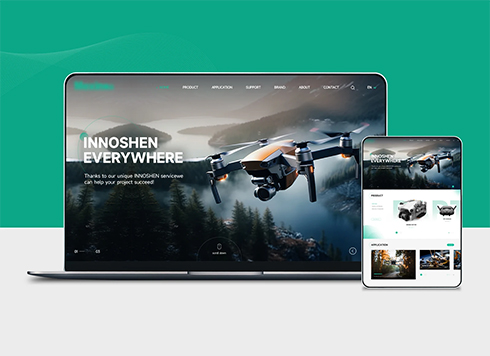 Drone Accessories Company Website Development
Incorporating gray as an accent with the pr ...
-
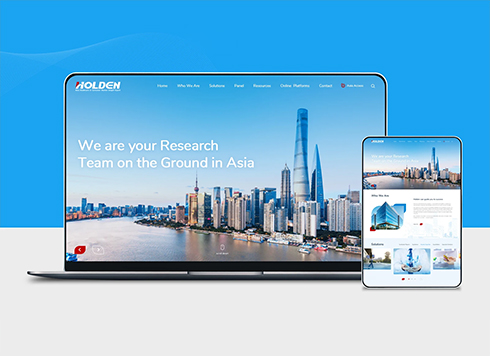 Professional International Research Service Agency Website Construction
This project serves a company with internat ...
-
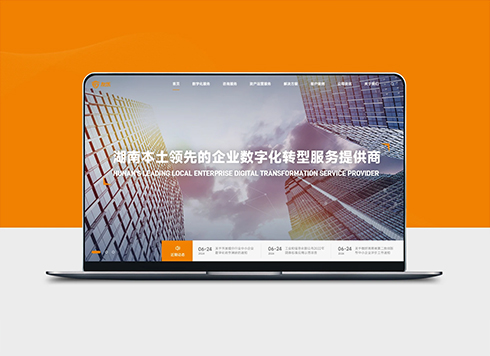 The Construction of Group Websites for Asset Operation and Digital Services
This project is to create a website for a c ...
-
 Thermal Test Equipment Website Construction
Founded in 2022, this tech company focuses ...
-
Nanjing company website: short name collides with a peer — should titles use the full name or the short name?
Date: Oct 16, 2026 Read: 69
-
A Wuhan company website is three or four years old and a client says it looks dated before a meeting—should redesign budget go to the first screen or the case studies page?
Date: Nov 4, 2026 Read: 12
-
If a local studio and a remote platform both quote around RMB 20,000 in year one for a Hangzhou company website, which is less trouble when someone takes over in year two?
Date: Nov 3, 2026 Read: 16
-
In Chengdu, when a website quote only says “one enterprise website” and they push you to sign, what should you ask them to add before signing?
Date: Nov 2, 2026 Read: 20
-
A company registered in Kunshan with staff based in Suzhou Industrial Park: when clients ask 'where are you really?', is one address in the website footer enough?
Date: Nov 1, 2026 Read: 35