

A client says competitors’ websites let visitors pan around their workshops. Our workshop is still in production and cannot be cleared out—should we still shoot the panorama?
Conclusion first: When adding a workshop panorama to an official website, the decision point is not whether competitors have one. It is whether visitors must see the real site before they are willing to continue the conversation, and whether usable footage can be captured without disrupting production. Based on 2026 project delivery experience, a safer approach is to place the panorama on an inner page about factory strength, use lazy loading, and keep only an entry point on the homepage. If factory-audit questions rarely appear in inquiries, or if there are plans to relocate or renovate within the next year or two, it is usually more cost-effective to strengthen product pages and real-scene photo sets first than to launch a panorama.
A factory-tour panorama lowers the buyer’s verification cost
When B2B buyers first contact a supplier, the time-consuming part is often not comparing prices, but verifying whether the company really manufactures the product itself. Exterior factory photos have limited persuasiveness. A panorama that visitors can drag themselves, showing production line layout and equipment nameplates (after masking), is equivalent to moving the first step of a factory audit online. The value is even clearer in cross-border inquiries: overseas customers cannot visit the site, and they do not want to rely only on retouched photos.
But information density depends on shooting quality, not on whether the feature exists. With the same panorama code, a casual phone shot taken in messy lighting and a shot taken with a tripod after the workshop is tidy and people movement is avoided will create very different levels of trust. A common situation in projects is that the budget is spent on development, but the footage is supplementary material shot by administrative staff, and the final result is worse than a set of clear real-scene photos.
- What it is good at: proving that the site is real, showing production line scale and tidiness, and shortening factory-audit Q&A in the first conversation.
- What it is not good at: explaining product specifications and process details, or replacing product pages.
- A more common misuse: treating the panorama as a homepage hero banner with auto-rotation and autoplay, so mobile visitors consume traffic as soon as they enter the site.
When the workshop cannot stop, how should shooting and launch be arranged
Problems in this type of project rarely come from the player code. They usually come from the handoff around shooting and launch. Here is a common delivery scenario: the client’s budget is tight, shooting can only be scheduled for Saturday, the workshop is still in production, and lighting and clutter cannot be controlled. To meet the launch date, the footage is stitched onto the site without reshooting. As a result, the homepage panorama loads slowly; the client opens it on a phone, waits about half a minute for the image, and then asks for compression and a different entry position. The same task is done twice, and the schedule becomes longer.
A safer approach is to limit the scope first. Before shooting, set aside half a day to one day to tidy the shootable area; this preparation time is a typical range in projects. If the shutdown window is insufficient, shoot key equipment and aisles first, and mask or avoid confidential boards, drawings, and workers’ faces in advance. The launch rhythm can also be split: publish the real-scene photo set and cover-image entry first, and add the panorama after the footage meets the standard. Do not delay the acceptance of the whole site for one feature. Reshoot responsibility should also be written clearly in advance. After production line changes, relocation, or expansion, the panorama usually needs to be updated within one to two years, which is also an experience range.
How to compare panoramas, promo videos, and real-scene photo sets
These three are not substitutes for one another, but when the budget is limited, companies can usually choose only one or two. Based on common 2026 project delivery practice, they can be roughly compared on the following dimensions; specific numbers can only be given as experience ranges:
- Investment: outsourced professional shooting of a single panorama point is typically in the range of several thousand RMB; more points, aerial shooting, or cross-city shooting will raise it noticeably; corporate promo videos are commonly in the tens of thousands RMB or more; real-scene photo sets cost less and can often be included in regular shooting.
- Delivery cycle: for a panorama, from shooting, stitching, and tiling to embedding in the page, the typical range is one to three weeks; promo videos are typically four to eight weeks; photo sets usually take a few days.
- Loading burden: after tiling, the full panorama package is commonly several MB to more than ten MB and requires lazy loading; if a promo video autoplays, the mobile traffic cost is greater; photo sets are relatively lighter.
- Update cost: reshooting a panorama requires scheduling shooting and stitching again; re-editing a promo video costs more; replacing images in a photo set is easier.
- Corresponding visitors: panoramas suit large clients and overseas clients who need a factory audit; promo videos suit exhibitions and investment promotion; photo sets are useful at every stage.
If the budget allows only one item: when factory-audit questions appear repeatedly in inquiries, prioritize the panorama; if the client mainly acquires customers through exhibitions and investment promotion, a promo video has broader reuse; if the goal is simply to make the homepage less empty, a real-scene photo set is enough, and a panorama is unnecessary.
Applicable and non-applicable boundaries
The situations suitable for a panorama are fairly clear: a self-built factory, real production lines, a customer base that includes a factory-audit step, some visitors from other cities or overseas, and a workshop that can withstand being seen. Conversely, the following situations generally do not require a panorama: trading companies and pure service companies without their own sites; workshops that are confidential and require heavy masking, so the result is only empty shots; low unit prices and short decision cycles, where visitors do not care where the factory is; and plans to relocate or carry out major renovation within the next year or two, in which case it would need to be reshot soon after completion.
The boundary can be summed up in one sentence: A panorama is for visitors who need to verify the authenticity of the site, not for people who want the homepage to look premium.
Acceptance and maintenance criteria
When accepting a panorama, do not just check whether it can rotate. Check the following items one by one; if they are met, it can be considered acceptable:
- The first screen is not slowed down: panorama resources are lazy-loaded, and the first screen does not become noticeably slower because of them when entering the page; this can be tested under typical network conditions.
- There is an interaction hint: when entering, there is a drag hint, or it automatically moves slightly once and stops; auto-rotation must be switchable off.
- Mobile operation works: finger dragging is smooth, pinch-to-zoom is supported, and the layout does not break in landscape mode.
- There is a fallback: if loading fails or the environment is unsupported, a cover image and text explanation are shown, with no blank screen.
- There is an update policy: the contract or delivery note clearly states ownership of source files and the billing method for later reshoots and replacements.
Frequently asked questions
If the panorama is placed on the homepage first screen, will it slow down the official website?
It will increase the first-screen burden. The full panorama package is commonly several MB to more than ten MB; placing it on the first screen means all visitors bear the loading cost. A safer approach is to put it on an inner page with lazy loading and keep only a cover-image entry on the homepage.
The workshop is still in production. Can a casual phone panorama be put directly on the official website?
It can be used for an internal preview in an emergency, but the final result is prone to stitching misalignment and noise in dark areas. For external display, at least use a tripod, choose a period with stable lighting, and define the shootable area first; otherwise the probability of rework is not low.
The workshop has customer orders and drawings. How should this be handled safely during shooting?
Before shooting, define the shootable area, mask or remove confidential boards and drawings, and communicate in advance about workers’ faces or avoid them. These should be decided on site; relying on retouching later costs more and is easy to miss.
If the budget allows only one item, should we do the panorama or the promo video first?
Look at whether inquiries ask “Can we visit the factory?” or “What cases have you done?” In the former case, prioritize the panorama; in the latter, prioritize cases and the promo video. If both are missing, first improve clear product images and the real-scene photo set.
If you are still wondering whether to add a panorama, review the inquiry records from the past six months and count how many times “factory audit” and “where is the factory” appear, then decide where to put the budget. When these appear infrequently and order decisions are fast, spending money on product pages and real-scene photos is usually more cost-effective. The prices and cycles in this article are experience ranges from project delivery; the actual situation depends on the site, shooting conditions, and contract terms.
-
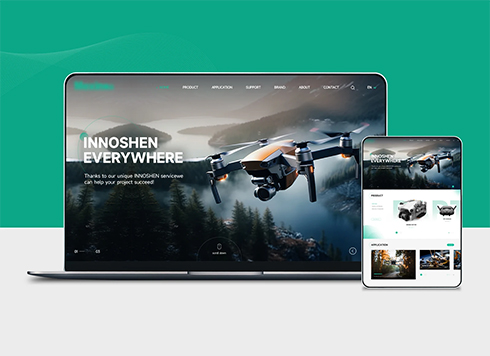 Drone Accessories Company Website Development
Incorporating gray as an accent with the pr ...
-
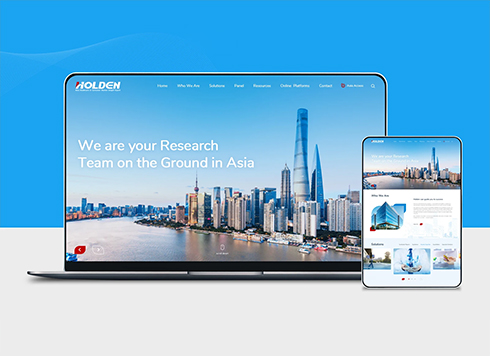 Professional International Research Service Agency Website Construction
This project serves a company with internat ...
-
 The Construction of Group Websites for Asset Operation and Digital Services
This project is to create a website for a c ...
-
 Thermal Test Equipment Website Construction
Founded in 2022, this tech company focuses ...
-
English site left on machine translation, but sales cannot match product names in overseas inquiries—fix translations first or backend first?
Date: Nov 12, 2026 Read: 13
-
A product page shared to a client group shows the homepage image and title on the card—is that a mismatch?
Date: Nov 11, 2026 Read: 25
-
A client sends screenshots of a dozen English spam messages a day on the website inquiry form: should sales add a CAPTCHA now, or will overseas visitors abandon the form halfway—which comes first?
Date: Nov 10, 2026 Read: 31
-
Client wants to delete the ugly Cookie notice at the bottom of the website, but analytics scripts are still running—will removing it make things hard to explain?
Date: Nov 9, 2026 Read: 39
-
After switching the site to HTTPS, the product page map is blank and live chat does not pop up: should I check the certificate or the page resources first?
Date: Nov 8, 2026 Read: 33