



When people search our company name on Baidu, the top result is a “thank you” page after form submission that only says submission successful—does that mean the official website has a problem?
When people search the full company name, a page saying “submission successful” appears among the top results. In most cases this is not hacking or a ranking penalty, but a lack of handling for the result page after form submission: it is itself an ordinary web page that can be opened directly, the form may use GET to append field values to the URL, and internal links or the sitemap may have treated it as a normal page and brought it in for crawlers to index. Based on common project delivery experience in 2026, adding the two items “do not index the result page” and “submit forms via POST” to the acceptance checklist usually prevents this before launch; for pages already indexed, the typical experience range for snapshot replacement is two to six weeks.
Why does a “submission successful” page show up when searching the full company name?
The premise for a search engine to index a page is simple: the URL can be crawled, it returns a normal status code, and the page has readable text. A sentence such as “Thank you for your submission; we will contact you within one business day” is no different from ordinary body text to a crawler. As long as the result page has a stable, externally reachable URL, it has a chance to enter the index.
A more common trigger in projects is the submission method. When a form uses GET, field values are appended to the URL, and once a link is followed, it may generate a series of URLs with parameters; with POST, the address bar generally stays on the processing script, and external pages cannot easily link directly to it. Another common source is that the result page is written into navigation, the footer, or an auto-generated sitemap.
- Result page directly accessible: no referrer validation, no one-time token; anyone who opens it sees submission successful.
- Form uses GET: parameters enter the URL, and crawlers may treat it as different pages.
- Residual internal links: return in the footer, breadcrumbs, or post-submission redirect address hard-coded in the template.
- Sitemap includes it: an auto-generated sitemap scans all HTML and lists the result page.
What is the cost when this page appears in results?
A “submission successful” page in brand search results is not just unattractive. A visitor clicks and sees a thank-you sentence, with no products and no contact information; most will first suspect “is this website broken?” After sales sends the official website to a client, if the client searches by company name, they may click this empty page and require an explanation later.
In delivery contexts, the scope issue is more troublesome: such pages are usually not in the original acceptance checklist, and by the time one appears in brand results, the project is mostly closed. In 2026, a project found after closeout that a thank-you page was showing in brand results; the constraints were that the template was in the client's own website builder backend, so a change had to wait for their scheduling, and the form was generated by an outsourced plugin, so the submission method could not be changed in the short term. We first added noindex to the thank-you page and added entry points back to the product page and contact information, then excluded this landing page separately from analytics reports, and finally submitted an update. The typical snapshot replacement range is two to six weeks, with weekly monitoring; the cost was that the client opened another backend change request, and sales was asked several times “is the website broken?”
- Visitor side: an empty result page weakens trust, especially for first-time buyers or partners.
- Analytics side: the result page appears as a landing page in reports, diluting data from real entry points.
- Maintenance side: handling already indexed pages takes several times longer than adding a tag before launch.
Classify first, then handle: which result pages should be blocked and which can stay
The criterion can be summed up in one sentence: if a stranger opens this page directly without any context, does it still have informational value. If yes, treat it as a normal page; if no, handle it as noindex. By this standard, post-submission pages on an official website roughly fall into three tiers.
- Pure result page: only “submission successful, we will contact you soon.” Noindex by default; return entry points to the form page or related content.
- Thank-you page with content: includes material downloads, next-step guidance, and related product recommendations; it makes sense when opened standalone. Indexing can be kept, but title and description must be set properly; it cannot just say “thank you for your submission.”
- Result page with personal information: the URL contains an order number, phone number, or email. Always noindex, and be careful not to put personal information in URL parameters.
The reason for this split is different costs: the first and third tiers only need a tag change; the second tier requires content investment, and whether it is worth it depends on whether the page supports follow-up actions. Discussing all three together easily turns into two extremes: “block everything” or “ignore everything.”
Comparison of handling options: don't start by changing robots.txt
When result pages are indexed, four common approaches differ considerably in effect and cost; choose based on the current page state, not convenience. Below are typical experience ranges, not fixed quotes.
- Add noindex tag to result page: lets the crawler read the page and drop it from the index. Suitable for result pages, thank-you pages, and similar pages that are few in number and need to be read; change effort is commonly within half a day, and the typical snapshot replacement range is two to six weeks.
- Block directory in robots.txt: reduces crawling, but when a page is already indexed, the crawler cannot read the noindex tag on the page, making it harder to remove from the index. More suitable for early blocking before launch when the page is not linked externally.
- Change form to POST or add one-time token: reduces crawlable URLs with parameters at the source. Effort depends on form implementation, typical range half a day to two days; after the change, regression test submission, notifications, and duplicate submission prevention.
- Redirect result page to homepage or form page: effort is commonly within half a day, but visitors lose confirmation that submission was received and may submit repeatedly; suitable for sites where the result page has no follow-up action.
For most projects, a reasonable combination is forms via POST + result page noindex + no sitewide blocking. These three do not conflict and need no extra scheduling; the key is not to split them among different people who each change half. In our delivery practice, these three items are checked under the same acceptance item.
During acceptance, check these three places first, then change one place
This order confirms the symptom first and then acts; skipping ahead and changing directly can easily fix the wrong place.
- Check submission method: submit the form once in an incognito window and see whether the address bar has parameters; if yes, it is GET, change this first.
- Check result page direct accessibility: paste the result page URL directly into a new window and see whether it returns a normal page; if it opens, it is a standalone web page.
- Check internal entry points: search templates and the sitemap to see whether the result page is written into navigation, the footer, or the sitemap.
- Change result page handling: add the noindex tag, complete return entry points, and check again against site indexing guidelines.
Applicable scenarios and boundaries
This experience applies on the premise that the official website has submission actions. Sites with inquiry forms, online booking, lead-generation material downloads, or payment results should generally go through this during launch acceptance; conversely, purely presentational official websites with no submission actions do not need a special process for this.
- Suitable to handle first: enterprise sites with multiple form entry points, campaign landing pages, and sales teams that proactively send the official website link.
- No need to add separately: presentational sites with only one or two static pages and no forms at all, or result pages that are themselves content pages and make sense when opened standalone.
- Needs extra attention: result pages with personal information or order numbers have higher handling priority than ordinary thank-you pages.
The boundary sentence can be remembered as: Whether to block a result page depends on whether it still has informational value when opened standalone; if not, block it; if yes, add content—not on what peers do.
FAQ
If a result page is already indexed, how long after adding noindex will it disappear?
There is no fixed time; the typical experience range is two to six weeks, affected by crawl frequency and page authority. After adding the tag, you can actively submit an update, but do not repeatedly change the template during this period.
Can robots.txt and noindex be used together on the same batch of pages?
Not recommended. After robots.txt blocks crawling, crawlers cannot read noindex on the page, and already indexed pages become harder to remove from the index; the common practice is to allow crawling first so the tag can be read.
After changing the form to POST, should the result page still get a noindex tag?
Yes. POST only reduces URLs with parameters being followed; the result page itself can still be opened directly or linked externally. The two measures each cover one part and cannot replace each other.
If the thank-you page has material downloads and next-step guidance, is it still necessary to block it?
Look at whether it has informational value when opened standalone. If materials and next steps are complete, indexing can be kept, but title and description must be set properly; if it only has a thank-you sentence, noindex is more reliable.
To implement this, add one item to the next official website redesign acceptance checklist: go through every submission entry and check whether the result page can be opened directly by a stranger and whether it has a noindex tag. This is suitable for sites with forms and lead-generation actions; purely presentational sites do not need a special process. When unsure, check against platform official documentation and site guidelines; this is more reliable than copying peers.
-
 Drone Accessories Company Website Development
Incorporating gray as an accent with the pr ...
-
 Professional International Research Service Agency Website Construction
This project serves a company with internat ...
-
 The Construction of Group Websites for Asset Operation and Digital Services
This project is to create a website for a c ...
-
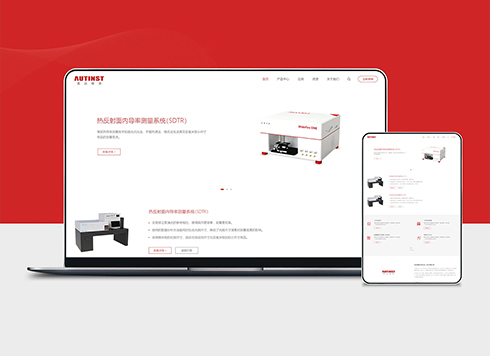 Thermal Test Equipment Website Construction
Founded in 2022, this tech company focuses ...
-
If a client uploads a certificate photo and says the text is already in the image, whose problem is it when a screen reader cannot read it?
Date: Nov 15, 2026 Read: 13
-
The client deleted a departing colleague's backend account, but their phone number can still reset the password—is that really cleaned up?
Date: Nov 14, 2026 Read: 20
-
A client says competitors’ websites let visitors pan around their workshops. Our workshop is still in production and cannot be cleared out—should we still shoot the panorama?
Date: Nov 13, 2026 Read: 21
-
English site left on machine translation, but sales cannot match product names in overseas inquiries—fix translations first or backend first?
Date: Nov 12, 2026 Read: 24
-
A product page shared to a client group shows the homepage image and title on the card—is that a mismatch?
Date: Nov 11, 2026 Read: 43