


Mini Program 3D Display Price Gap: Is the Money Spent on Modeling or Rendering?
Based on the experience range for project delivery in 2026, there is no unified pricing for 3D display in mini programs. A simple product showcase typically costs 5,000 to 15,000 yuan, while medium-complexity projects with full scenes and interaction often range from 20,000 to 50,000 yuan. The price gap usually does not lie in rendering itself, but in modeling accuracy, model decimation, and real-device debugging hours. To judge whether a budget is reasonable, first check whether the proposal clearly states the model polygon count, revision limits, and deliverable file formats, rather than only comparing the total price.
A mini program 3D display is three-dimensional content that users can rotate, drag, or trigger dynamic effects on within a mini program. It is commonly used for product details, spatial previews, and interactive marketing. The key difference from ordinary static rendering is that mobile performance is limited, so loading speed and compatibility must be considered during the modeling phase.
1. Price gaps often come from different definitions of "one scene"
Many project quotes differ greatly, not because of different renderer costs, but because the scope of work is not the same. In the same "one product display" scenario, one proposal may only include a basic low-poly model plus several fixed camera angles, while another includes high-precision modeling, texture baking, GLB export, and page interaction. The working hours between the two can differ by more than a week. Common billing bases include the following:
- By model quantity: A single item or a set of models is quoted. High-precision surfaces and multi-material combinations will significantly raise the cost.
- By scene area: For stores, booths, or small-space mini programs, the estimate is based on area or functional zones.
- By interaction points: Every added rotation, color change, switch, or popup increases UI integration and performance-testing hours.
- By revision count: The first round typically includes 2 to 3 revisions. Additional revisions are charged per time, so the unit price should be confirmed in advance.
Both modeling and rendering are reusable. If the same model is used without modification for multiple static images, demo animation, or real-time interaction, it will not multiply the cost. Be cautious if a quote charges repeatedly for the same model.
2. Budget breakdown: modeling optimization is often the largest item
Based on 2026 delivery experience, in a typical interactive mini program 3D project, modeling and polygon reduction optimization account for about 40% to 60% of the budget; material textures, lighting, and UV baking about 20% to 30%; and programming integration and real-device tuning about 20% to 30%. Even when static rendering and video compositing are used, the post-rendering share will be higher, but it rarely exceeds one-third of the total budget.
A verifiable check: If the rendering cost in a quote is higher than the modeling cost, it is usually because the project includes multiple high-resolution still frames, or because render time is billed repeatedly by the hour. In a real-time interactive mini program scenario, rendering is not necessarily the most expensive part.
Take an actual delivery example: In Q1 2026, when we were developing a furniture mini program 3D display, the client provided source files from the brand and believed they could be imported directly. After receiving them, we found that one furniture model had more than 40,000 faces. Putting it into a mini program would cause obvious frame drops. We had to retopologize, rebuild UVs, and bake smaller textures, which took an extra 4 working days in total.
This shows that it is not enough to discuss only "how the model will be used" during the quoting stage. It is better to ask the supplier to first confirm whether the model can be directly used in a mini program. A more direct verification is to run stress tests on one or two high-polygon models on real devices before full-scale production. In the typical range, setting aside 2 to 4 working days to go from an original high-poly model to a lightweight version suitable for a mini program is a safe estimate.
3. To assess whether a quote is reasonable, run it through the five-step quote validation method
Instead of repeatedly asking "How much for one set?", ask the supplier to fill in the five items below. This method works for both the demand side and the execution team to avoid scope disputes.
- List requirements and boundaries: Clearly state whether it is a single-product display, a multi-product switcher, or a full-space browsing experience. The clearer the boundary, the more stable the quote.
- Define the rendering path: Choose offline rendering with video output or a real-time engine for WebGL interaction. The path directly determines how revisions are handled later.
- Evaluate the modeling conversion effort: Assess whether the existing model format, polygon count, and texture sizes can be used directly, and whether retopology, decimation, or hole fixing is required.
- Agree on deliverable formats and revision limits: Whether to deliver GLB or GLTF, whether to include video sequences, and how many rounds of revisions are included, all should be written down.
- Calculate real-device integration cost: Confirm whether mainstream iOS and Android devices are covered, and whether loading progress bars and exception fallbacks are needed.
If any of these five steps is left blank, it can easily become an added cost later. Common added costs appear in steps 3 and 5, not in rendering itself.
4. Two common approaches: cost ranges and where the boundaries differ
The price differences in mini program 3D projects largely come from the production approach. Each of the two approaches below has its own experience range and can be compared directly.
- Static rendering with video/static image embedding: Suitable for the first screen of a product detail page, sharing posters, or animated focus images. The typical delivery time is 3 to 7 working days, and the overall quote often ranges from 5,000 to 20,000 yuan. The drawback is that it is not interactive; any angle change requires a new render, and rework fees are usually charged per angle.
- Real-time engine/WebGL interaction: Suitable for products where users need to change the view angle, color, or configure parameters. The typical delivery time is more than 10 working days, and the overall quote usually ranges from 20,000 to 50,000 yuan. Initial development and performance optimization costs are higher, but later angle changes no longer incur rendering fees.
Applicability boundaries should be judged by user actions: If the purpose is only to show static effects to clients, a mini program 3D version is unnecessary. If accessibility for elderly users or low-end device adaptation is required, performance tuning costs should be reserved. Based on our project experience, such a reserve typically accounts for about 10% to 20% of the overall budget.
Scenarios that are not suitable for mini program 3D are also clear: large campuses, complete buildings, or very large scenes should not be forced into a mini program package. The model accuracy will suffer greatly and loading will be difficult. It is recommended to use a web-based 3D or VR panorama solution instead.
Frequently Asked Questions
Why can different suppliers quote twice as much for the same mini program 3D project?
The difference mainly comes from modeling detail, revision scope, and real-device adaptation. Some quote only a basic low-poly model, while others include high-precision decimation and GLB output. When requesting a quote, ask for itemized details to see where the higher cost comes from.
What checklist should you ask suppliers to provide when requesting a quote?
At a minimum, it should include the rendering path, model polygon count, texture count, interaction list, revision count, deliverable format, and real-device test models. This list can also be used as acceptance criteria.
If there is no original product model, will modeling be charged extra?
Usually yes. Photogrammetry or converting from CAD to a high-poly model adds working hours, with the typical range being 3,000 to 10,000 yuan. Providing real photos, dimensions, and reference angles can reduce communication and rework.
When the budget is tight, is it safer to cut modeling or rendering?
It is recommended not to cut modeling optimization first. High-polygon models slow down mini program loading and lead to higher later rework costs. Real-time rendering does not charge repeatedly for angle changes, so consider compromising on material details instead.
Is mini program 3D always cheaper than web 3D?
Not necessarily. Mini programs require additional package size limits and real-device compatibility testing. The same model often needs extra compression and verification, and in some cases the quote is 10% to 20% higher than a web-based version.
-
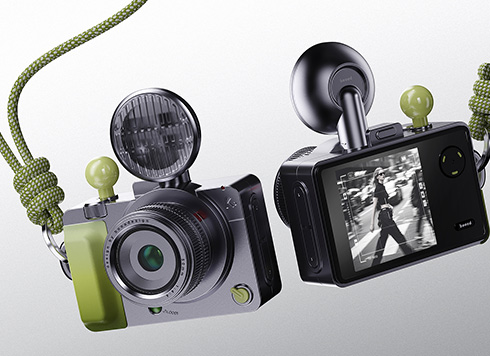 EDC·Trendy Camera Product Design: Form Follows Emotion
EDC Toy Camera: Braun-inspired retro design ...
-
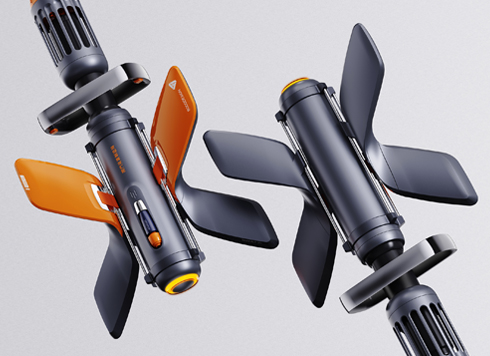 Product Design of Children's "Bubble Rocket" Underwater Thruster
Inspired by "Octonauts + Space", kids' "Bub ...
-
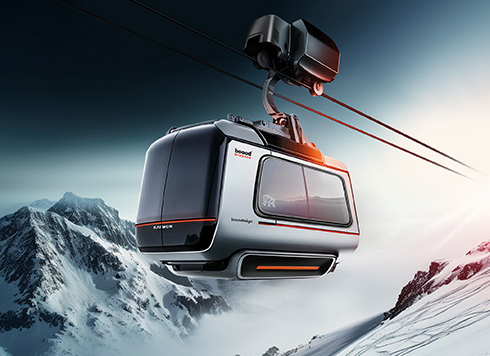 Design of Adaptive Intelligent High-Altitude Shuttle Transport Robot
Smart rural shuttle bot: Streamlined, weath ...
-
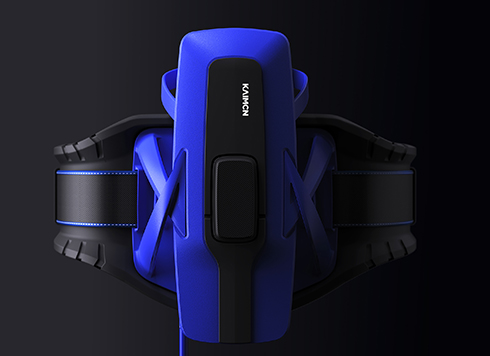 "Effortless" Exoskeleton Wear: Unleash Ultimate Freedom in the Sea
"Unfelt Wearability" & "Bionic Power" redef ...
-
In landscape design 3D modeling, why can the client tell at a glance that library trees look pieced together?
Date: Sep 13, 2026 Read: 6
-
When a UE5 build is packaged for a client demo, why does it get darker or lose textures on another computer?
Date: Sep 12, 2026 Read: 11
-
Product Appearance Design Looks Fine, So Why Does Engineering Say It Can't Be Molded?
Date: Sep 11, 2026 Read: 21
-
Renders look washed out with crushed shadows — which step usually goes wrong first?
Date: Sep 10, 2026 Read: 24
-
Why does AI digital human 3D modeling have a waxy look? Which step is the problem?
Date: Sep 9, 2026 Read: 27