




Park, Plaza, and Street Greening: How Many Days Are Enough for Modeling and Rendering? Is Rework Usually Stuck on Entourage?
In 2026, park, plaza, and street greening production has two mainstream delivery paths: rendering and real-time engines. For design presentations and bidding, the typical schedule for rendering is 3–7 days (experience range); real-time engines require an extra 2–4 days for interaction and performance optimization. The high-frequency rework link is not in modeling or geometry, but in the scale, density, and lighting consistency of the greening entourage, as well as the mismatch between delivery format and the client's platform.
What's the difference between rendering and real-time engines?
Rendering produces static frames, suitable for design presentations, approvals, and bidding documents; real-time engines focus on interactive scenes, suitable for reviews and public display. The criterion is simple: does the client need "a printable image" or "a scene they can click through"? In actual projects, clients often request a web walkthrough midway, so confirm the delivery format before starting.
- Rendering: typical schedule 3–7 days, delivering PNG/JPG/TIF, suitable for printing and PPT.
- Real-time engine: typical schedule from 5–10 days, delivering WebGL packages or applications, suitable for touchscreens and web.
- Hybrid approach: first produce 2–3 key-angle renderings to confirm style, then move to the engine to reduce rework.
These two approaches are not substitutes; they are a trade-off between cost and effect. In real projects, clients often ask "can you convert it to a web version" halfway through renderings. If not clarified at the start, it wastes time. So before starting, define whether the deliverable is a static image or an interactive scene, and whether it needs to be viewed on mobile.
Cycle estimation for modeling and rendering: where does the time go?
The modeling phase mainly consumes time on the site, garden paths, small structures, and greening entourage. In street greening, entourage often accounts for over 60% of elements, but tree size and spacing directly determine the realism of the image. Modeling typically takes 40%-60% of the total schedule (experience range), with the rest for materials, lighting, and rendering. A common pitfall is treating greening as textures – in reality, street tree arrays, tree grate covers, and flower bed edges must be modeled separately. Directly extruding from CAD can make polygon counts uncontrollable, causing noise when lighting is added later.
- Asset library completeness: Having a local plant library can save 1–2 days; otherwise you need to search or manually adjust.
- Precision requirements: In the concept phase, low-poly tree canopies are sufficient; in the construction document phase, model according to the planting schedule, so the schedule difference is significant.
- Render resolution: The rendering time for 8000 pixels is more than double that for 4000 pixels; decide based on the final use.
- Common rework: street tree spacing not meeting codes, canopies blocking building facades, lawn color casts, and insufficient night lighting layers.
From experience, rework in street greening projects concentrates on three types: canopies blocking buildings, non-standard street tree spacing, and distorted lawn color. These three can be avoided through layered management during modeling.
Field delivery experience: failing to check entourage scale caused two extra days of rework
In a park and plaza project, the client required delivery of renderings and a simple walkthrough within 7 days. We allocated 4 days for modeling, 1.5 days for lighting and materials, and 1.5 days for rendering and compositing based on the typical range. During modeling, we found that the client's CAD drawings did not mark street tree spacing. We arranged trees based on common spacing (typically 2.5–3 meters), but eventually it did not match local codes, causing rework. Rearranging the main road green belt took two extra days. Since then, we confirm three parameters with the client in a document before modeling: street tree spacing, tree pit size, and the layer relationship of trees, shrubs, and groundcover. Only after confirmation do we proceed to full-scene production.
This lesson made us realize that even with a tight schedule, the parameter confirmation step cannot be skipped. Later, we included "entourage parameter confirmation" as an appendix to the contract to reduce deviations caused by verbal agreements.
Greening production "three-gate check method" to intercept rework early
We break park, plaza, and street greening production into three gates, each with checkable acceptance items. The purpose is not to add process, but to stop rework points before moving to the next step.
- Gate 1: Site scale and viewpoints. Check the scale of CAD or satellite images, confirm sidewalk width, intersection turning radius, and main viewpoint positions. Many rework cases occur because the overall model scale is wrong, making trees and people larger than buildings.
- Gate 2: Plant entourage and asset granularity. Confirm the crown width, height, and quantity for each plant type; the same tree should be consistent across angles; control the precision gradient for foreground, midground, and background.
- Gate 3: Lighting, materials, and delivery format. Clarify skylight and exposure; for real-time engines, confirm the compression format and platform compatibility. Write acceptance criteria in documents: no color overflow, consistent shadow direction, and model poly counts maintain full frame rate.
Quantitative criteria for reference: for Gate 1, use a scale bar and CAD to check, with an error no more than 1%; for Gate 2, spot-check 3 key angles; for Gate 3, use render previews and engine tests to measure frame rate. A score below 7 indicates high rework risk. The score records can be accumulated as team experience.
This method also suits retrospective reviews of delivered projects: pull up archived records and score each item to identify whether the team is weaker in scale control or asset management.
Applicable boundaries: when you don't need a real-time engine
Rendering is suitable when: the schedule is short, the budget is limited, only fixed angles are needed, and the delivery is for print or flat media. A real-time engine is suitable when: the client needs free multi-angle viewing, embedding in web pages or mini-programs, VR panoramas, or the client will use the model for operations later. In 2026, WebGL is mature, but high-precision models still cause lag when imported directly; decimation, LOD, and texture compression are required, and these extra tasks should be factored into the schedule.
In terms of cost magnitude, a single rendering typically ranges from a few hundred to a few thousand yuan (experience range), while real-time engine projects typically range from several thousand to tens of thousands of yuan, depending on interaction complexity and model precision. This is not a quote, just a reference. For pure construction drawing output, CAD/BIM is more direct. When budget is insufficient and hardware is outdated, real-time engine optimization costs can get out of control.
- Suitable for: design presentations, approval materials, public display, immersive demonstrations, and web/mini-program showcases.
- Not suitable for: pure construction drawing output, insufficient budget and outdated hardware.
Another common mistake: to pursue image quality, every model is set to the highest precision, causing the real-time engine to struggle, and then you have to decimate again. It is recommended to define the target platform first, then work backwards to determine model precision.
FAQ
In park, plaza, and street greening production, how much time do modeling and rendering each take?
Modeling accounts for about 40%-60%, with the remainder for lighting, materials, and rendering. Pure renderings take 3–7 days; adding an interactive engine extends it by 2–4 days. This is a typical range, depending on project precision.
How to choose between rendering and a real-time engine?
Look at the final deliverable: if only static images are needed, choose rendering; if the client needs to interact, choose a real-time engine. You can also produce renderings first to confirm the design, then move to the engine.
Greening entourage looks fake. What's the problem?
Mostly it's inconsistent plant scale, density, and lighting direction. First check the ratio of canopy diameter to site scale, then check shadow direction and color saturation.
What delivery formats are commonly required?
Renderings usually use PNG/JPG; real-time engines commonly use WebGL packages or EXE/DMG. Confirm the client can open them before starting, otherwise you may have to reformat and redo at the end.
In action, start with the site CAD and reference images to run a "three-gate check" pre-check, confirm viewpoints, entourage precision, and delivery format, then schedule for rendering or real-time engine. If the project period is less than 5 days, prioritize Gate 1 and Gate 2; lighting can be supplemented in post-processing. This method is aimed at park, plaza, and street greening production. It is not applicable to highly realistic architectural interiors or industrial product CG, where the weight of materials and lighting is completely different.
-
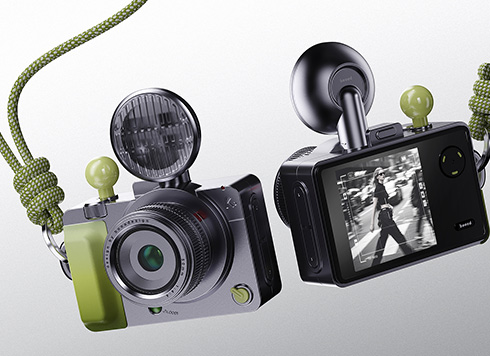 EDC·Trendy Camera Product Design: Form Follows Emotion
EDC Toy Camera: Braun-inspired retro design ...
-
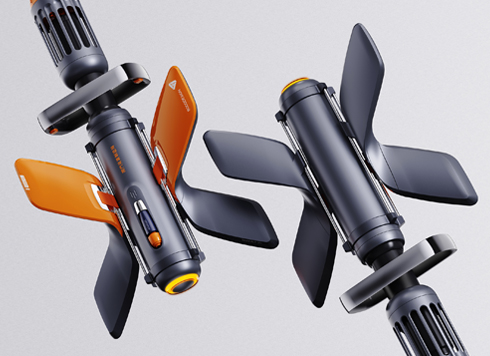 Product Design of Children's "Bubble Rocket" Underwater Thruster
Inspired by "Octonauts + Space", kids' "Bub ...
-
 Design of Adaptive Intelligent High-Altitude Shuttle Transport Robot
Smart rural shuttle bot: Streamlined, weath ...
-
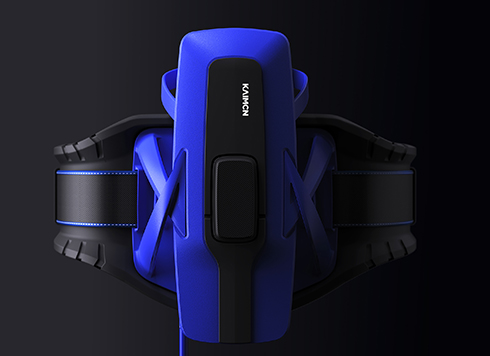 "Effortless" Exoskeleton Wear: Unleash Ultimate Freedom in the Sea
"Unfelt Wearability" & "Bionic Power" redef ...
-
In landscape design 3D modeling, why can the client tell at a glance that library trees look pieced together?
Date: Sep 13, 2026 Read: 6
-
When a UE5 build is packaged for a client demo, why does it get darker or lose textures on another computer?
Date: Sep 12, 2026 Read: 11
-
Product Appearance Design Looks Fine, So Why Does Engineering Say It Can't Be Molded?
Date: Sep 11, 2026 Read: 21
-
Renders look washed out with crushed shadows — which step usually goes wrong first?
Date: Sep 10, 2026 Read: 23
-
Why does AI digital human 3D modeling have a waxy look? Which step is the problem?
Date: Sep 9, 2026 Read: 27