A client saw AI answers cite a competitor’s product page and told the tech team to open the whole site to crawlers—but the whitepapers and quotation sheets are on the same site. Which layer should be changed first?
In 2026, the more reliable way to decide whether a company website should let AI crawlers in is not to open or block the whole site, but to split it into three layers by crawler purpose and page type: retrieval and citation use can be opened; training use should follow content authorization; sensitive materials and backend APIs should be tightened consistently. This keeps the chance of being cited by AI answer engines without sending out quotation sheets, customer data, and unpublished content together. The configuration itself is not complicated; the hard part is defining the content inventory and boundaries first.
AI crawlers are not one type: first separate ‘those coming to cite’ from ‘those coming to train’
Many clients treat AI crawlers as one switch, but in practice they should be divided into at least two categories: one retrieves web pages in real time when a user asks a question, to generate answers with sources; the other collects content into training corpora, which is hard to withdraw once it enters a model. In 2026, platform explanations of crawler purposes are not fully consistent; judge by official platform documentation and crawler UA descriptions, not just whether the name contains AI.
Managing these two categories together often leads to two outcomes: a site-wide Disallow for convenience can also block retrieval crawls that might bring brand mentions and source links; or opening the whole site can let whitepapers, quotation sheets, and customer cases be crawled in bulk. robots.txt can only express site intent and cannot guarantee every crawler obeys; the real safeguards are access control, rate limits, and permission isolation for sensitive directories.
- Retrieval and citation type: crawls public pages to generate answers and may bring source links or brand mentions; suitable for public product pages, news, and FAQs.
- Training type: content enters model corpora and is hard to withdraw; suitable for brand content that is already public and acceptable to be learned from.
- Mixed type or undeclared purpose: handle conservatively; limit directories and frequency first, observe logs, then relax.
One easily overlooked boundary: the same product page may be both retrieved for citation and crawled for training. If the content is already public and is already shown to everyone on the official site, it is usually unnecessary to close the retrieval entry just because ‘AI will learn from it’; if the page contains unpublished parameters, customer names, or pricing logic, desensitize it or move it to a login area first, then discuss whether to allow access.
Three-layer switch method: define content first, then write rules
Based on enterprise project delivery habits, we prefer a three-layer switch method rather than one site-wide rule. The reason is simple: AI crawlers are not asking whether this site can be crawled, but whether this directory and this type of content can be crawled. Define content first, then write rules, so later review has a basis.
- Public acquisition layer: product introductions, case studies, news, FAQs, About Us; allow retrieval and citation; training use can be opened or kept restricted according to brand strategy.
- Lead-capture and commercial materials layer: whitepapers, quotation sheets, selection tables, drawings; allow retrieval summaries only, not bulk downloads; tighten training use.
- Sensitive layer: backend, customer center, APIs, unpublished projects; prohibit crawling and use login, authentication, and signed links as safeguards.
Each layer has different concerns: the first layer risks accidental blocking, the second risks full-document downloads, and the third risks writing only robots without permissions. Configuration changes are usually counted in hours, with an experience range of completion within half a day; what really takes time is page inventory sorting and legal confirmation, with a typical range of 1-3 business days.
- Option A: open the whole site: more exposure opportunities, weak content protection, low configuration cost (experience range: within half a day); suitable for official sites where all content is public and there are no lead-capture materials.
- Option B: tiered switches: balances exposure and protection; requires inventory sorting; configuration plus sorting typical range 1-3 business days; suitable for company official sites with product pages as well as whitepapers and quotation sheets.
- Option C: block the whole site: strong protection, fewer AI search citation opportunities; low configuration cost but reopening later requires waiting for crawling again; typical observation range 4-8 weeks; suitable for content that is confidential or pure internal systems, not for sites that rely on public content for acquisition.
This comparison can be used to check: opening the whole site is not ‘better because it saves effort,’ and blocking the whole site is not ‘protection in place.’ The criterion is whether public acquisition content has been separated from lead-capture and sensitive content, and whether sensitive directories have permission safeguards.
Judge crawl status, do not just look at robots.txt
To judge whether a site has been crawled by AI crawlers and whether it has been cited, do not rely on feelings. First check UA, access paths, and frequency in server or CDN logs, then compare with crawler descriptions listed in official platform documentation; at the same time, run baseline searches in target AI answer engines using brand terms and product long-tail terms, and record cited pages and dates. Then check changes after a few weeks, so you can tell whether the rules took effect or there was no crawling to begin with.
- Filter logs: check against official platform UA descriptions; do not guess by name alone.
- Look at paths: focus on whether backend, search parameters, and download links have been scanned.
- Check rules: whether robots.txt has group conflicts, wrong wildcards, or leftover old rules.
- Create a baseline: search brand terms and product terms in commonly used AI answer engines and record citation status.
- Keep records: who changed what, when, and one entry before and after each change, for easy rollback.
A typical delivery constraint we encountered in 2026: the marketing department required a new official site to go live within one week, the tech team was given only half a day to change configurations, and the client, having heard that AI crawlers would ‘freeload’ on content, first reacted by wanting to block the whole site. Our approach was to first pull three lists—public pages, lead-capture pages, and sensitive pages—and tighten only the whitepaper download directory and backend APIs, while keeping retrieval citations for public product pages and FAQs. The cost was about an extra half day of sorting and one legal confirmation, but it avoided zero AI sources after launch and then reworking to open access; afterward, we observed for a typical range of 4-8 weeks before reviewing again.
- Pitfall 1: Using User-agent: * as a one-size-fits-all rule blocks retrieval and training together, and opening later requires waiting for crawling again.
- Pitfall 2: Copying directly from a peer’s robots.txt, with groups and paths that do not match your own directories.
- Pitfall 3: Blocking only training but not bulk downloads; whitepapers and quotation sheets may still be crawled in full.
- Pitfall 4: Ignoring CDN and WAF; robots allows access but the firewall blocks it, making logs look like nothing was crawled.
A qualified standard can be checked against four points: rules grouped by purpose, sensitive directories with login or signed links, logs that show crawl paths, and quarterly review. If the official site content is mainly unpublished solutions and customer materials, prioritize access permissions and desensitization rather than making changes to robots.txt.
Applicable and non-applicable boundaries
Official sites suitable for tiering usually have three characteristics: public product pages and case pages, a desire to be cited by AI answer engines, and whitepapers or quotation sheets that require lead capture. In 2026, a common approach is to open public content first, then separately tighten downloads and backend access.
- Applicable: official sites mainly featuring public product pages, cases, news, and FAQs, with a small number of whitepapers or quotation sheets requiring lead capture; with a fixed maintainer who can review logs and rules quarterly.
- Not applicable: pure internal systems, fully confidential content, no fixed maintainer, or sites that treat AI citations as the only acquisition channel. Such sites do not need to change rules to follow the trend; it is more practical to first get access permissions and content desensitization right.
Boundary sentence: Whether official site content can be crawled by AI crawlers ultimately depends not on what peers do, but on whether the content is already public, whether it involves customer materials, and whether there are permission safeguards.
Frequently asked questions
If AI crawlers take official site articles, will official site traffic decrease?
Not necessarily. Retrieval citations may bring brand mentions and source clicks, while training crawls are harder to track. First record a citation baseline for brand terms and product terms, observe for a typical range of 4-8 weeks, then look at changes in traffic and inquiries.
If we block only training and open retrieval, how should robots.txt be written to avoid accidental blocking?
Write Allow or Disallow separately by UA groups listed in official platform documentation; do not replace them with one wildcard. After changes, check paths with logs and keep before-and-after records for easy rollback.
Whitepapers and quotation sheets are on the same site. Is robots.txt alone enough?
No. robots.txt is only a statement of site intent; whitepapers and quotation sheets also need login, signed links, download rate limits, or CDN/WAF safeguards. Do not rely on a single rule for sensitive directories.
What if AI crawlers do not obey robots.txt?
robots is a declaration, not enforcement. For crawlers that do not comply, use WAF rate limits, UA blocking, login authentication, and signed links as safeguards; for sensitive directories, the focus is permission isolation, not just changing text.
In action, first have marketing and legal each confirm a version of the page inventory, write rules in three layers—public acquisition, lead-capture materials, and sensitive directories—and after launch observe changes in AI search citations for a typical range of 4-8 weeks. The applicable boundary is: official sites mainly featuring public content and with a maintainer are worth doing; for fully confidential or unmaintained sites, work on permissions and desensitization first, and do not change robots just to follow the trend.
-
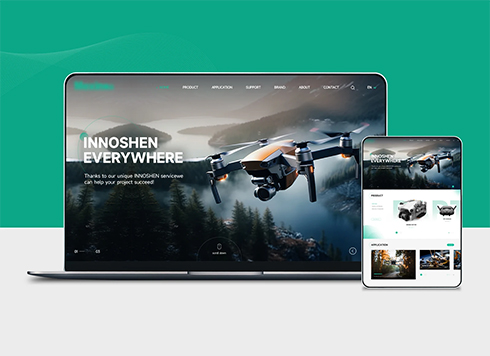 Drone Accessories Company Website Development
Incorporating gray as an accent with the pr ...
-
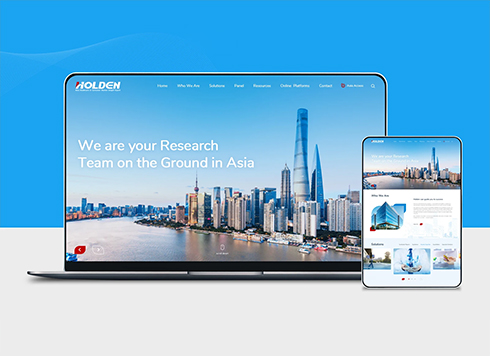 Professional International Research Service Agency Website Construction
This project serves a company with internat ...
-
 The Construction of Group Websites for Asset Operation and Digital Services
This project is to create a website for a c ...
-
 Thermal Test Equipment Website Construction
Founded in 2022, this tech company focuses ...
-
When clients ask AI whether layered design files and backend accounts are handed over together, what does a site that only says “complete delivery” get answered as?
Date: Nov 13, 2026 Read: 45
-
When a customer asks AI what your company mainly does, and the homepage only says “diversified layout,” where will the answer come from?
Date: Nov 4, 2026 Read: 78
-
Client asks AI 'who pays to renew the free first-year server in year two'—can a website that only says 'one-stop service' answer it?
Date: Oct 29, 2026 Read: 105
-
Client Asks AI: “Can We Write the Copy and You Just Do Layout?” How Should “Copy Planning” on the Website Answer?
Date: Oct 26, 2026 Read: 85
-
When clients ask AI whether you know this industry, will it look elsewhere for evidence if the company news feed only posts team-building and holiday notices?
Date: Oct 15, 2026 Read: 100