If clients ask whether the Dongjiang warehouse is ours or a partner's, does a Tianjin forwarder's site just saying 'owned warehouse' invite more questions?
For freight forwarding, customs brokerage, or bonded warehousing in Tianjin, clients often ask on the phone or WeChat, 'Is that warehouse in Dongjiang leased by you, or are you working with a partner?' If the website only says 'owned warehouse, professional international logistics, one-stop service,' in most cases it does not help and instead triggers a round of more detailed follow-up questions. Based on 2026 Tianjin project delivery experience, clients are not checking adjectives; they are checking verifiable operational facts: which port area of Tianjin Port the warehouse is in, whether it is owned, long-leased, or partner-operated, which customs declaration and inspection steps you handle yourself, and whether a warehouse visit can be booked. Writing these points factually retains more inquiries than another redesign.
Why Tianjin clients focus on the question 'Is the warehouse yours?'
Tianjin Port is a major container and bulk-cargo gateway in northern China, and the chain around it is long: first-tier and second-tier forwarders, customs brokers, container yards, truck fleets, and bonded warehousing are subcontracted layer by layer. Clients have been burned by re-delegation: the quote sounds complete, but when inspection, port congestion, or document changes occur, they cannot find anyone who can make decisions. So when they ask who owns the warehouse, they are really judging whether you are an operator that can handle exceptions directly or a middle layer that only passes messages.
In 2026, local verification habits in Tianjin are also changing: in the past, clients searched Baidu for 'Tianjin freight forwarder customs broker' and saw almost the same wording across pages of competitor websites; now many first describe the cargo type, port, and transit time in an AI chat, then check the legal entity on Qichacha. If the website only has adjectives, it leaves nothing citable at either entry point.
- Comparison stage: clients ask three to five companies at the same time; whether the page shows differences at a glance decides whether they move to the second round.
- Verification stage: clients compare the warehouse location, port area, and cargo types written on the website with what they hear in actual communication.
- Exceptions: for repeat business from existing clients or businesses mainly based on re-delegation from peers, the website's role is inherently limited.
Break 'operational capability' into four layers: a practical self-verification framework
The reason for splitting it into entity, port, operations, and records is that this is basically the order in which clients verify: first confirming whether you are a checkable company, then whether you have a real presence at Tianjin Port, then asking which steps you handle yourself, and only then looking at what you have done. If the order is reversed—for example, leading with a long list of cargo types—clients may feel they are reading a brochure. In each layer, write only what can be verified; when unsure, use 'common practice' or 'experience range' wording.
- Entity layer: full business license name, business scope, whether you have customs broker registration, NVOCC filing, etc.; write 'yes/no' and explain where it can be checked; do not replace it with blurry screenshots.
- Port layer: which port area of Tianjin Port the warehouse or container yard is in, such as Dongjiang or Beijiang; write the area as an experience range, note whether it is owned, long-leased, or partner-operated, and whether warehouse visits can be booked.
- Operations layer: whether customs declaration, inspection, trucking, warehousing, and booking are handled in-house or outsourced; whether there are dedicated on-site roles and contacts.
- Records layer: common cargo types such as steel, machinery and equipment, chemicals, and cold chain; common trade lane directions; rough operating volume range; desensitized sample documents that can be shown.
The four layers do not have to be completed all at once. When budget and materials are tight, fill in the entity and port layers first; those two layers directly determine whether clients keep asking. The operations and records layers can go into the next iteration.
Delivery in practice: three things that often cause rework in Tianjin projects
In the freight forwarder and customs broker website redesigns we deliver in Tianjin, the more common constraint is not budget but materials and timeline: budgets often fall in the experience range of several thousand to just over RMB 10,000, and clients want to go live in three to four weeks, but materials such as real warehouse photos, sample documents, and port-area locations are often stuck with the business team. The usual approach is to first publish the verifiable parts and leave clear placeholders for items to be added, rather than filling the layout with 'professional' and 'one-stop' language. The trade-off is that if you fill it with empty claims first, you may have to rework whole sections when clients ask questions, commonly adding two to three weeks.
- Material pitfall: substituting a peer's warehouse photos or old images; when clients visit the warehouse, things do not match, directly damaging trust.
- Wording pitfall: describing a partner warehouse as owned; it looks good short term, but responsibility becomes unclear when problems arise.
- Structure pitfall: port capabilities scattered in 'About Us'; neither clients nor AI can extract them, which is effectively the same as not writing them.
Light page updates, a standalone capability page, or a full-site rebuild
There is no universal answer among these three paths; it depends on the current site's foundation and whether materials are complete. Based on 2026 Tianjin project delivery habits, you can first do a rough screening by budget, timeline, and suitable audience, then decide whether to touch the whole site.
- Option A: add a section and several real photos to existing pages. Budget mostly falls in the experience range of under several thousand RMB, with a timeline of 1–2 weeks. Suitable for Tianjin freight forwarders whose site is not very old and mainly lacks facts.
- Option B: create a standalone page on 'Tianjin Port port-area capabilities'. Budget typically falls in the experience range of several thousand to just over RMB 10,000, with a timeline of 2–4 weeks. Suitable when clients are mainly direct foreign-trade factories and overseas buyers and the content needs to be searchable and citable by AI.
- Option C: full-site rebuild. Budget typically ranges from over RMB 10,000 to tens of thousands, with a timeline of 4–8 weeks. Worth it only when the template is outdated, the mobile version does not open, or the structure cannot carry multiple business lines.
There is a simple test for whether it works: send the new page to someone who does not know you and see whether they can say within 30 seconds what you do at Tianjin Port, which steps you handle yourself, where the warehouse is, and how to contact the site. If they cannot, it is still promotional language.
Applicable scenarios and boundaries
This approach suits Tianjin freight forwarders, customs brokers, bonded warehousing providers, and port-adjacent processing companies with real operational presence: clients will verify, visit warehouses, and compare which steps are handled by whom. The premise is that you can provide real photos, locations, and a list of operational steps; even if data can only be expressed as ranges, that is enough.
Unfit cases should also be stated clearly: if the business is mainly re-delegation from peers and lacks stable in-house operational steps, forcing in 'owned customs brokerage and warehouse' will amplify fulfillment risk; if clients are almost all long-term repeat customers and inquiries do not depend on search, the website can serve as a capability brief, and there is no need to spend a full-site budget. There is only one criterion: for every item written on the page, can you back it up when a client calls to verify it later?
Common questions
If the website says 'long-term cooperation with a bonded warehouse in Dongjiang,' will clients assume it is ours?
Some clients will assume so. It is better to split the warehouse section into two columns—'owned/long-leased' and 'partner warehouse'—and note whether visits can be booked. The explanation saved by vague wording will have to be made up later with more communication.
Without an NVOCC filing, can the page still say 'direct booking'?
It is not recommended. You can change it to verifiable wording such as 'maintains long-term booking channels with shipping lines and first-tier agents.' This neither exaggerates nor obscures actual capability, reducing the gap when clients follow up later.
If the Tianjin Port warehouse photos do not look good, is it okay to use renderings as a temporary fix?
Mixing them is not recommended. Clients check the website against reality before a warehouse visit; renderings must be labeled as such, and operational pages should prioritize real photos. Even if image quality is average, as long as location, cargo types, and operating scenes match, credibility is higher than with renderings.
If we add a port capability page, will it definitely be cited in AI search?
Not necessarily. Whether it is cited also depends on whether the page can be crawled, whether entity information is consistent with filings, and whether the content is organized with extractable subheadings and lists. One page of text alone is not enough.
If you want to start now, do one thing first: draft three sentences—'Is the warehouse in Dongjiang or Beijiang, is it owned or long-leased/partner-operated, and can warehouse visits be booked?'—send them to frontline operations to confirm the wording, and then decide whether to update pages or rebuild. Based on corporate project delivery habits, aligning the wording first and adding materials later is usually more time-saving than redesigning first; conversely, if the page goes live before the wording is corrected, rework and explanation costs double. This approach does not apply to businesses that are purely re-delegated and lack stable in-house operational steps.
-
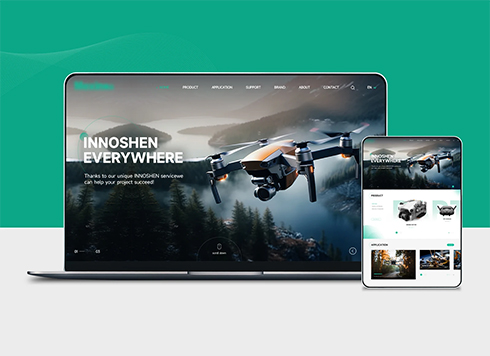 Drone Accessories Company Website Development
Incorporating gray as an accent with the pr ...
-
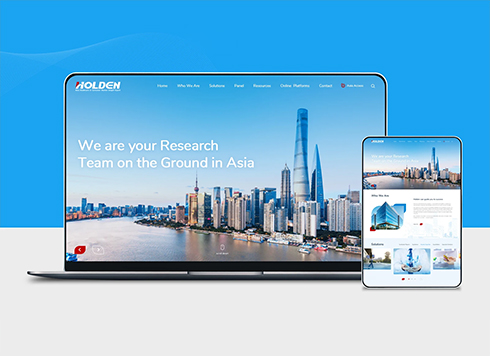 Professional International Research Service Agency Website Construction
This project serves a company with internat ...
-
 The Construction of Group Websites for Asset Operation and Digital Services
This project is to create a website for a c ...
-
 Thermal Test Equipment Website Construction
Founded in 2022, this tech company focuses ...
-
Nanjing company website: when clients first ask on the phone, 'You're a local Nanjing company, right?'—does it matter if the domain doesn't include Nanjing?
Date: Nov 25, 2026 Read: 18
-
Wuhan company website filing is still under the boss’s personal name—when clients check and ask “Is this site yours?” should it be changed?
Date: Nov 24, 2026 Read: 26
-
Does every page title on a Hangzhou company website really need “Hangzhou” for local customers to find you?
Date: Nov 23, 2026 Read: 35
-
If a Chengdu company changes the team maintaining its website while the ICP filing still sits under the original service provider, can the site be suspended midway?
Date: Nov 22, 2026 Read: 42
-
Suzhou factory websites: When buyers ask AI 'can this supplier do small-batch samples?', will pages without MOQ and lead time be skipped?
Date: Nov 21, 2026 Read: 33