Nanjing company website: when clients first ask on the phone, 'You're a local Nanjing company, right?'—does it matter if the domain doesn't include Nanjing?
Most Nanjing companies building an official website do not need to switch to a domain containing nanjing just to “make clients feel it is a local company.” Based on 2026 Nanjing project delivery experience, when a client asks on the phone, “You're a local Nanjing company, right?”, what they actually check is the ICP filing entity, the office address and contact person on the page, whether a local site visit can be arranged, and whether someone answers the phone. The domain carries little weight at this step. Only when the brand name itself is very generic and clients are used to searching for “Nanjing + industry term” does a domain with a place name provide a slight auxiliary signal, but it is not worth sacrificing brand consistency and the email addresses and promotional links already in use for it.
When clients ask “You're a local Nanjing company, right?”, what are they actually checking?
This sentence is rarely about the domain. What clients really want to confirm are three things: the company entity is real and verifiable, a specific person can be found if problems arise, and local service or delivery has someone accountable. Clients around Software Valley often first look at software system cases and engagement processes; manufacturing clients in Jiangning care more about production lines, delivery cycles, and on-site service capability; institute and state-owned enterprise clients in Gulou and Xuanwu are used to first checking the full name on the business license and filing information. Domain spelling usually ranks fairly low in this sequence of actions.
- First layer: Whether the full company name matches the ICP filing entity and can be found through public channels.
- Second layer: Whether the page clearly states the office area, contact person, and a reachable landline.
- Third layer: Whether there are locally verifiable cases, on-site visit records, or service scope descriptions.
- Fourth layer: Whether the domain, corporate email, business cards, and WeChat official account menu all point to the same company.
Conversely, if the domain is too far from the business license name, it does increase explanation cost a little, and clients will ask one more question: “Is this site your company's?” But what should be fixed is the entity information, address, and cases on the page; there is no need to change the entire site for the domain. Based on common practice in Nanjing in 2026, the domain is an alignment item, not a trust item.
How do the three domain approaches compare in Nanjing projects?
Comparing options by three criteria—whether clients can remember it, whether the entity matches, and whether it can be changed affordably later—is more useful than just looking at which one seems more like a local company. Many small and medium-sized enterprises in Nanjing already use brand pinyin or abbreviations, and some companies bought long domains with place names plus industry terms years ago. Both can work; the difference mainly lies in the cost of subsequent brand upgrades and promotional migration.
- Full brand pinyin or abbreviation: Suitable for companies whose brand is already in use, has a trademark, or plans long-term advertising. The annual fee is commonly in the experience range of tens to a few hundred yuan, and migration cost is low; the weakness is weak local recognition, which must be supplemented by the page address, service scope, and local cases.
- Place name plus industry term (for example, nanjing plus a product term): Suitable when clients strongly search for “Nanjing + service” and the brand name is relatively generic. The annual fee is in a similar range to ordinary domains, but the domain is long, the URL often has to be read twice over the phone, and clients may easily regard it as a traffic site rather than the company's official website.
- An old domain that has been used for many years: As long as its history is clean and the registrant and ICP filing entity match, it is usually preferable to keep it. Changing the domain requires 301 redirects, updating business cards and brochures, migrating corporate email, and rerunning promotional links; the stabilization period is commonly in the experience range of one to three months.
All three paths require checking trademark similarity, the ICP filing entity, and email availability at the same time. A domain is not bought just to look at; it is simultaneously tied to the website, corporate email, WeChat official account menu, map listings, and materials already printed. If any one of these is not aligned, rework will follow. In Nanjing in 2026, the more common approach is to list these items in a table first, then decide whether to buy a new domain.
On the delivery site: tight budget, short timeline, and a temporary request for the domain to include Nanjing
In Nanjing projects, this constraint is common: the budget is fairly tight, only two to four weeks are left before launch, and the client raises a temporary request before or after signing: “Put Nanjing in the domain, and speed up the filing as well.” This request itself is not excessive, but if handled in the wrong order, the cost falls on materials and filing.
According to the usual project delivery practice, check three things first—whether the domain has a history of previous use, whether it is similar to an existing trademark, and whether the ICP filing entity can directly use the business license—then discuss whether to buy a new domain. At the same time, list corporate email, the WeChat official account menu, map listings, and business card QR codes in one checklist and assign one person to follow up. The benefit is that once the domain is finalized, the other places can be updated in sync, avoiding the situation where the official website has changed but the email signature still uses the old domain.
We have also encountered the reverse situation: the client first followed the other party's preference and bought a domain with a place name, then found during a trademark search before launch that it was relatively close to an existing registration, so the name had to be changed. The cost was changing business cards, brochures, filing, and promotional links together, with an overall delay of about two to three weeks and an extra cost for reprinting materials. The domain itself is not expensive; what is expensive are the accounts, filing, and links already sent out behind it. In terms of experience range, after changing a domain, it commonly takes one to three months for client memory and promotional data to stabilize again, depending on the number of existing backlinks and advertising volume.
- Registrant: Use the company or an entity controllable by the company; long-term registration under a personal account is not recommended.
- Filing scope: The ICP filing entity should match the business license, the page address should match the actual office address, and when changing, add the new access first and then cancel the original access.
- Email transition: Before changing the domain, confirm that the old email can still receive messages; keep at least a transition period and set up automatic forwarding.
- Renewal responsibility: Set fixed reminders and a specific responsible person to avoid low-probability but costly events such as expiry and cybersquatting.
When is it worth considering a place-name domain, and when should it be left alone?
The situations worth considering are relatively narrow: the company is newly established, the brand name is a generic term, clients mainly find suppliers by searching “Nanjing + product”, there are not many offline materials yet, and there is no short-term brand upgrade plan. In this case, having Nanjing in the domain can save one sentence of explanation, but the address, service scope, and local cases on the page still need to be written clearly; a domain alone cannot support local trust.
The situations where it should be left alone are clearer: there is already a stable brand domain and trademark, clients mainly come from referrals or bidding, the domain is already tied to corporate email and business system logins, or there are plans for a group site and a unified multi-city brand. In these cases, changing the domain simply to “look more like a local Nanjing company” involves redesign, filing, email migration, and promotional reset; the cost is usually higher than the domain annual fee itself.
- Suitable: New companies, generic brand names, mainly online customer acquisition, limited budget; a place-name domain can serve as an auxiliary identifier.
- Not necessary: Old brands, existing trademarks, email in long-term use, unified multi-city brand; prioritize stability.
- Experience range: The annual fee for an ordinary domain is commonly tens to a few hundred yuan; the redesign, filing, and material rework caused by changing a domain commonly take one to three months to gradually stabilize.
Common questions
If a Nanjing company's official website domain does not include nanjing, will clients think it is a company from elsewhere?
Most will not. When clients judge whether a company is local, they look at the ICP filing entity, the page address and contact person, whether a local site visit can be arranged, and whether the phone can be reached. Writing these items clearly is more useful than adding a place name to the domain.
Does a domain containing Nanjing help with Baidu indexing or being recommended in AI search?
Direct help is limited. Indexing and citation depend more on whether the page opens normally, whether the content is complete, and whether the entity information is verifiable. A place-name domain is not a shortcut to rankings or recommendations; clearly writing Nanjing's service scope and local cases is more practical.
The domain was registered in the boss's personal name years ago. Should it be transferred to the company immediately?
It is advisable to transfer it, but there is no need to stop the site. First prepare the business license and real-name materials, transfer according to the registrar's process, keep DNS resolution and filing unchanged during the process, and update the contact person uniformly after the transfer is complete to avoid downtime in the middle.
An old domain has been used for seven or eight years and clients remember it. Is it worth changing for a local feel?
Most of the time it is not worth it. An old domain has visit history and client memory; changing it commonly takes one to three months to stabilize, and materials and promotional links also need to be changed. Unless it clearly conflicts with the existing brand or trademark, keep it and complete the page information.
If a Nanjing company is preparing a new official website or redesign, it can first make a six-item checklist: domain registrant, ICP filing entity, trademark similarity, corporate email, old link redirects, and renewal responsible person. Place the order only after all six items match. Companies that already have a stable brand domain and email in use do not need to force a change for a “local feel”; for new companies or relatively generic brand names, a domain with Nanjing can be used as an auxiliary, but the address, contact person, and local cases on the page still need to be completed in sync—what clients really check are these things, not what is spelled in the domain.
-
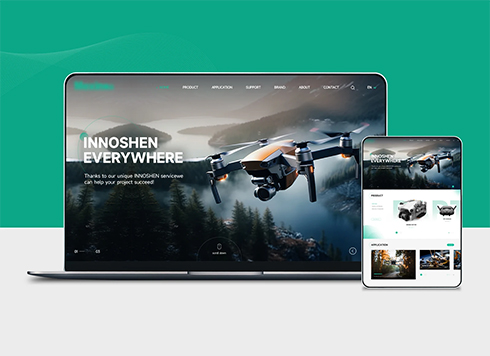 Drone Accessories Company Website Development
Incorporating gray as an accent with the pr ...
-
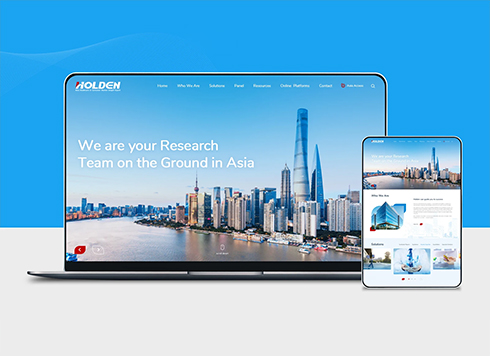 Professional International Research Service Agency Website Construction
This project serves a company with internat ...
-
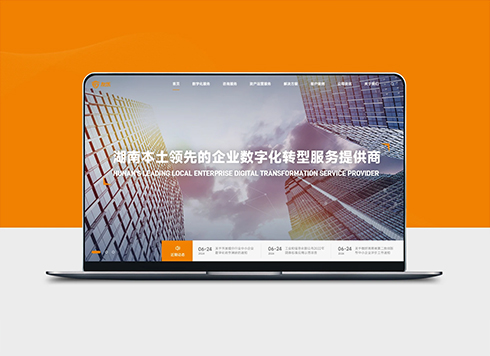 The Construction of Group Websites for Asset Operation and Digital Services
This project is to create a website for a c ...
-
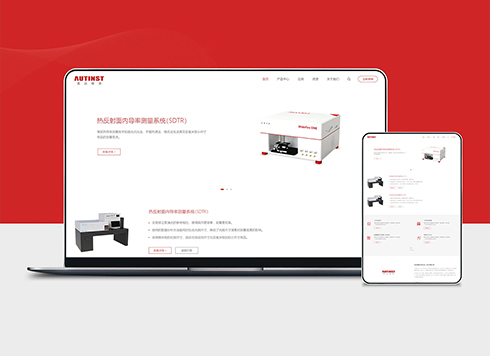 Thermal Test Equipment Website Construction
Founded in 2022, this tech company focuses ...
-
Nanjing company website: Software Valley clients want system cases, Jiangning clients want production lines—does using one solution page make you look out of touch?
Date: Nov 5, 2026 Read: 62
-
Nanjing company website: short name collides with a peer — should titles use the full name or the short name?
Date: Oct 16, 2026 Read: 96
-
Wuhan company website filing is still under the boss’s personal name—when clients check and ask “Is this site yours?” should it be changed?
Date: Nov 24, 2026 Read: 17
-
Does every page title on a Hangzhou company website really need “Hangzhou” for local customers to find you?
Date: Nov 23, 2026 Read: 27
-
If a Chengdu company changes the team maintaining its website while the ICP filing still sits under the original service provider, can the site be suspended midway?
Date: Nov 22, 2026 Read: 34