Does every page title on a Hangzhou company website really need “Hangzhou” for local customers to find you?
Most Hangzhou company websites do not need “Hangzhou” in every page title. Based on 2026 Hangzhou project delivery experience, the places where geographic terms actually work are concentrated on the homepage, About Us, Contact Us, and service scope pages; forcing geographic terms into product detail, news, and case-study inner pages neither improves local customers’ judgment nor keeps titles from reading like keyword stuffing. What determines whether customers can find you and whether they leave their details after clicking is whether the page clearly explains three things: what you do in Hangzhou, where you serve, and who to contact.
When Hangzhou customers search for a company, at which layer do geographic terms actually work?
Hangzhou’s industry structure shapes layered search habits: software, SaaS, and e-commerce service customers in areas such as Binjiang and Yuhang more often search “category term + service provider”; manufacturing and supporting enterprises in Xiaoshan, Qiantang, and Linping often search “Hangzhou + process or product” when purchasing; brand owners and export customers search directly by full company name or brand name. Geographic terms are not a universal suffix; they play a clear role only at the step when customers judge whether you are local, whether you can visit onsite, and whether they can reach a person.
A common situation in projects is that the marketing department treats “Hangzhou” as a talisman and requires a uniform suffix on all site titles. As a result, product page titles become long, awkward strings such as “model + company name + Hangzhou,” and the model and process terms in front are squeezed out. This kind of change usually brings no search benefit and adds rework later.
- Geographic terms are useful when: customers need to visit the factory or meet in person, require local response speed, procurement is doing initial supplier screening, or tender or vendor-registration materials have requirements for a local entity.
- Geographic terms are not useful when: products are standardized and sold purely online, customers mainly come from other provinces or overseas, or the page itself is parameter- and manual-type content.
- Rule of thumb: first ask “Will customers hesitate because of distance?” If yes, geographic terms are worth writing clearly; if no, leave the space for product and industry terms.
Three-layer geographic keyword layout: entity layer, service layer, content layer
The reason to divide by three layers is that these page types carry different responsibilities: the entity layer answers “who you are and where you are,” the service layer answers “where you cover and whether you visit onsite,” and the content layer answers “is this what I need.” If they are mixed together, every page may say Hangzhou while no page clearly states the boundaries, and customers still have to call to ask.
- Entity layer (homepage, About Us, Contact Us): Use the full name on the business license plus Hangzhou; keep the address, phone number, contact person, and map listing consistent and verifiable.
- Service layer (service item pages, solution pages, regional service pages): State the service radius and response method clearly—for example, onsite visits within Hangzhou city proper and by appointment in surrounding districts and counties. This is more credible than a vague “covering all of Zhejiang” and reduces invalid inquiries.
- Content layer (product details, cases, news): Add geographic terms only when customers actually search for that category by location; in most cases keep titles natural and give the space to model, process, and industry terms.
Two points to note during execution: do not concentrate geographic terms in the same paragraph and repeat them over and over on one page; keep total title length within the range that can be fully displayed—the longer the suffix, the more easily the keywords in front are truncated.
What counts as acceptable: four verifiable acceptance criteria
There is no official score for this kind of adjustment, but you can self-check against four criteria. During delivery, these four are also often used to align page by page with the client, avoiding different interpretations and arguments in the third round over “whether to add it at all.”
- Title reads smoothly: Read the title aloud; if two “Hangzhou” appear or there is obvious repetition, it fails.
- Entity is verifiable: The full company name in the site footer and About page matches the business license; the address matches the map listing; someone answers the front-desk phone.
- Boundaries are clear: Service scope, onsite conditions, and response hours are stated specifically, rather than with phrases like “based in Hangzhou, serving the whole country” that cannot be verified.
- Structure is not repetitive: Geographic terms mainly fall on the entity layer and service layer; the content layer uses them as needed, without forcing a uniform sitewide suffix.
On delivery: check three things before changing titles
Among Hangzhou projects handled by Xiyue Company, a typical case had a budget of around RMB 20,000, a four-week timeline, and client materials limited to scans of old brochures and phone photos of products. The marketing department insisted on adding “Hangzhou” to all site titles, then two weeks after launch asked to change them back—equal to an extra round of rewriting; after resubmission for indexing, recovery usually takes another two to four weeks.
Therefore, under 2026 delivery practice, before changing titles we check three things: whether the full name on the business license matches the actual operating address; the proportion of local customers and whether onsite service is needed; and which existing pages already have stable indexing. Changing titles before these three are aligned clearly raises the probability of rework—especially for companies with many product lines, where one change often affects dozens of pages.
How to choose between the two approaches: sitewide uniform suffix vs layered geographic terms
Neither approach is absolutely better; the difference lies mainly in upfront investment, suitable audience, and ongoing maintenance cost. You can compare your company’s situation using the dimensions below.
- Sitewide uniform geographic suffix: Fast to change and easy for the client to understand; suitable for display-oriented sites where almost all customers are in Hangzhou and nearby and the site has fewer than ten pages. The cost is longer titles, and keywords on content pages are easily squeezed out.
- Layered geographic terms: Requires sorting out page responsibilities first, adding one to two days of upfront planning; suitable for companies with many product lines and a complex customer mix. The cost is higher communication effort, requiring page-by-page confirmation with the client.
- Cost and timeline reference (experience range): An adjustment covering only titles and structure review usually costs a few thousand RMB and can be completed within one week; rebuilding together with service-scope pages and regional pages commonly falls between RMB 10,000 and 30,000, with a timeline of three to six weeks.
A few common pitfalls
These problems often surface only at the acceptance stage, and fixing them is usually more time-consuming than expected. It is better to put them into the checklist at the proposal stage.
- Writing “covering all of Zhejiang” when the company is based in Hangzhou; when customers actually request an onsite visit, they find you cannot serve them, which damages trust.
- Changing the footer address without syncing the map listing and business registration information, so customers navigate to another door.
- Putting the same suffix on every page title, making titles highly similar across the site and hard to distinguish.
- When the company has entities in both Hangzhou and elsewhere, listing the two addresses in parallel so customers cannot tell which one they are signing with.
Suitable scenarios and boundaries
Situations suitable for geographic keyword review: local customers account for more than half, the business requires onsite visits or meetings, procurement needs initial supplier screening, or tenders require a verifiable local entity. In these cases, clearly stating entity information, service radius, and contact person brings relatively direct returns.
Cases where it is unnecessary are equally clear: 90% of customers are in other provinces or overseas, products are standardized and transacted directly online, or the whole site is a minimal display site with only one or two pages. For such sites, spending budget on product parameters, delivery-time explanations, and multilingual adaptation usually brings higher returns.
- Recommended: Mostly local customers, factory visits or meetings are involved, service radius needs explanation.
- Can be postponed: Sites that have just launched and have not yet developed an inquiry structure; observe customer sources first.
- Not recommended: Businesses that are mainly export-oriented, have very few pages, and whose customers make decisions and place orders entirely online.
FAQ
If the homepage title says “Hangzhou” but inner pages do not, will that look inconsistent?
No. The homepage handles entity identification, while inner pages handle content matching. Each doing its own job is actually clearer, as long as the full company name, address, and phone number are consistent on key pages.
Customers search “Hangzhou + product name” but cannot find us. Is that because the title lacks Hangzhou?
Not necessarily. More common reasons are that the page is not indexed or the body text lacks product and process descriptions. Check indexing and page content first, then decide whether to adjust titles.
The company is in Xiaoshan, but most customers are in Binjiang. Which district should the title use?
The title can simply say Hangzhou; put district-level information on the Contact page and service-scope page, and explain the onsite route and response hours. That is more useful than stuffing a district name into the title.
If we change titles after launch, will indexed pages drop?
Small adjustments generally have limited impact, but batch changes can cause short-term fluctuations. Submit changes in batches and observe for two to four weeks; do not make concentrated changes during a promotion period.
If you are still wondering whether to add “Hangzhou” to every site title, start with one small exercise: take the homepage, service page, and contact page, and answer page by page: where are you, where do you serve, and who should customers contact. Once these three sentences read smoothly, geographic terms will naturally fall where they belong; if they do not read smoothly, improve the content before discussing titles—that gives a better return on investment (experience range reference: review-type adjustments cost a few thousand RMB and take within one week; structure rebuilds including content cost RMB 10,000–30,000 and take three to six weeks).
-
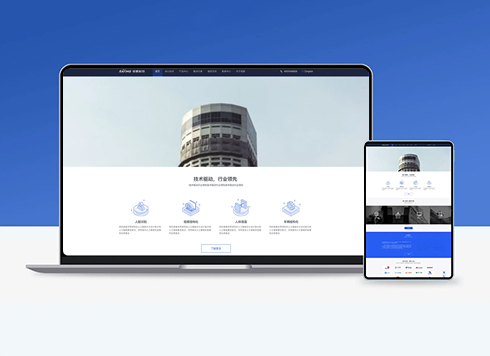 Website Development for Smart Hardware Device Companies
Founded in 2017 with a capital of 16.66 mil ...
-
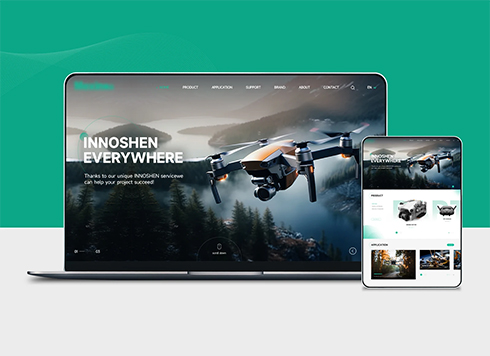 Drone Accessories Company Website Development
Incorporating gray as an accent with the pr ...
-
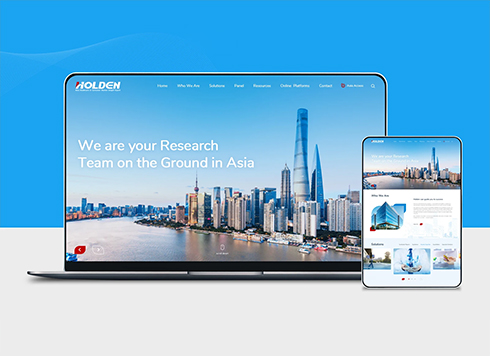 Professional International Research Service Agency Website Construction
This project serves a company with internat ...
-
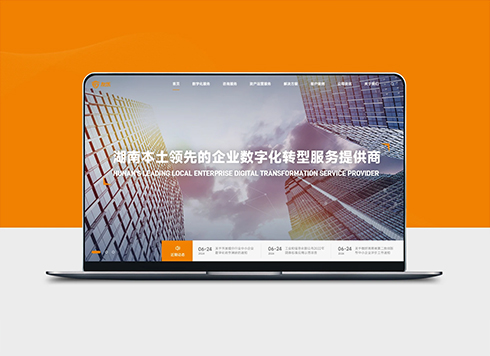 The Construction of Group Websites for Asset Operation and Digital Services
This project is to create a website for a c ...
-
Will visitors from Douyin actually scroll past three large carousel images above the fold on a Hangzhou company website?
Date: Sep 24, 2026 Read: 193
-
If a local studio and a remote platform both quote around RMB 20,000 in year one for a Hangzhou company website, which is less trouble when someone takes over in year two?
Date: Nov 3, 2026 Read: 69
-
Hangzhou Website Development Guide: How to Select and Build Your Corporate Website
Date: Jul 30, 2026 Read: 277
-
If a Chengdu company changes the team maintaining its website while the ICP filing still sits under the original service provider, can the site be suspended midway?
Date: Nov 22, 2026 Read: 13
-
Suzhou factory websites: When buyers ask AI 'can this supplier do small-batch samples?', will pages without MOQ and lead time be skipped?
Date: Nov 21, 2026 Read: 17