A client says the .com for our Chinese company name was taken long ago—is launching the official site on .cn a mistake from the start?
Conclusion first: When the .com for the company's Chinese name is taken, running the official site on .cn is not a wrong choice, but it depends on customer source and brand stage: if domestic government and enterprise clients are the main source, the trademark is in hand, and ICP filing can be completed, .cn can run as the primary site; if overseas inquiries account for a high share or the brand is going global, .cn as the primary site will increase explanation and email trust costs. A safer approach is to switch to a registrable .com brand term, or use .cn first and plan the migration. In common 2026 project delivery practice, registering both .com and .cn is usually not wasted money, provided that only one primary site is set up, the other suffixes 301 redirect, and the registrant and renewal email are under the company name. The suffix is not a ranking switch; do not treat it as a way to solve indexing or speed.
What a domain suffix does and does not affect
A domain suffix is the last part of a web address, managed by a registry and renewed annually; it is not the same as where the server is located. It does not directly determine opening speed, nor is it a search ranking switch; the same content on a different suffix will not automatically become faster or slower. For corporate websites in 2026, what the suffix really affects is visitors' recognition of the brand, whether the corporate email domain is consistent, the document checks during domestic access and ICP filing, and the migration cost after the primary site changes suffix.
To judge whether a suffix is worth using as the primary site, first look at customer source and brand term. If overseas customers account for a high share, the general recognition of .com saves explanation cost; if domestic government and enterprise clients are the main source, .cn has no weak local recognition, but overseas customers may ask one more question. Only when the company's Chinese name is very short and easy to cybersquat is it worth taking multiple suffixes together; if the company name is long and has no brand premium, registering one usable primary site first is more practical.
- Does not affect: page speed, server location, or content quality itself.
- Does affect: whether business card and email suffixes are consistent, the negotiation cost after the brand is cybersquatted, and the rework volume of 301 redirects and backlink rewrites when changing the primary site.
- Common pitfall: adding hyphens or forcing pinyin abbreviations just to get a .com; visitors cannot remember it, and emails are easily treated as an unfamiliar domain.
If the .com for the company's Chinese name is taken, can .cn be the primary site?
Yes, but with conditions. The prerequisites for .cn as the primary site usually include: the registrant is the company entity, ICP filing can be completed according to the hosting provider's requirements, the brand term matches the trademark class, and the main visitors are in China. If these conditions are met, .cn will not fail to open or be excluded from indexing because of the suffix itself; its problems mostly come from explanation cost—overseas customers seeing .cn may first confirm whether the company is a local business, and the email suffix must be unified accordingly.
If .com is taken and the quote is clearly over budget, do not rush to force a hyphenated version. A more common approach is to switch to a registrable .com brand term, or use .cn as the primary site first and register .com.cn as a defensive registration, then evaluate whether to acquire the .com after the brand stabilizes. Based on common 2026 project experience, the annual fee for an ordinary .cn and .com.cn is commonly tens to just over one hundred RMB per suffix (experience range; refer to the registrar's live page for specifics). Short-character .com domains may carry a premium or go through aftermarket transactions, with large price differences. There is one boundary here: if overseas inquiries already account for more than domestic ones, using .cn as the primary site will add one sentence of explanation to every business card and every outreach email; in that case, it is better to put the primary site on a registrable .com and let .cn only redirect.
When is registering both .com and .cn not wasted money?
The value of registering both is not having one more web address, but reducing the cost of brand cybersquatting and later negotiation. When the brand name is short, has a trademark, is planned for long-term operation, and there are customers both at home and abroad, taking both .com and .cn together commonly costs tens to just over one hundred RMB per suffix per year (experience range), which is not a major part of the overall official website budget. Conversely, for short-term campaign pages, internal systems, or projects that may change brands within six months, laying out a row of suffixes only adds renewal management burden.
- Suitable for registering both: short brand term, trademark in hand, long-term operation, and both overseas and domestic customers.
- No need to register both: short-term campaign pages, extremely tight budget, very long company name with no brand recognition, or internal display only.
- Counterexample: building one site on .com and another on .cn, with unsynchronized content, split analytics and indexing, and eventually having to merge them.
One often overlooked action is checking the registrant and renewal email. No matter how many suffixes there are, if renewal reminders go to a departed colleague's personal email, the domain will still lapse when it expires. At delivery, changing the registrant to the company entity and the renewal email to a company-controlled mailbox prevents more accidents than registering two extra suffixes.
On delivery: how one domain checklist keeps rework out before work starts
In a small official website project within a common range in late 2025, with a budget of RMB 10,000 to 20,000 and a cycle of three to four weeks, the client urged the domain before materials were ready, and sales forwarded a line: register a .cn for now, and deal with .com later. The constraints were that the client had no trademark search, overseas inquiries were just starting, and the marketing department was waiting to print business cards. The approach was to pull a domain checklist before work started: primary brand term, trademark class, registrant, renewal email, primary site suffix, 301 plan for other suffixes, and email domain, with the client confirming each item. The result was limiting 'use .cn first' to a trial run of the primary site, while also checking quotes for registrable .com brand variants; the client chose .cn as the primary site and .com.cn for redirects, with business cards and email signatures uniformly using .cn. The cost was half a day of extra checking upfront, but it avoided rework after launch—two sets of analytics not matching, then one or two more days to add 301s and reconcile reports. In this type of project, a domain checklist is worth more than buying one more suffix.
Comparing .com and .cn side by side: what is the difference?
Comparing suffixes within business scenarios is more useful than just looking at which one is better. The comparison below is based on common project experience; prices and cycles are experience ranges, and specifics are subject to the registrar and hosting provider pages.
- Recognition and memory: .com is internationally common, with low explanation cost for overseas customers; .cn is common in China, and overseas customers may ask one more question.
- Registration and renewal: commonly tens to just over one hundred RMB per suffix per year (experience range); short-character .com domains may carry a premium or go through the aftermarket, with large price differences.
- Access and ICP filing: servers in mainland China usually require ICP filing, and the suffix must meet the hosting provider's requirements; hosting overseas does not involve mainland ICP filing, but access speed and compliance must be assessed separately.
- Brand protection: whichever class the trademark is in, prioritize securing the corresponding suffix; registering both reduces the probability of cybersquatting, but it does not mean the trademark is automatically protected.
- Migration cost: if the primary site changes suffix after launch, 301s, backlinks, business cards, and email signatures all have to change; the rework is usually greater than registering one more suffix at the start.
If you can remember only one thing: treat the primary site suffix as a brand asset, treat the other suffix as a defensive action, and do not operate both as primary sites.
Applicable and non-applicable boundaries
Situations suitable for .cn as the primary site or for registering both: the brand name is short, the trademark has been obtained or is being applied for, the plan is for three years or more, domestic government and enterprise clients are the main source, and ICP filing can be completed according to the hosting provider's checklist. Situations suitable for registering only one: the official website is only a display page, the budget must prioritize content and design, the company name is long and has no brand recognition, or the brand or entity may change within six months. The boundary is clear: if overseas inquiries account for a high share and the brand is going global, .cn as the primary site is not unusable, but the explanation cost and migration path must be calculated first; if it is only a short-term campaign page, registering one primary domain first and managing the renewal email well is more practical than laying out a row of suffixes.
Another boundary is ICP filing and servers. The domain suffix itself does not solve access speed, nor does it replace ICP filing; if the server is in mainland China, filing materials must be checked against the hosting provider's checklist; if it is overseas, the mainland filing step is omitted, but overseas access speed and compliance requirements must be evaluated separately. Do not treat changing the suffix as a way to solve indexing or speed.
Common questions
If the official site uses .cn as the primary site, will Baidu indexing suffer?
It will not be treated differently because of the suffix itself; indexing depends more on content, structure, and whether crawling is smooth. However, a .cn primary site must ensure stable ICP filing and DNS resolution, and do not run one set of content on .cn and another on .com.
If the .com for the company's Chinese name is registered, can we get it back?
First check whether the other party is a malicious cybersquatter and whether it conflicts with your trademark; this can be checked under domain dispute resolution mechanisms. In most cases, a more practical approach is to adjust the brand term, or use .cn as the primary site first while synchronizing the trademark.
If we register both suffixes, roughly how much does it cost per year?
Commonly tens to just over one hundred RMB per suffix per year (experience range). Short-character or popular .com domains may carry a premium or go through the aftermarket; specifics are subject to the registrar's live page. Renewal reminders should be bound to a company mailbox.
If both .com and .cn resolve to the same site, is that duplicate content?
It is not recommended to resolve both directly to the same set of pages; choose one primary site and 301 redirect the rest to it, so analytics and indexing do not split.
With many overseas customers, is registering only .com enough?
When overseas customers are the main source, .com is usually enough, and .cn can be defensive; if there are also domestic government and enterprise clients and ICP filing needs, then add .cn and use it only for redirects.
In action, first list the brand terms and trademark classes, check the availability and quotes for .com, .cn, and .com.cn, decide on one primary site, 301 redirect the rest, and put the registrant and renewal email under the company name. If the budget is tight or the project is short-term, registering only the primary domain can also work; but changing the suffix after the primary site launches usually makes rework uneconomical. For ICP filing and access requirements, check against the hosting provider and official documentation.
-
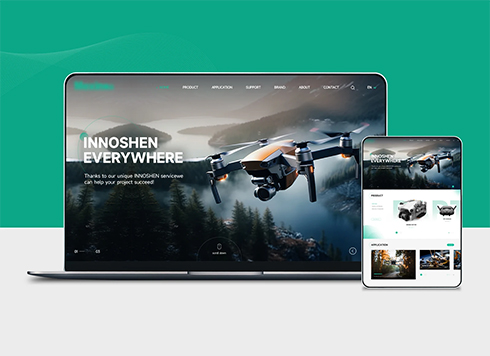 Drone Accessories Company Website Development
Incorporating gray as an accent with the pr ...
-
 Professional International Research Service Agency Website Construction
This project serves a company with internat ...
-
 The Construction of Group Websites for Asset Operation and Digital Services
This project is to create a website for a c ...
-
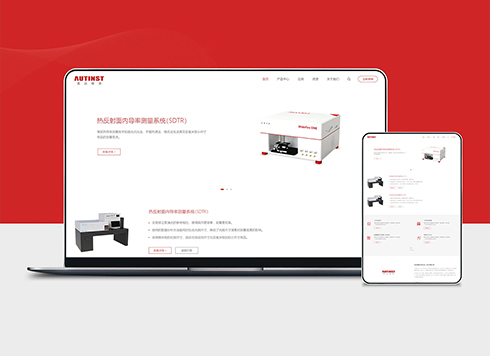 Thermal Test Equipment Website Construction
Founded in 2022, this tech company focuses ...
-
The final payment is not settled and the client is pressing for source code and backend account, while the contract only says 'one website'—should we hand them over?
Date: Nov 22, 2026 Read: 12
-
The website has been live for almost six months, but searching the full company name only brings up a job board—the robots.txt still has Disallow: / from testing. Is that what is blocking it?
Date: Nov 21, 2026 Read: 20
-
Why do Word-pasted articles break font sizes and tables in the website CMS—and can a new editor fix it?
Date: Nov 20, 2026 Read: 26
-
After a site redesign, the footer sitemap is full of old broken links. Should we delete the whole page—and will that remove indexed pages too?
Date: Nov 19, 2026 Read: 31
-
Client says the 404 page was redesigned three times to match brand colors, yet more empty links appeared in search—is the problem really the visuals?
Date: Nov 18, 2026 Read: 30