If the official spec table is just an image, can AI compare several models side by side when a customer asks?
When a customer asks AI, “Can these specs be compared side by side?”, if the official site turns the spec table into a single image, or crams several model numbers into merged cells, answer engines often cannot make the comparison—they extract text nodes on the page, not the visual effect of the design file. Based on 2026 website building and delivery experience, four prerequisites make specs consistently citable: identifiable headers; units in the same cell as the value or immediately adjacent; one-to-one mapping between model numbers and specs; and key measurement basis explained in standalone sentences. If one of the four is missing, answers tend to fall back to generic ranges or competitors' pages.
Why “clear to humans” does not equal “accurate for AI”
AI answer engines usually take two paths when processing official-site specs: one is extracting text and table structure from HTML; the other is OCR on images. The two paths differ greatly in fault tolerance. Text extraction can capture the relationship between headers and cells and know that “12” belongs to the “thickness” column; OCR only gets characters at pixel positions, and its misread rate rises noticeably with row spans, superscripts, minus signs, and decimal points. So the issue is not whether the layout looks good, but whether the same data has a second readable representation on the page.
More practically: when specs exist only in an image and the page body has no independently valid sentence describing the specs, answer engines will not guess for the company. They either fall back to generic answers such as “Please contact the manufacturer for specific specs” or cite a competitor's page that already states them clearly. Customers see “AI says you did not write it,” while the company sees “we clearly printed it on the image”—this gap is still common in 2026 project delivery.
- Table sliced directly into an image: there is no corresponding text in the body; structured extraction can hardly get anything, leaving only the image file name.
- Merged cells across models: after merging, cell ownership is lost, and values easily bleed into the neighboring model.
- Units written only in a heading outside the table: when values are extracted alone, millimeters are often answered as centimeters.
- Specs hidden in pop-ups, tabs, or accordions: content not rendered by default is often unavailable to crawlers.
For a spec table to be citable, it must first pass four checks: headers, units, model numbers, and measurement basis
This checking order is arranged by severity of information loss; the earlier an item is lost, the harder it is to recover: losing headers distorts the whole table; losing units distorts values; losing model numbers distorts ownership; losing measurement basis distorts credibility. It is not a layout standard but a way to leave anchors for extraction.
- Headers: each header cell should clearly state the dimension name (thickness, material, load capacity), not “Parameter 1” or “Parameter 2.” Headers and data cells should be in the same table; do not split them into two tables stacked vertically.
- Units: if the unit is consistent within a column, put it in parentheses in the header; if units are mixed within a column (for example, millimeters and inches together), every cell must be labeled. Do not make readers convert by themselves.
- Model numbers: fix the first column as model number, one model per row, without merged cells; keep the model number format consistent with product page titles so a customer asking about model A does not get model B.
- Measurement basis: below the table, use a complete paragraph to explain the measurement method, tolerance range, applicable batch, or version. This paragraph is a backup excerpt location for answer engines and is relatively easy to extract.
A simple way to judge whether it is good enough: copy the entire page table as plain text and paste it into Notepad, then see whether things still line up. If values and model numbers remain paired and units have not shifted in plain text, the extraction side will most likely line them up too; if the paste is out of order or only a string of numbers remains, the structure is not solid.
Image tables, merged-cell tables, and standard tables: where does extractability differ?
These three are not aesthetic choices but extractability choices. In experience, they can be divided by “number of specs × number of models”: with two or three spec rows and only one model, an image table causes limited loss; when specs reach eight or more and models exceed five, the loss from an image table multiplies. Below is a comparison of input and cost within typical ranges; these are experience ranges, not precise quotes.
- Image table: front-end launch is faster, usually completed within half a day (typical range); extractability is very low. If customers ask AI about specs after launch, a common rework cost is another 1 to 2 working days to add a table and body text on measurement basis (experience range).
- Merged-cell table: about 0.5 to 1 person-day on the front end (experience range); it looks more compact, but extraction easily mixes rows, so it only suits scenarios with few models and few specs; before launch, be sure to do a plain-text paste self-check.
- Standard HTML table: the front end commonly takes 0.5 to 1 more person-day than slicing an image (experience range); extractability is relatively more stable, suitable for B2B selection, bidding, and product lines with many models.
There is another often overlooked approach: double-write with a table plus summary sentences in the body. The table handles completeness, while two or three sentences in the body clarify the key differences, for example, “Model A is 12 mm thick and used outdoors; Model B is 8 mm thick and used for indoor partitions.” This way, even if the table is not fully extracted, that body paragraph can still be excerpted on its own.
Delivery scene: the round of rework after an image-sliced launch
A common situation in projects is this: the client provides a printed product brochure PDF as source material, the designer restores the layout according to the brochure, and the front end, pressed for schedule, directly exports the spec area as an image and puts it on the page; at acceptance it looks lossless and the client approves it. The constraints here are very specific—only three days remain, the only source material is the brochure image, and there is no ready text draft of the specs. According to Xiyue Company's delivery habit, the approach is to have the front end do a plain-text paste self-check of the spec area before slicing the image, then change the table to a standard structure and add a paragraph explaining the measurement basis. The result is usually half a day to one day of extra front-end work (typical range), but it avoids rework when customers ask AI about specs after launch; if this step is skipped, a common cost is one or two working days of rework (experience range), plus resubmitting for inclusion and waiting for a new round of index updates. One or two months after launch, customers may report that “when asked about specs in AI, it still answers with old model data”; going back to add tables and body text on measurement basis usually costs one or two working days of rework (experience range).
Another common sticking point is spec versions: an old model is discontinued but its page remains, while the new table is written on a new page. When the values or measurement basis differ between the two places, answer engines will not decide for the company; they mostly pick the more complete statement with conditions to cite.
Applicable scenarios and boundaries
Spec structuring is not something every website should do; it creates value only under the premise that “customers will ask AI about specs.” The judgment can come down to two criteria: whether customers make side-by-side comparisons, and whether specs enter the screening process before a quote.
- Worth doing: more than five models and more than eight specs; B2B selection or bidding scenarios; discontinued models still need reference specs retained with status noted.
- No need to force it: products with only two or three specs and mainly style and appearance; pure brand display pages where customers will not ask AI about values; internal system pages that are not open to the public internet anyway.
A boundary sentence to remember: spec structuring serves “being comparable,” not “looking professional”; when the comparison premise is not met, the extra hours basically cannot return corresponding value.
FAQ
If a spec table is in an image, can adding alt text save it?
Alt text can carry only one summary sentence and cannot hold the row-column relationships of an entire table. It usually saves only title-level information; values and model-number ownership still do not line up.
Should each model have its own page?
When there are many models and large differences, separate pages are better; when the differences are only one or two items, splitting pages dilutes content, and one page with one table is actually better for side-by-side alignment.
Should units be written in the header or in every cell?
If the unit is consistent within a column, writing it in the header is enough; if units such as millimeters and inches are mixed within a column, every cell must be labeled, and readers must not be left to convert.
After specs are revised, will old data still be cited by AI?
A common situation is that old snippets remain for a while. You need to update the page in sync and keep a change note; simply deleting the page often does not suppress existing citations.
If your product line has many models and mixed specs, you can first pick one main model as a pilot: change that image table into a standard table, add a paragraph explaining the measurement basis, and then observe changes in AI answers for two or three weeks. The applicable boundary should also be clear: for categories with only two or three spec rows where customers mainly look at images rather than numbers, there is no need to add extra budget for this; first confirm that customers really will ask AI about specs, then decide how many hours to invest.
-
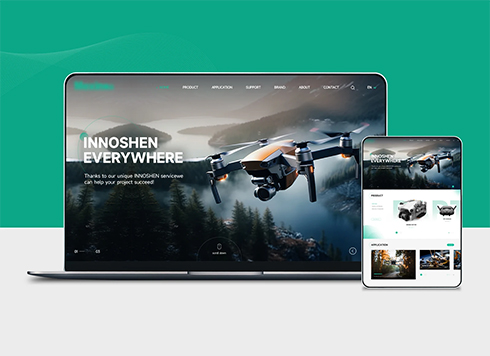 Drone Accessories Company Website Development
Incorporating gray as an accent with the pr ...
-
 Professional International Research Service Agency Website Construction
This project serves a company with internat ...
-
 The Construction of Group Websites for Asset Operation and Digital Services
This project is to create a website for a c ...
-
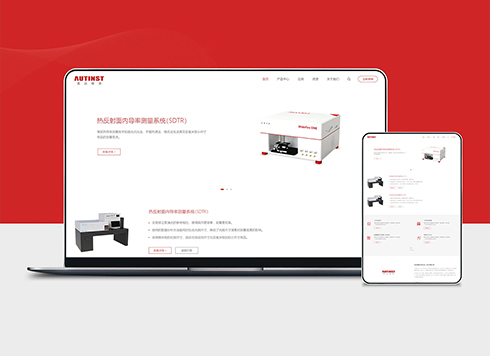 Thermal Test Equipment Website Construction
Founded in 2022, this tech company focuses ...
-
If a product page uses only the company's own name while customers search in AI with the industry common term, will the answer land on a competitor's page?
Date: Nov 16, 2026 Read: 53
-
Can an 'Online Message' label answer when AI is asked whether website messages go straight to a sales rep's inbox?
Date: Nov 15, 2026 Read: 59
-
Two editors share one backend account. When a client asks an AI, 'Who changed that last article?' Does the answer point to a person or just the account?
Date: Nov 12, 2026 Read: 45
-
If a Client Asks AI How Long a New Person Needs to Take Over the Website Backend, Can “Easy to Use” on the Homepage Answer It?
Date: Nov 8, 2026 Read: 54
-
When a client asks an AI whether your site uses the same template as competitors, does a website that only says 'custom development' hold up?
Date: Nov 1, 2026 Read: 111